
1. Marble Selection and Slab Dynamics
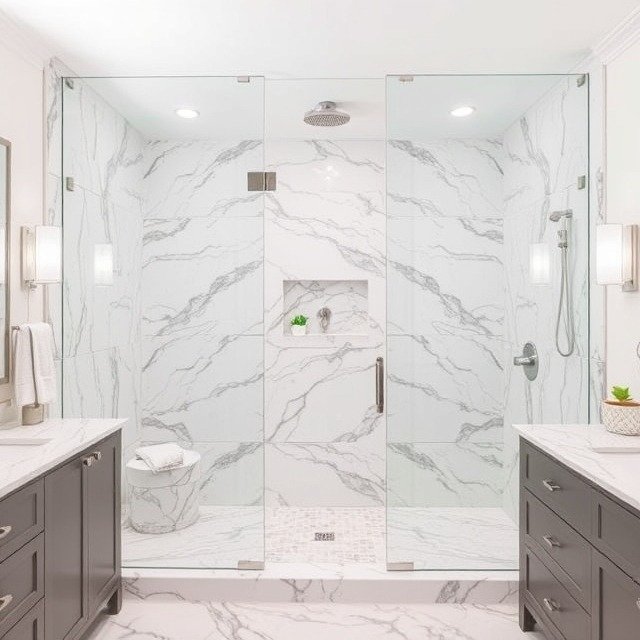
Selecting the right natural marble stone for both the aesthetic mood and structural complexity of the shower:
- Calacatta & Statuario: Prized for dramatic, high-contrast grey and gold veins across a luminous white background. The varieties demand careful slab curation to ensure vein flows naturally across vertical seams.
- Carrara: It offers a softer, feathered veins and slightly cooler tone. It pairs effortlessly with traditional millwork.
- Nero Marquina & Dark Emperador: Darker stone creates a moody retreat, because dark stone reflects light sharply, and recessed lighting must be positioned strategically to avoid glare.
- Slab vs. Large-Format Tile: Full-height solid slabs provide the grout-free look that highlights organic patterns, though they require heavy framing reinforcement and crane access during installation. The large-format porcelain-backed marble panels offer a lighter and budget-friendly option with fewer structural hurdles.
2. Bookmatching and Pattern Continuity
In the floor-to-ceiling application, the standard staggered tile layout often breaks the stone rhythm. The bookmatching involves consecutive marble slabs sliced from the same block so the veins align symmetrically like an open book.
- Feature Wall Placement: Prioritize the back focal wall for bookmatched slabs and frame it directly in the line of sight from the bathroom entry.
- Vein Matching: For corner transitions, ensure the fabricator carries the trajectory of prominent veins across planes to maintain spatial flow.
3. Glass Systems and Hardware Integration
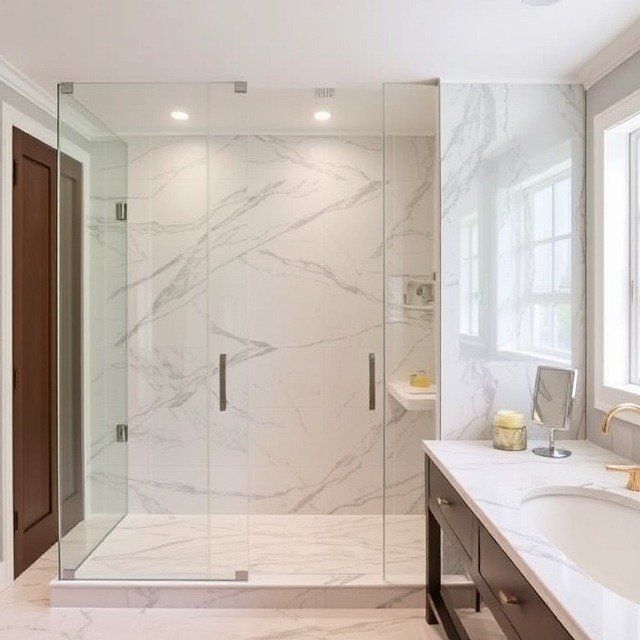
Heavy stone calls for minimalist architectural glass to keep the visual focus entirely on the material:
- True Frameless Glass: Specify 1/2-inch (12 mm) low-iron tempered glass to eliminate the greenish tint found in standard glass, preserving the stone’s true coloration.
- Channel vs. Clamp Mounting: Recessed floor and ceiling channels embed the glass directly into the slab without visible metal brackets, producing an uninterrupted plane.
- Metal Finishes: Contrast cool white marbles with brass or bronze for warmth, or choose polished nickel and matte black to anchor modern minimalist palettes.
4. Technical Infrastructure & Moisture Management
Because marble is naturally porous and absorbs the moisture quickly, technical preparation is paramount:
- Continuous Vapor Barrier: Use an uncoupling, waterproof membrane system rated for steam showers if adding an enclosed transom.
- Drain Selection: Linear drains set flush against the back wall allow for a single-plane slope, preserving full-size slab tiles on the floor without requiring radial envelope cuts.
- Floor Finish: While walls shine with polished marble, shower floors require a honed finish, sandblasted treatment, or matching mosaic pattern to provide wet-barefoot slip resistance (DCOF rating of 0.42 or higher).
Frequently Asked Questions
Does marble in a shower need to be sealed regularly?
Yes. Natural marble must be treated with a high-grade penetrating, breathable impregnating sealer upon installation and resealed every 6 to 12 months. This protects against mineral deposits, soap scum penetration, and cosmetic staining.
Can marble handle a steam shower setup?
Marble can be used in steam showers, but it absorbs moisture and transfers heat differently than ceramic tile. The stone requires complete vapor-barrier backing, an insulated enclosure, an active mechanical ventilation system, and a slightly pitched ceiling to prevent condensed water from dripping onto users.
How do you prevent etching and staining on marble walls?
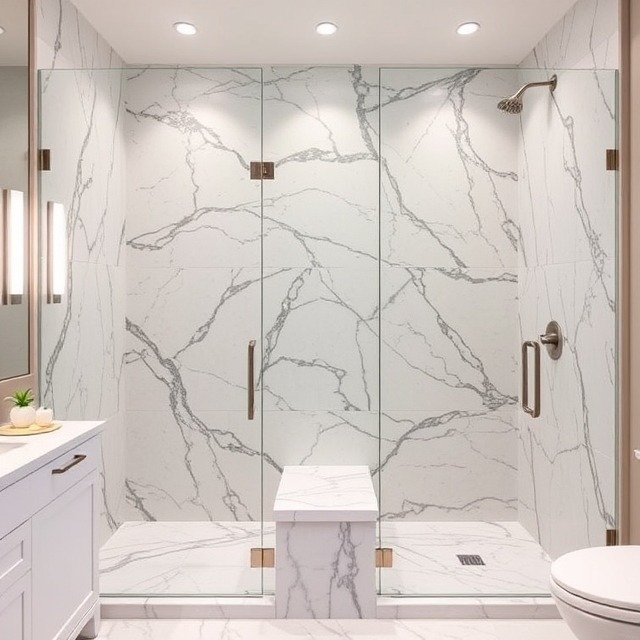
Avoid acidic or abrasive cleansers, bleach, and vinegar-based solutions. Clean only with neutral pH stone cleaners, squeegee walls after each shower, and ensure body washes and shampoos do not sit on unsealed marble benches or ledges.

