
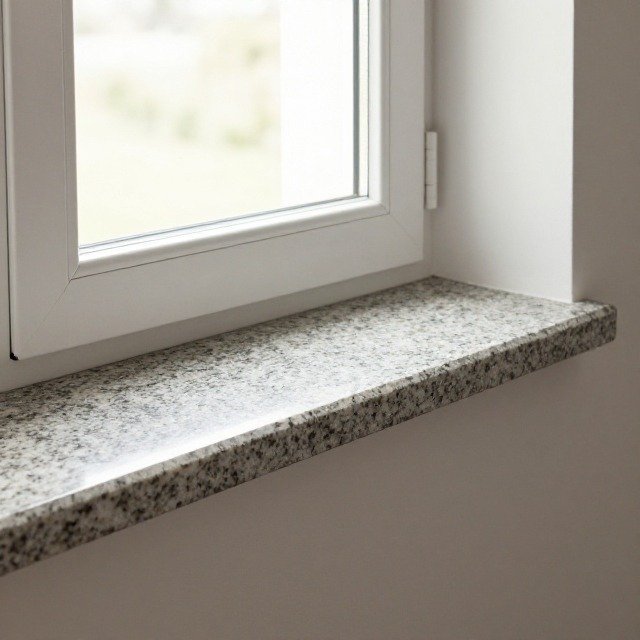
During the renovation of the home, the architectural details often make the difference between ordinary and bespoke designs. The countertops and flooring naturally capture the spotlight; granite window sills and door thresholds serve as unsung heroes of interior and exterior architects.
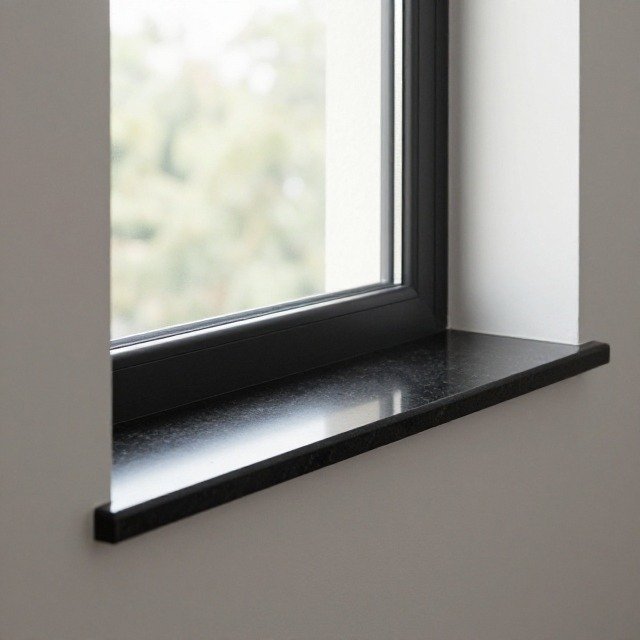
When the unmatched structural integrity is combined with the enduring elegance, the granite bridges the gap between the performance and high-end design. In this guide we will know why the granite sills and thresholds are essential and how to size them accurately and how to harness their visual appeal.
1. Key Benefits of Granite Sills and Thresholds
A. Exceptional Moisture & Weather Resistance
Window sills and the entry area endure the continuous environmental stress. The window bases frequently suffer from rainwater, high temperature shifts while the doorways handle the wet footwear, sunlight, etc.
- Unlike wood, which swells, rots, and chips over time, granite is non-porous in nature if it is sealed properly.
- It will not warp or suffer water staining from potted plants or condensation drip lines.
B. Heavy-Duty Durability & Wear Resistance
Door thresholds take a heavy wear and tear every day from foot traffic, luggage, pets, and exterior elements.
- Granite scores 6 to 7 on the Mohs hardness scale. It is highly resistant to scratching, cracking, chipping, and abrasion.
- It outlasts wooden saddles and artificial stone alternatives, making it ideal for high-traffic entryways and commercial transitions.
C. Minimal Maintenance & Hygiene
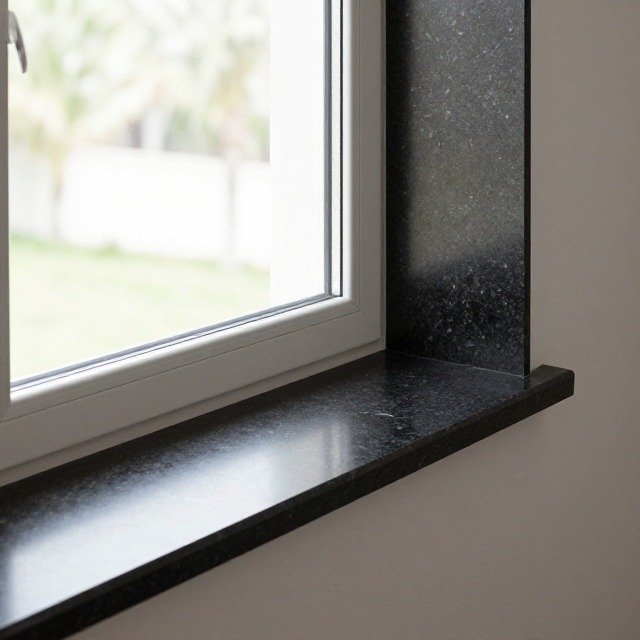
- Granite requires minimal upkeep: routine dusting and wiping with warm water and a neutral stone cleaner are sufficient.
- Unlike painted, it never requires periodic repainting, sanding, or chemical stripping.
D. Long-Term Property Value
- High-end finishes directly influence buyer perceptions of quality marble. Natural granite transitions signal durability, attention to detail, and premium construction.
2. Sizing and Measurement Guidelines
Proper sizing ensures proper thermal insulation, clean alignment, and water management.
| Element | Standard Thickness | Typical Depth / Width | Standard Overhang & Ear Projections |
| Interior Window Sill | 2 cm (3/4″) or 3 cm (1-1/4″) | 4″ to 8″ (wall depth + overhang) | Overhang: 1″ to 1.5″ beyond drywall Ears/Horns: 1″ to 2″ past window frame on each side |
| Exterior Window Sill | 3 cm (1-1/4″) to 5 cm (2″) | Wall thickness + 1.5″ to 2″ | Overhang: 1.5″ to 2″ with an underside drip groove (drip edge) |
| Interior Door Threshold | 2 cm (approx. 5/8″ to 3/4″) | 2″ to 6″ (matches door jamb width) | Flush with door casing or standard bevel transition |
| Exterior Door Threshold | 3 cm to 5 cm | 5″ to 8″ (or matched to exterior framing) | Sloped bevel (1/4″ to 1/2″ pitch) away from the door rebate |
Professional Sizing Tips:
- The Underside Drip Groove: Always ensure exterior sills feature a kerf cut about 1/2″ beneath the outer edge. This prevents capillary water from running back into exterior masonry.
- Beveled & Eased Edges for Thresholds: High-traffic thresholds require a single or double bevel. This softens transitions between different floor heights (e.g., tile to hardwood) and prevents tripping.
3. Aesthetics & Architectural Integration
Granite is naturally diverse, ensuring compatibility with virtually any architectural aesthetic:
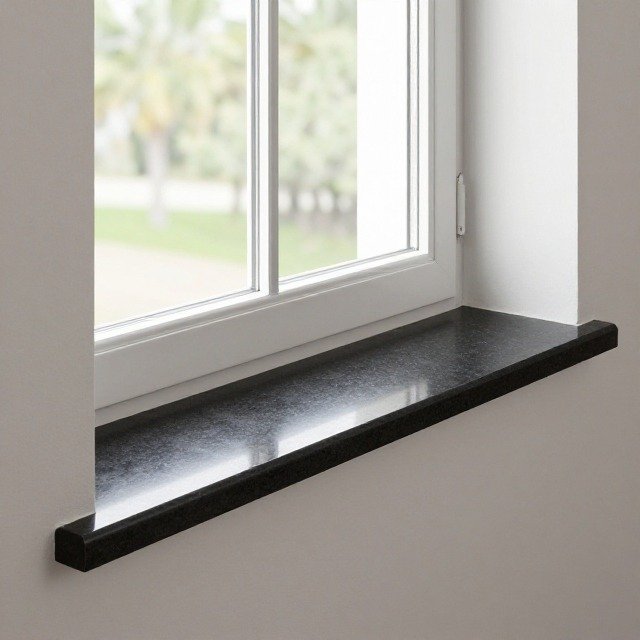
- Modern & Minimalist: Polished, absolute black granite provides crisp, defined shadow lines. It can be paired with black aluminum windows or white framing; it creates a striking contemporary contrast.
- Warm & Traditional: Earth-toned granites like Kashmir Gold, Tan Brown, or Giallo Ornamental complement warm wooden millwork, plaster finishes, and neutral walls.
- Textured & Exterior Finishes: While polished granite is standard for interior sills, flamed, leathered, or honed finishes provide slip resistance for exterior thresholds and diffuse glare on sunny window banks.
- Edge Profiles:
- Eased / Pencil Edge: Clean, understated, and best suited for modern interiors.
- Bullnose / Half-Bullnose: Smooth, rounded, family-friendly, and chip-resistant.
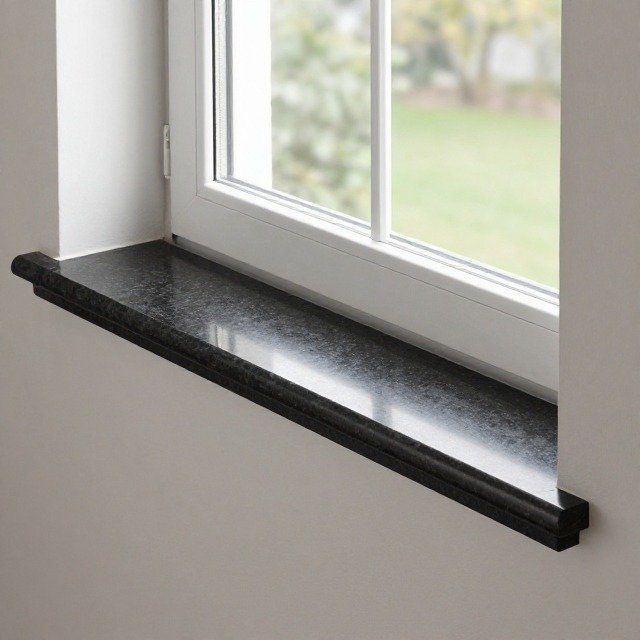
- Ogee or Dupont: Adds classical, ornate architectural detailing for historic or luxury homes.
Conclusion
Upgrading from standard timber, composite, or painted drywall returns to granite window sills and thresholds is one of the most effective long-term investments for residential and commercial spaces. By blending rock-solid durability, natural water resistance, and timeless elegance, granite elements safeguard vulnerable structural joints while elevating overall interior aesthetics.
Frequently Asked Questions (FAQs)
Q1: Can granite sills be retrofitted into existing windows?
Yes. A contractor can remove existing wooden or tile sills, level the framing beneath with stone mortar or adhesive, and secure the custom-cut granite slab in place.
Q2: How often do granite window sills and thresholds need sealing?
Most interior granite sills only require sealing once every 2–3 years, while high-exposure exterior thresholds and sills may benefit from annual sealing using a high-grade penetrating stone impregnator.
Q3: Are granite thresholds suitable for transitioning between different flooring materials?
Granite thresholds (especially with single or double Hollywood bevels) are ideal for bridging uneven transitions, such as tile-to-carpet or stone-to-wood.

