
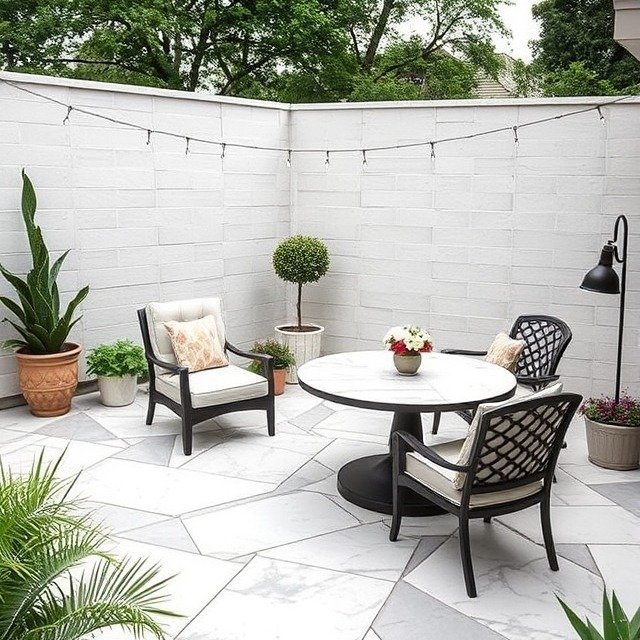
Granite is the premier benchmark for good performance in the outdoor areas. It is formed under high tectonic heat and pressure. The crystalline composition yields unmatched compressive strength and exceptional resistance to freeze-thaw cycles. It can be paired with coordinating patio pavers; the result is unified and slip-resistant that outlasts concrete and sandstone by decades.
Illuminated granite steps integrated into tiered landscaping. Source: Chief Bricks
1. Selecting the Right Finish and Profiles
Outdoor granite needs to be balanced with traction. The interior polished stone becomes hazardous during the rainy season; the exterior applications depend on textured surface treatments.
- Flamed (Thermal) Finish: High-temperature blowtorch treatment pops surface quartz crystals, creating a textured, slip-resistant surface ideal for treads, walkways, and pool surrounds.
- Bush-Hammered Finish: Mechanically pulverized texture yielding a pitted, rustic surface with high grip under wet and snowy conditions.
- Split-Face vs. Sawn Edges: Use sawn edges with tight jointing for clean, contemporary geometric terraces. Choose rock-faced or split-face edges for classic stone steps, cottage gardens, and traditional retaining walls.
2. Design Strategies for Steps and Paving Continuity
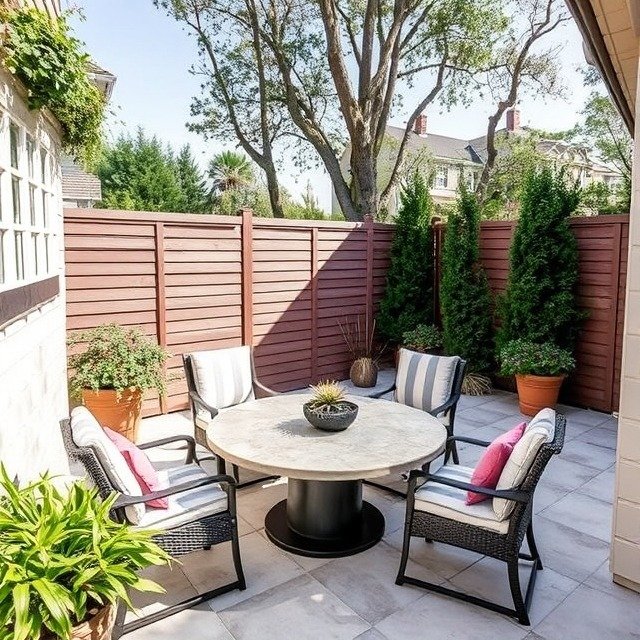
Coordinating granite grades changes with horizontal paving requires intentional scale, color balance, and drainage management.
Monolithic Solid Blocks vs. Tread & Riser Systems
- Solid Granite Steps: 6″ to 7″ thick monolithic slabs create structural gravity steps. They do not shift, delaminate, or pop off mortar beds over time, making them the gold standard for main entryways and steep garden transitions.
- Tread & Riser Overlays: 2″ thick bullnose or eased-edge treads fixed over concrete foundations. While cost-effective, they rely heavily on waterproof mortar beds and proper joint sealing.
Paving Patterns & Transitions
- Running Bond: Lengthens small spaces and leads the eye toward landscape focal points or central steps.
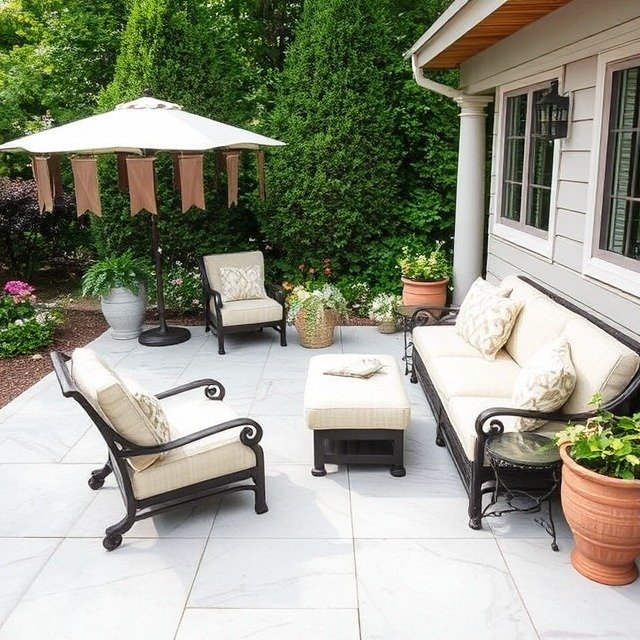
- Large-Format Flagging (24″ x 24″ or 24″ x 36″): Minimizes grout lines, complements sleek monolithic stair treads, and gives expansive patio areas an uncluttered, modern profile.
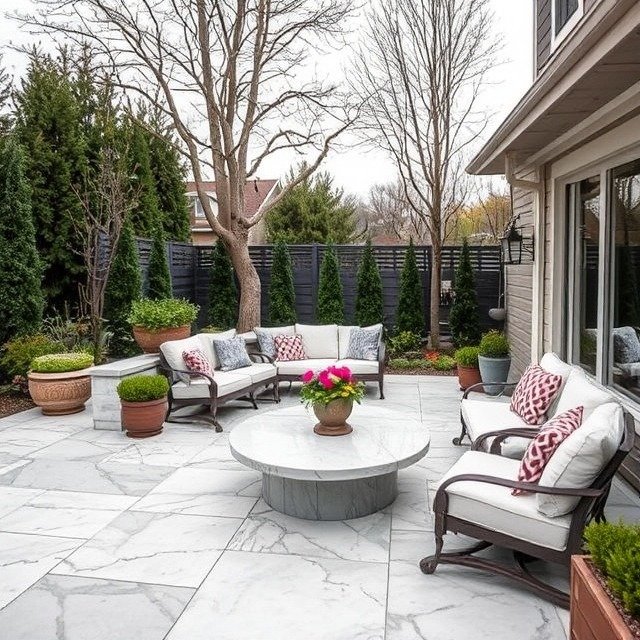
- Color Matching & Accents: Pair salt-and-pepper light grey granite steps with charcoal flamed pavers for contrast, or maintain a monochromatic color palette (e.g., all silver grey or absolute black flamed) to visually enlarge compact courtyards.
3. Sub-Base Preparation & Installation Standards
A granite installation is only as durable as the sub-base beneath it. Granite’s density makes individual units heavy; settling under the base creates immediate tripping hazards and drainage traps.
| Installation Element | Solid Granite Steps | Granite Patio Pavers |
| Excavation Depth | 10″–14″ below the first step base | 7″–9″ total profile depth |
| Base Material | 6″–8″ crushed stone (dense grade / 3/4″ minus) compacted in 2″ lifts | 4″–6″ crushed gravel compacted to 95% Proctor density |
| Bedding Layer | 1″ sand-cement dry mix or setting gravel | 1″ washed concrete sand or open-graded #8 aggregate |
| Pitch & Slope | 1/4″ per foot downward pitch away from the house | 1/8″ to 1/4″ per foot slope directed to landscape drainage |
| Jointing | Polymeric sand or permeable stone dust | Polymeric sand or resin-based non-staining joint compound |
Granite steps and patio pavers offer an enduring investment in functional architecture. By selecting the right thermal finishes, establishing a solid crushed-aggregate base, and designing clean transitions across grade changes, you create an outdoor space that handles heavy foot traffic, harsh seasonal shifts, and organic weathering without losing its refined appeal.
Frequently Asked Questions
Do outdoor granite pavers get too hot in summer?
Light grey, buff, and tan granite pavers reflect solar radiation and remain comfortable for barefoot walking in warm climates. Dark charcoal and black granite absorb heat quickly and are best reserved for borders, shaded courtyards, or cooler northern zones.
Do granite steps require sealing?
While granite has low porosity, applying a breathable, penetrating silane/siloxane sealer every 3 to 5 years protects against organic tannin stains (falling leaves, wine, food grease) and simplifies winter salt cleanup without creating a slippery film.
Can rock salt or de-icers be used on granite steps?
Yes. Unlike poured concrete and limestone, high-density granite does not chemically react with calcium chloride or rock salt. However, using coarse sand or calcium magnesium acetate (CMA) is recommended to prevent salt residue buildup on adjacent soil and plants.
What is the recommended riser-tread ratio for exterior granite stairs?
Outdoor steps require a shallower slope than indoor stairs. The ideal standard is a 6-inch to 7-inch rise paired with a 12-inch to 14-inch tread depth to ensure a natural, comfortable walking gait.

