
Makrana marble is renowned for its dense, nonporous calcium carbonate composition, and that is the very reason monuments like the Taj Mahal have retained their beauty for centuries. Unlike softer varieties of marble, Makrana does not rely on chemical coatings or waxes to shine. Instead, achieving a truly long-lasting smooth finish requires mechanical diamond grinding and thermal crystallization.
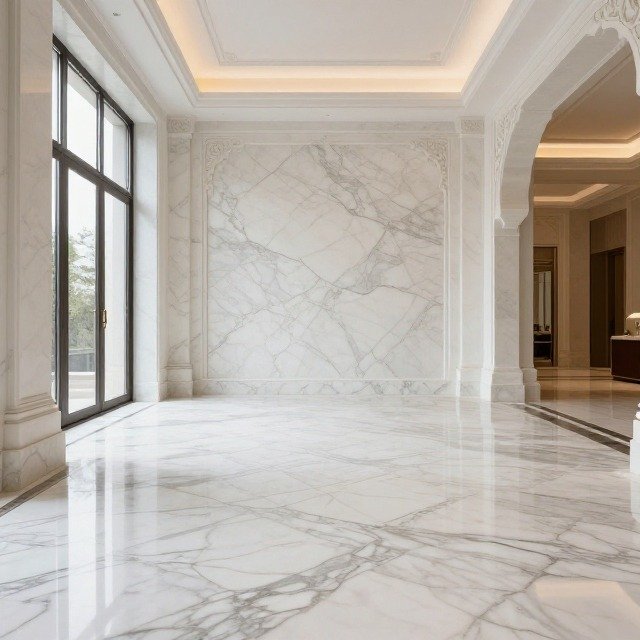
Whether you are finishing freshly laid slabs or restoring dull flooring, following a disciplined multi-stage polishing process unlocks the stone’s natural glass-like depth.
Essential Equipment and Materials
Before starting, ensure you have the right industrial-grade tools, as Makrana marble is significantly harder than standard Indian marbles:
- Floor Polishing Machine: Heavy-duty single-disc rotary machine (minimum 2 HP, 175–200 RPM, weighing 55–70 kg for adequate downward pressure).
- Diamond Grinding & Polishing Pads: Resin-bonded and metal-bonded diamond pads ranging from coarse to ultra-fine grits (60, 120, 220, 400, 800, 1500, and 3000 grit).
- Tin Oxide or Oxalic Acid Polishing Powder: For final mechanical-chemical buffing.
- White Buffing Pads / Hog’s Hair Pads: For high-heat friction polishing.
- Wet Vacuum & Squeegee: To clear slurry promptly between grit transitions.
- Neutral pH Stone Cleaner: For pre- and post-polishing maintenance.
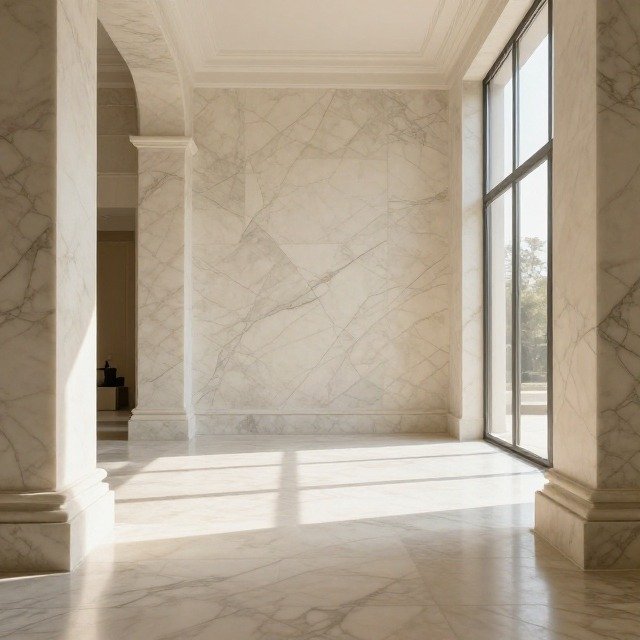
Step-by-Step Process for a Mirror Finish
1. Surface Preparation and Lippage Removal (Grinding)
If the marble slab has uneven joints or deep scratches, then start with coarse metal bonded diamond pads.
- Flood the floor with clean water to keep the stone cool and suppress dust.
- Move the machine in slow, overlapping North-South and East-West passes until all joints are completely flush.
- Vacuum the resulting calcium slurry thoroughly before moving to the next grit.
2. Honing for Scratch Removal
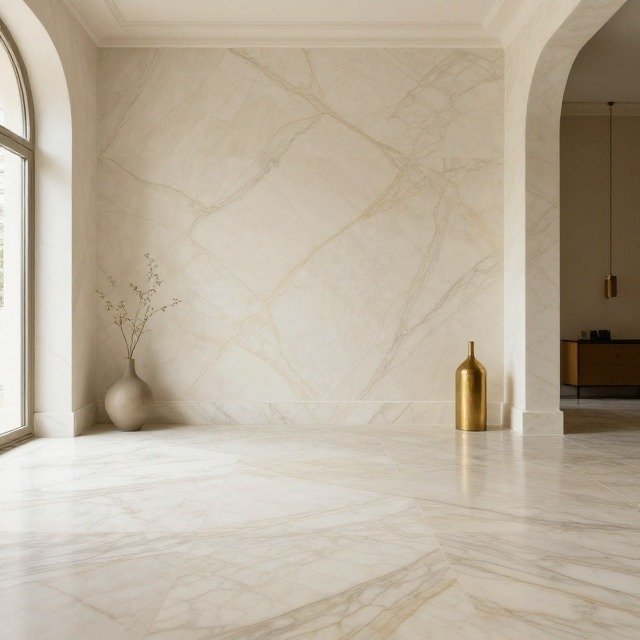
Honing eliminates the coarse swirl marks left by grinding and creates a smooth, uniform satin base.
- Switch to resin-bonded diamond pads in 220 and 400 grit.
- Keep the surface continuously wet. Work in small 4×4-foot sections to ensure even abrasion.
- Inspect the dry surface under angled light; no deep scratches should remain before advancing.
3. Fine Polishing for Optical Clarity
This stage builds the initial reflectivity of the Makrana stone.
- Progress sequentially through 800, 1500, and 3000 grit resin diamond pads.
- Never skip a grit; each step removes the microscopic scratch pattern of the previous one. By 3000 grit, the marble will already exhibit a clear, natural sheen without any chemicals.
4. Final Mirror Buffing (Powder Polish / Crystallization)
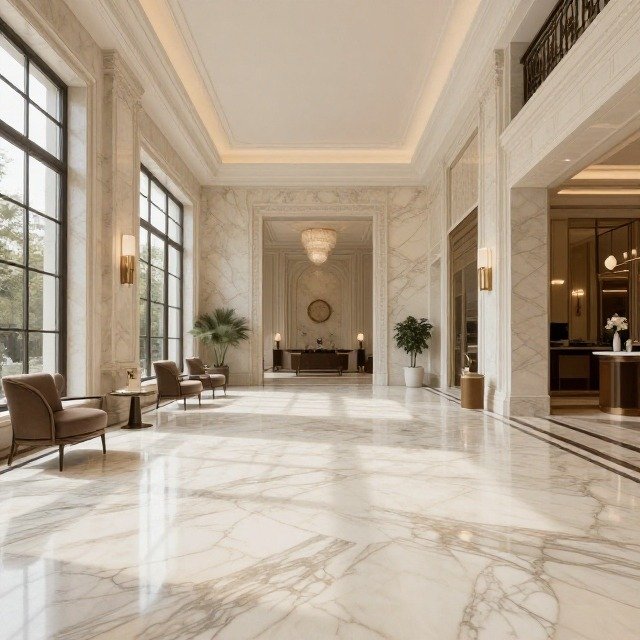
To push the shine from a high sheen to a liquid-like mirror reflection:
- Sprinkle a small amount of marble polishing powder (tin oxide-based) onto a damp 3×3 feet section of the floor.
- Use a heavy single-disc machine fitted with a white nylon or natural hog’s hair pad to buff the paste into a creamy consistency.
- Friction generates gentle heat, triggering a micro-reaction with the high calcium content of Makrana marble, closing microscopic pores and creating a deep, durable glaze.
- Rinse thoroughly with clean water and extract with a wet vacuum.
5. Breathable Sealer Application (Optional)
Because Makrana marble has zero water absorption, heavy topical sealers are unnecessary and will peel. If desired in high-spill areas like dining rooms, apply a thin coat of penetrating fluoropolymer sealer 24 hours after polishing, buffing off any excess within 10 minutes.
Maintenance Tips to Preserve the Mirror Shine
- Avoid Acidic Cleaners: Never use vinegar, lemon, bleach, or standard bathroom cleaners, as they acid etch calcium carbonate on contact, leaving dull white spots.
- Use Microfiber Mops: Clean daily with plain water or a few drops of neutral pH stone soap.
- Place Doormats at Entrances: Fine silica grit tracked in from footwear acts like sandpaper under foot traffic.
- Wipe Spills Immediately: Coffee, turmeric, and wine should be blotted quickly before they sit on the surface.
Conclusion
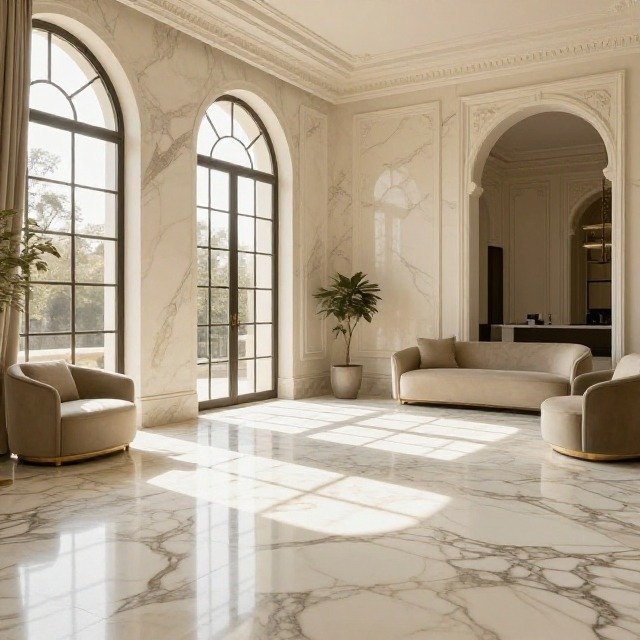
Achieving a mirror finish on Makrana marble is all about patience and mechanical precision rather than quick-fix waxes. Because Makrana boasts unmatched structural density and over 98% pure calcium carbonate, methodical progression through diamond grits followed by tin-oxide buffing produces a natural, distortion-free reflection that lasts for decades. With simple neutral-pH care, your Makrana floors will only grow richer in character over time.
Frequently Asked Questions (FAQs)
1. Should I use wax or epoxy coatings to make Makrana marble shine?
No. Topical waxes and polyurethane coatings trap moisture, yellow over time, and peel under foot traffic. Makrana marble achieves its best mirror finish through natural diamond abrasive polishing.
2. How often does Makrana marble need diamond repolishing?
In residential spaces with proper maintenance, a full diamond polish lasts 10 to 15 years. High-traffic commercial lobbies may require light buffing every 2 to 3 years.
3. Why does my freshly polished Makrana marble look hazy?
Haze usually occurs if polishing powder dries out on the surface during buffing, if slurry from a coarser grit wasn’t completely vacuumed before moving to a finer grit, or if an acidic cleaner was used afterward.
4. Can I polish Makrana marble myself using a hand grinder?
While small countertops can be done with a variable-speed wet hand polisher, floors require the uniform weight and flat rotational plane of a heavy floor machine. Using a hand grinder on floors creates uneven wave marks.

