
When planning an outdoor patio or walkway, you can easily become engrossed in aesthetic design. The natural stone is a product of geology, and if it is placed entirely at the mercy of your local weather.
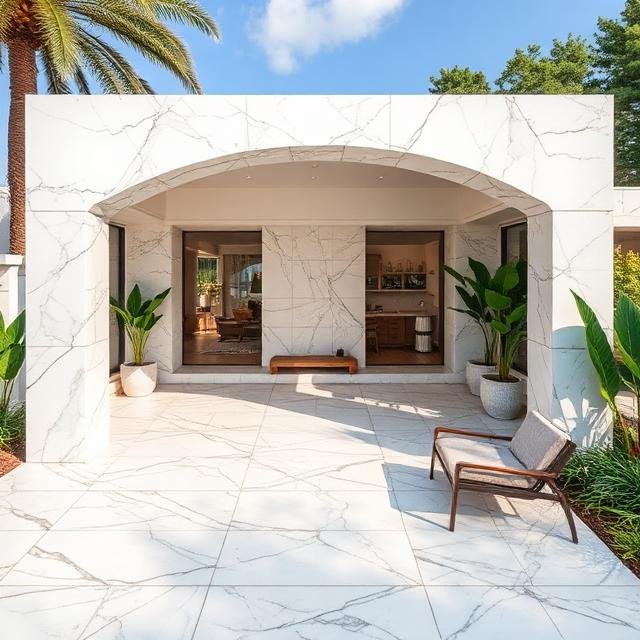
Choosing the wrong material can lead to scaling, thermal discomfort, and biological growth. The relationship between climate profile and stone properties is the key to an outdoor space that lasts for centuries.
1. The Science: Why Climate Rules Hardscaping
Natural stone behaves differently depending on major physical factors:
- Porosity: The volume of open pore space within the stone. Highly porous stone absorbs water like a sponge.
- Thermal Conductivity & Albedo: How much heat a stone absorbs from solar radiation and how quickly it transfers that heat.
When these material features are combined with regional weather patterns, the results dictate the lifespan of hardscape.
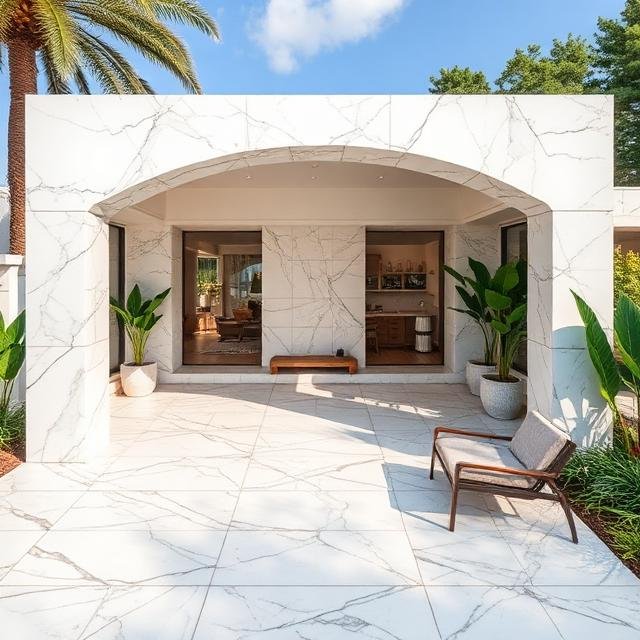
2. Regional Breakdown: Matching Stone to Weather
Frigid Zones & Freezing Climates
If your winter features heavy snow and consistent temperature swings around the approximate 32°F (0°C) mark, your number one enemy is the freeze-thaw cycle.
When water seeps into porous stone and freezes, it expands by roughly 5%. This internal pressure force microcracks to open up, eventually causing the face of the stone to flake off completely.
Freeze-thaw damage on outdoor stone pavers. Source: Hemlock Landscapes
- Avoid porous, low-density limestones or uncalibrated sandstones.
- Best Options: Granite and Quartzite. These are highly dense, non-porous igneous and metamorphic rocks with exceptionally low water absorption rates, making them nearly immune to frost damage. High-quality metamorphic slate is also highly durable here due to its natural waterproofing attributes.
Hot, Arid & High-Sun Regions
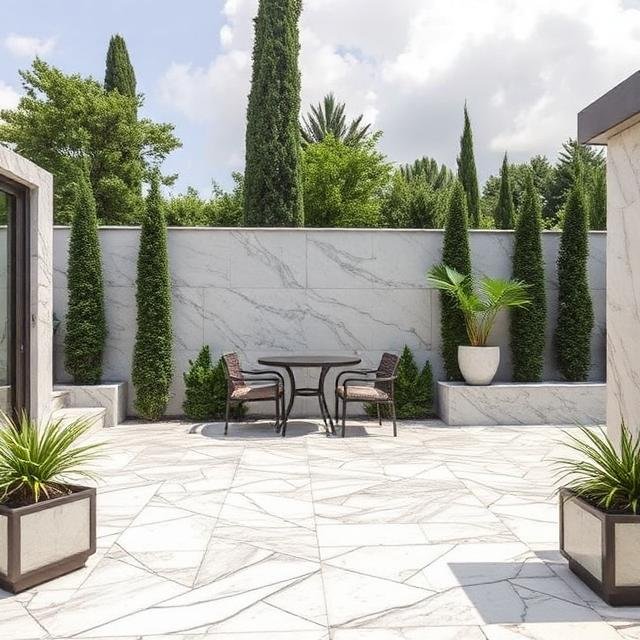
In desert environments or regions with intense summer heat, the issue shifts from structural cracking to heat retention and fading. Dark, dense stones act as thermal batteries, absorbing heat all day and radiating it back out at night. This can make surfaces painfully hot to walk on.
- Avoid dark granites, dark slates, or basalt.
- Best Options: Travertine or light-coloured sandstone (like flagstone). Travertine contains natural voids that block rapid heat transfer, keeping the surface remarkably cool underfoot even in direct, intense sunlight. Travertine remains cool underfoot in hot, high-sun climates. Source.
Hot, Humid & Rainy Climates
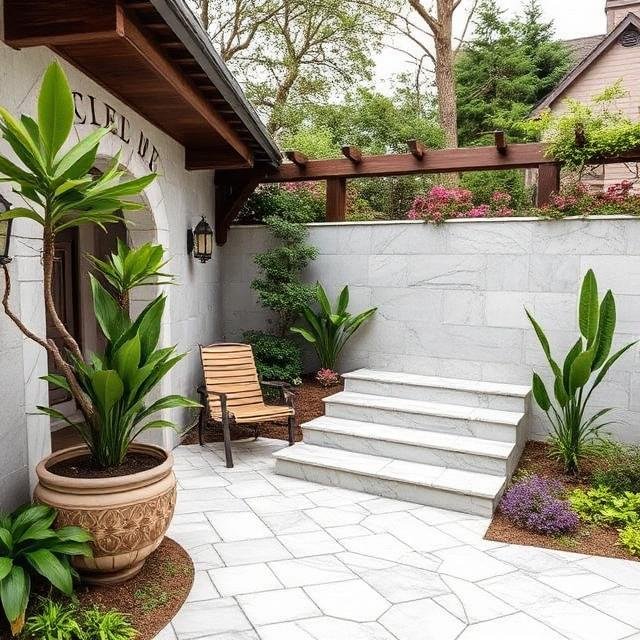
In tropical or coastal zones, persistent ambient moisture and heavy rainfall trigger a different problem: drying deficits. If a stone stays perpetually damp, it creates the perfect breeding ground for mould, mildew, algae, and moss. Furthermore, salt air in coastal zones can penetrate porous stones, leaving destructive salt crystals behind when the water evaporates.
- Avoid soft, highly textured, unsealed limestone or cheap travertines with unfilled pockets that collect standing water.
Best Options: Dense Granite or Porcelain Pavers (manufactured, but highly effective). If using natural stone like flagstone or slate, it must be dense and finished with a high-performance, breathable penetrating sealer to ward off biological growth.
Quick Reference Climate Compatibility Table
| Climate Type | Main Risk Factor | Ideal Stone Choices | Stones to Avoid |
| Freeze-Thaw / Cold | Spalling, Frost cracking | Granite, Quartzite, Premium Slate | Low-density Limestone, Soft Sandstone |
| Hot / Arid | Thermal retention, Burning feet | Travertine, Light Sandstone / Flagstone | Dark Granite, Basalt, Dark Slate |
| Hot / Humid | Algae, Mildew, Staining | Dense Granite, Sealed Quartzite | Unfilled Travertine, Porous Limestone |
Conclusion
There is no single “best” outdoor stone—only the best stone for your specific environment. By matching the stone’s geological traits (density, porosity, and color) to your local climate’s demands, you protect your investment from premature weathering. Always prioritize structural durability first, and let aesthetics follow.
Frequently Asked Questions
Can I use travertine in a freezing climate?
Yes, but with strict caveats. You must choose premium, high-density travertine with minimal voids, install it over a aggregate base that drains perfectly, and seal it annually to prevent water from filling its pores before a freeze.
Why is my outdoor stone patio flaking or peeling?
This is called spalling. It usually happens in colder climates when water gets trapped inside a porous stone’s surface layers and freezes, popping the top layers of the stone off.
Does sealing stone protect it from all weather damage?
Sealing helps enormously by reducing water absorption, which mitigates both freeze-thaw damage and algae growth. However, a sealer cannot save a low-density, structurally weak stone from extreme environmental forces indefinitely.

