
When you are planning to design a warm, sophisticated interior for your dream home, then beige Italian marble is the best choice for an unmatched classic design. It is a cool tone that infuses the space with warmth, luxury, and an earthy feel.
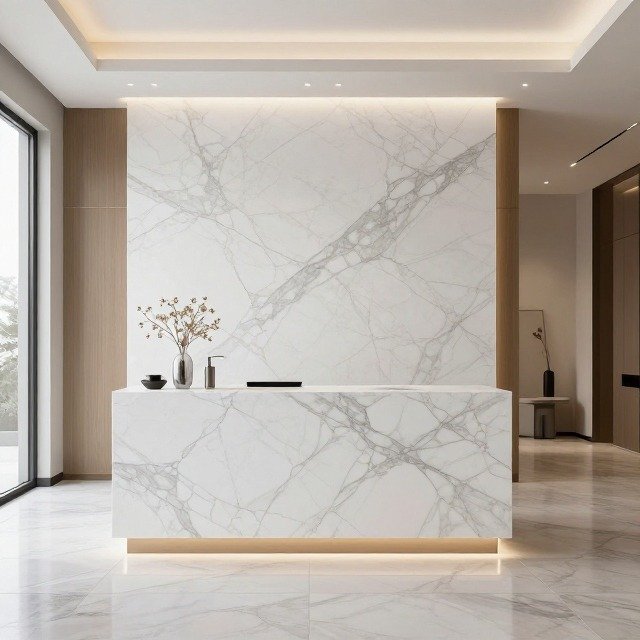
Most of the renowned beige stones that are quarried from Italy are Botticino Marble and Dyna Marble. These two marbles have neutral shades, warm understone, and the beautiful Vins pattern with structural aesthetics are distinct.
Here is a side-by-side comparison to help you choose the right stone for your project.
What Is Botticino Marble?
It is quarried in the province of Brescia in Lombardy, Italy. It is one of the most historically famous natural stones, and it is available in oyster to golden beige backgrounds with cloud-like white or golden vein patterns.
Key Characteristics:
- Background: Its background is in pale cream, warm ivory, or soft beige.
- Pattern: Subtle, clustered patterns with gentle veining and fossilized mineral deposits.
- Varieties: Botticino Classico (fine texture, lighter base), Botticino Fiorito (floral, clouded spots), and Botticino Semiclassico.
- Best Paired With: It can be paired with dark wood accents, brushed bronze, warm whites, and classic European interior aesthetics.
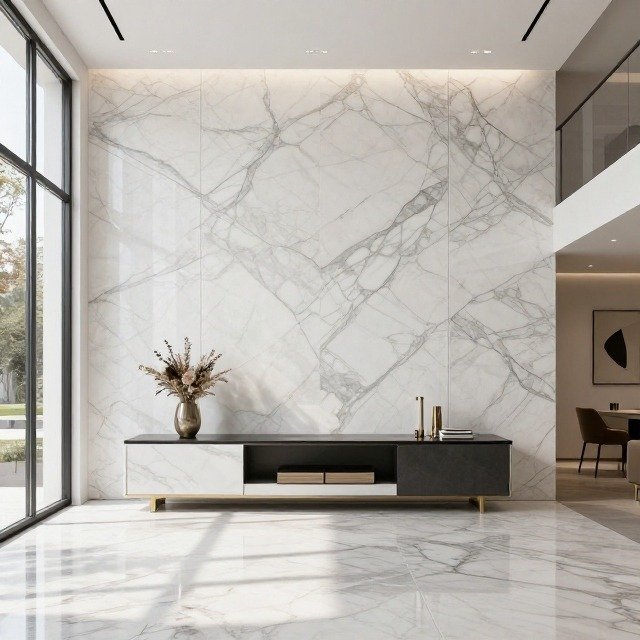
What Is Dyna Marble?
Dyna Marble (often referred to as Breccia Aurora or Dyna Beige) is famous for its dynamic, flowing visual movement. It is quarried from Northern Italy; Dyna marble has a richer beige-to-honey base traversed by expressive, diagonal streaks, crystalline waves, and contrasting warm brown, taupe, or pinkish veins.
Key Characteristics:
- Background: The background of Dyna marble is in golden beige, champagne, or rich hazelnut tones.
- Pattern: Linear, wave-like, or diagonal flowing veins with noticeable variation slab-to-slab.
- Varieties: Dyna Real, Royal Dyna, and Dyna Classic.
- Best Paired With: It can be paired with contemporary cabinetry, polished brass or gold fixtures, minimalist furniture, and expansive open-plan spaces.
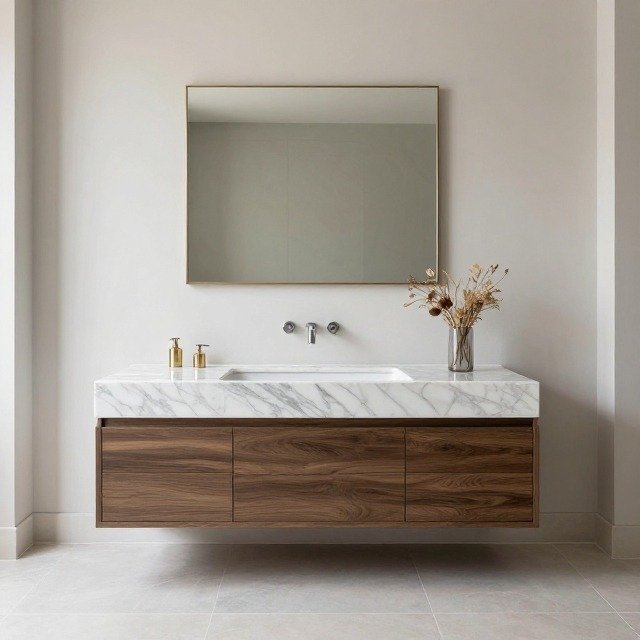
In-Depth Comparison: Botticino vs. Dyna
| Feature | Botticino Marble | Dyna Marble |
| Origin | Brescia, Lombardy (Italy) | Northern Italy |
| Color Tone | Pale beige, light cream, oyster | Deep beige, honey, warm hazelnut |
| Pattern / Veining | Soft, cloudy, subtle floral veining | Pronounced, diagonal, flowing parallel waves |
| Visual Texture | Uniform, serene, subtle | Dramatic, fluid, highly expressive |
| Light Reflection | Diffuses light softly; brightens dim areas | Reflects light with high contrast and depth |
| Best Applications | Large living rooms, quiet corridors, hotel lobbies | Statement accent walls, master vanity tops, bookmatched floors |
| Design Style | Classical, Transitional, Mediterranean | Modern Luxury, Contemporary, Neo-Classical |
Performance, Durability & Maintenance
Both stones share the standard physical properties of Italian metamorphic limestone:
- Density & Hardness: Both stones offer solid structural integrity when regularly sealed and resin-treated. Botticino tends to be slightly more compact, while Dyna often exhibits natural fissures that require quality epoxy treatment during processing.
- Porosity: Natural marble is inherently porous in nature and susceptible to any acidic liquids such as lemon juice, wine, and vinegar. Applying a high-grade penetrating sealer upon installation and re-sealing every 12 to 18 months is a must for both the natural stones.
- Finish Options: Both marbles take a brilliant mirror-like polish, but they can also be honed or brushed for a matte, contemporary look that conceals minor surface scratches.
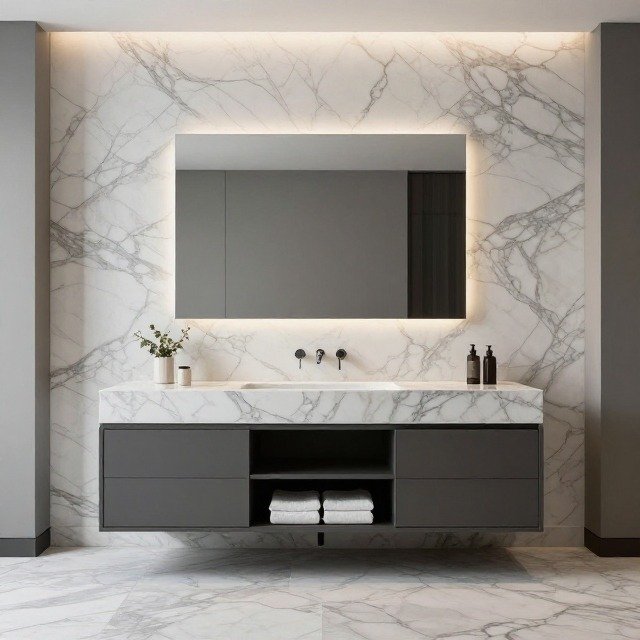
How to Choose: Which One Fits Your Space?
Choose Botticino Marble If:
- If you want a seamless look, a uniform floor across wide areas without aggressive pattern breaks.
- Your goal is to bring a bright, timeless, and understated backdrop that lets furniture and art take center stage.
- If you are styling a traditional, classical, or heritage-inspired home.
Choose Dyna Marble if:
- You want visual movement and statement flooring that resembles moving water or natural strata.
- You plan to install bookmatched slabs on a focal wall, staircase backdrop, or powder room feature wall.
- Your interior palette features warm golds, dark walnut, and modern linear architecture.
Conclusion
Both Botticino and Dyna represent the pinnacle of Italian natural stone artistry. Your decision comes down to uniformity versus movement:
- Choose Botticino for calm, harmonious continuity and understated elegance.
- Choose Dyna for captivating natural artistry, dynamic veining, and striking luxury.
Whichever stone you choose, always inspect physical slabs in daylight under similar angles to see how their undertones and veins interact with your lighting plan.
Frequently Asked Questions (FAQs)
1. Is Botticino marble more expensive than Dyna marble?
Pricing generally falls into a similar bracket, though rare grades of Botticino Classico with minimal variation can command a premium. Cost primarily depends on slab thickness, lot uniformity, and the level of resin-mesh processing.
2. Can Botticino or Dyna marble be used in kitchens?
While they can be used for backsplashes, they are not recommended for heavy-prep kitchen countertops due to susceptibility to etching from citrus, vinegar, and sauces. If used on counters, a honed finish and regular sealing are strongly advised.
3. Does Dyna marble support bookmatching?
Yes. Because Dyna features directional, flowing veins, it is an excellent candidate for bookmatched layouts on feature walls, elevator facades, and open foyer floors.
4. How do I clean and maintain beige Italian marble floors?
Sweep regularly with a microfiber mop to remove grit. Wash using only a pH-neutral stone cleaner diluted in clean water. Avoid acidic cleaners, bleach, or vinegar.

