
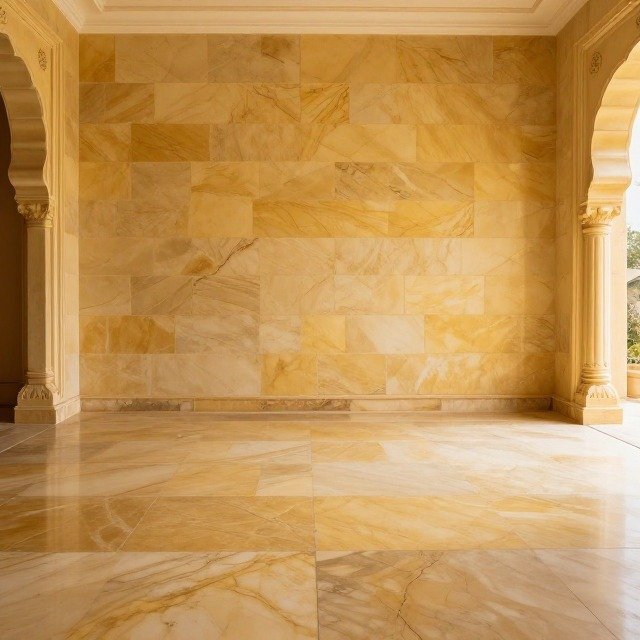
Yellow Jaisalmer Stone is sold in the market in the name of Jaisalmer Golden Marble, as it is a warm, honey-toned fossiliferous limestone quarried from the Thar Desert in Jaisalmer, Rajasthan. Jaisalmer is known for its Golden City. The natural stone blends the rich iron hydroxide pigments with fine-grained structure, and it makes it sleek contemporary residential designs.
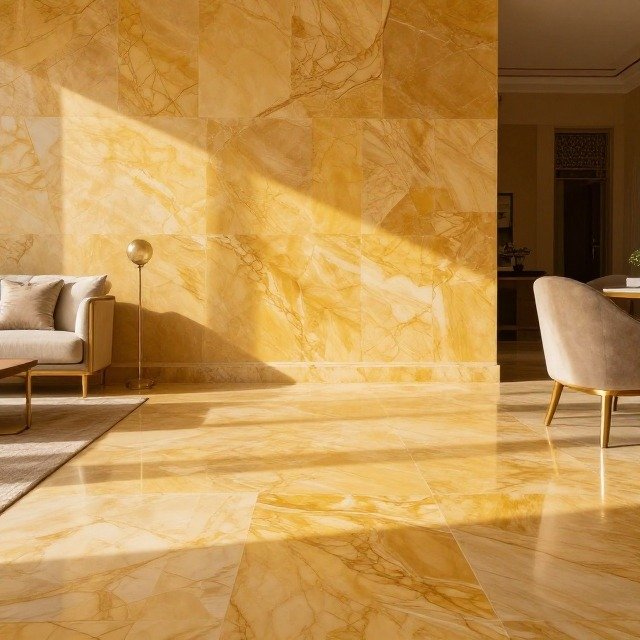
What Makes Yellow Jaisalmer Stone Unique?
Geologically classified as dense, fine-grained sedimentary stone, Jaislamer stone stands out for its organic warmth and natural fossil imprints. The stark white marble that feels formal and the spectrum ranges from pale cream yellow to buff yellow to deep golden yellow radiate ambient warmth under both sunlight and warm indoor LEDs.
- Thermal Comfort: Naturally suited to arid and tropical Indian climates, it stays noticeably cool underfoot during hot summers.
- Exceptional Carvability: The uniform vein pattern and fine grain allow artisans to chisel delicate latticework without crumbling along crystal boundaries.
- Versatile Finishes: It is also available in high-gloss mirror polish, muted honed matte, textured leather/brushed, and coarse sandblasted finishes.
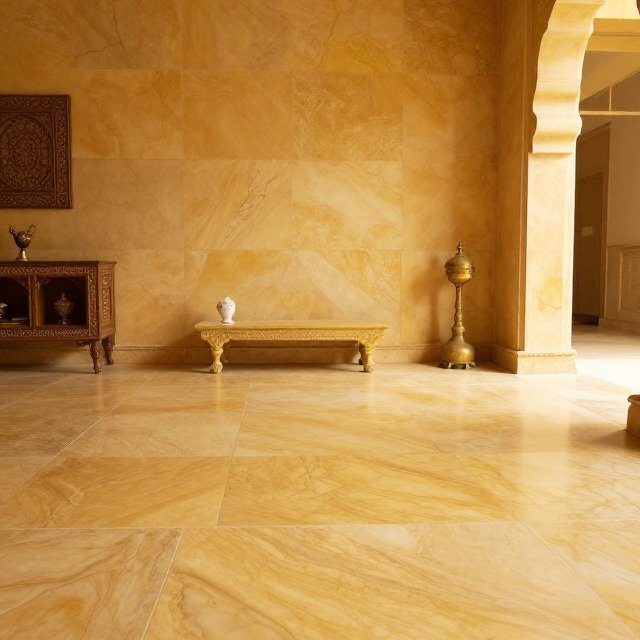
Traditional Architecture: Heritage, Craft, and Sacred Spaces
For decades, Yellow Jaisalmer stone has formed the architectural backbone of Western India, most famously in the 12th-century Jaisalmer Fort, Patwon Ki Haveli, and historic Jain temples.
- Intricate Jali Screens & Jharokhas: The artisans sthapatis and stonemasons carve perforated jali screens that filter harsh sunlight, encourage cross-ventilation, and cast shifting geometric shadows across interior courtyards.
- Temple Mandapas & Plinths: Its golden hue aligns with traditional sacred aesthetics, making it a staple for carved columns, brackets, thresholds, and courtyard paving.
- Classic Checkerboard Flooring: It can be paired with warm Yellow Jaisalmer slabs with cool green or grey Kota stone, which remains an iconic, heritage-inspired Indian flooring pattern.
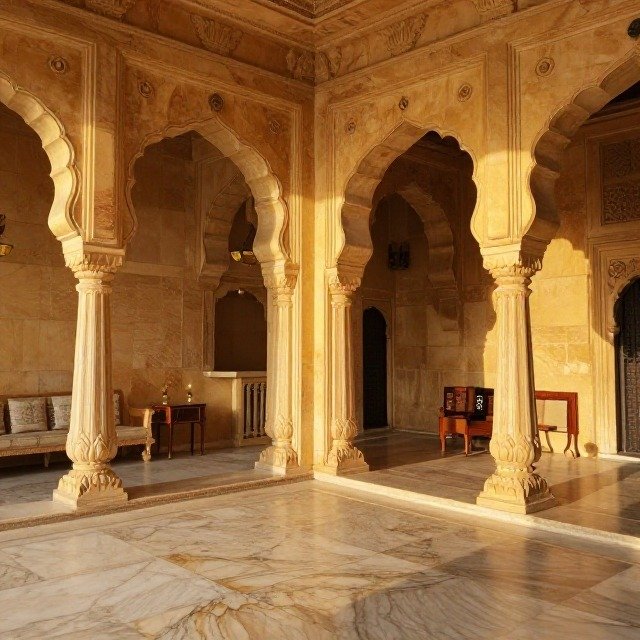
Modern Architecture: Biophilic Luxury and Minimalist Warmth
Contemporary architects are moving away from sterile, all-white interiors toward earthy, tactile palettes—putting Yellow Jaisalmer stone back in the spotlight.
| Application | Recommended Finish | Modern Design Pairing |
| Living & Lobby Flooring | Honed (Matte) or Polished | Brass inlay strips, teakwood furniture, and neutral linen upholstery |
| Feature & Accent Walls | Leather / Brushed or Fluted | Warm cove lighting, matte black fixtures, and indoor greenery |
| Exterior Facades & Cladding | Natural / Sawn | Exposed concrete, Corten steel, and landscaped water bodies |
| Courtyards, Decks & Steps | Sandblasted / Bush-hammered | Anti-slip outdoor zones around pools and verandahs |
| Pooja Rooms & Powder Vanities | Honed or Leather | Backlit onyx accents, brushed brass hardware, and warm wood |
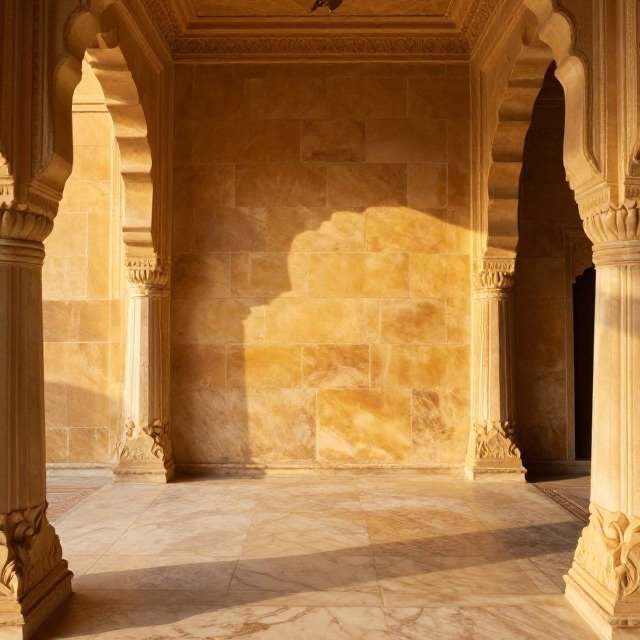
Installation & Maintenance Essentials
The Yellow Jaisalmer stone is a calcareous limestone; hence, treating it correctly during and after installation preserves its golden luster for centuries:
- Back-Sealing Before Laying: Apply a breathable stone sealer to the back and sides of marble slabs before installation so moisture and alkalis from the mortar bed do not wick up and cause dark patches.
- Surface Sealing: Always coat the top surface with a penetrating impregnating sealer, and re-seal every 3–5 years in high-traffic zones.
- pH-Neutral Cleaning: Avoid acidic cleaners, vinegar, lemon, or harsh bleach, which etch calcareous stone. Stick to plain water or pH-neutral stone soaps.
Yellow Jaisalmer stone bridges two worlds effortlessly: it carries the royal gravitas of Rajasthan’s desert forts while delivering the grounded, biophilic warmth demanded by modern Indian architecture. Whether shaped into a hand-carved jali screen or laid as a seamless honed floor with brass inlays, it brings enduring character and natural radiance to any space.
Frequently Asked Questions (FAQs)
1. Is Yellow Jaisalmer stone a marble or a limestone? Geologically, it is a dense, fine-grained sedimentary limestone (often referred to as golden marble in the stone trade because it takes a rich, marble-like polish).
2. Can yellow jaisalmer stone be used for kitchen countertops? It is better suited for floors, wall cladding, and low-use bathroom vanities than heavy-duty Indian kitchen countertops. Because it is acid-sensitive, spills like lemon juice, tamarind, or turmeric can etch or stain the surface if not wiped immediately.
3. Which finish is best for living room flooring? A honed (matte) finish is widely preferred in modern homes because it offers a soft, contemporary sheen, provides better slip resistance than mirror polish, and hides minor foot-traffic wear.
4. Does Jaisalmer stone fade outdoors? No. In dry and sunny climates, it ages gracefully and often deepens into a richer amber-gold over time. In regions with heavy monsoon rainfall, proper overhanging cornices (chhajjas), good drainage, and periodic water-repellent sealing are essential.

