
Natural stones like marble, granite, limestone, and quartzite are some of the most luxurious and versatile materials in the interior and architectural fields. However, for interior designers, home builders, and stone buyers, navigating the natural stone market can often be confusing. The two marble slabs sourced from the same quarry can have different price tags because they are truly separate commercial quality and premium quality.
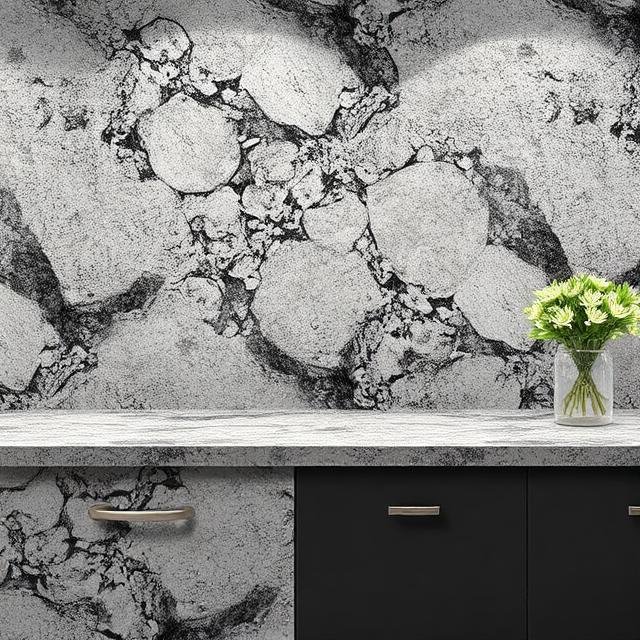
Stone grading is an industry classification system based on aesthetic consistency and structural integrity and surface perfection. Hence, understanding the distinctions is very crucial for aligning the project specification with performance and budget allocations.
1. What Factors Determine Stone Quality?
The manufactured porcelain or tiles and natural stone are quarried naturally. As a result, two blocks cannot be identical. Geologists and stone industry experts evaluate the slabs based on various factors and structural parameters.
- Color Uniformity & Background Clarity: Premium stone exhibits a consistent background without any undesirable dark blotches or any color variations caused by irregular mineral deposits.
- Veining & Pattern Flow: High-quality stone has well-defined and uniform vein patterns that allow for seamless book matching in premium applications.
- Structural Integrity & Fissures: Natural veins are expected, but hairline cracks and fragile voids diminish the physical integrity of a slab.
- Porosity & Surface Inclusions: Excessive micro-pores and soft mineral inclusions that sap lines lower the commercial value of the stone.
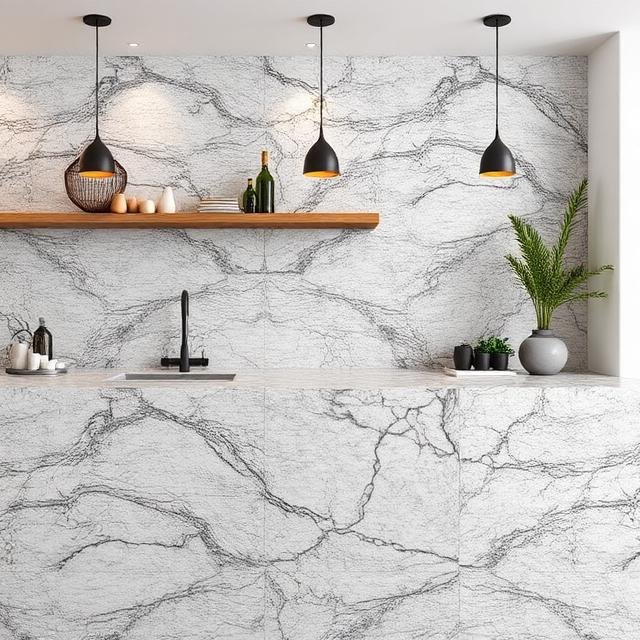
2. Premium Quality Stone: The Pinnacle of Perfection
Premium-quality stone represents the top-notch selection and extracts from the quarry. It is later processed with extreme precision and selected for projects demanding impeccable visual appeal and durability.
Key Characteristics:
- Flawless Background: Pristine and uniform background color, like milky white marble.
- Minimal Defects: Near-total absence of dark spots, sap lines, and yellowing or structural fractures.
- Optimal Density & Finish: Takes a mirror-like polish or honed finish effortlessly due to minimal surface porosity.
- Book-Matching Capability: Slabs are cut sequentially, making them prefect for featured wall designs, waterfall kitchen islands, and expansive luxury flooring.
Best Used For: Luxury residential interiors, five-star hotel lobbies, feature walls, kitchen countertops, high-profile commercial reception desks, and custom furniture.
3. Commercial Quality Stone: Practical & Economical
Commercial-quality stone is sometimes categorized as standard or secondary grade and is natural stone that exhibits noticeable variations in pattern, background color, or structural consistency. While it possesses the same basic geological hardness as premium stone, its visual flaws lower its market grade.
Key Characteristics:
- Color & Pattern Variation: Noticeable shade variations across slabs, irregular veining patterns, or irregular color.
- Natural Inclusions & Markings: Presence of sap lines, dark spots, or uneven mineral clusters.
- Surface Imperfections: May contain micro-fissures or tiny pits that require epoxy filling and mesh backing during processing.
- Budget-Friendly Cost: Significantly lower cost per square foot, making large-scale installation economically feasible.
Best Used For: Large commercial developments, high-traffic flooring (malls, airports, office corridors), outdoor paving, cladding, back-of-house utility areas, and budget-conscious residential projects.
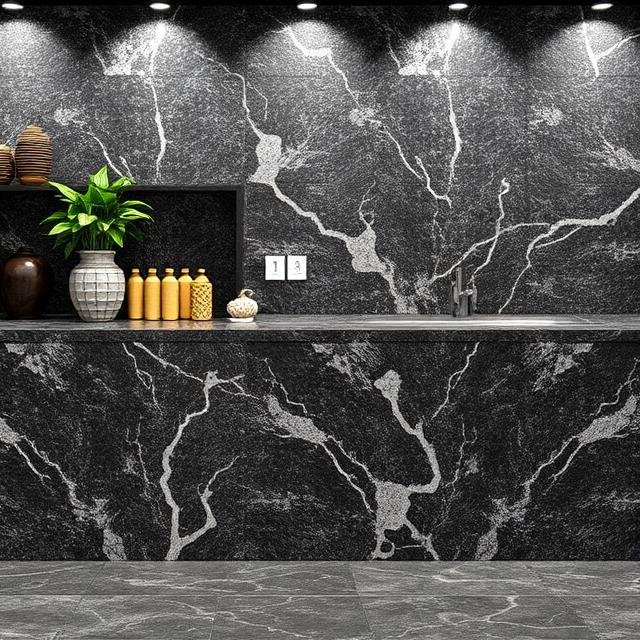
4. Commercial vs. Premium Quality: Direct Comparison
| Evaluation Parameter | Premium Grade | Commercial Grade |
| Visual Consistency | Highly uniform background & crisp veining | Noticeable shade variation & irregular patterns |
| Natural Imperfections | Virtually free from spots, sap lines, or pits | Frequent iron spots, sap lines, and dark inclusions |
| Structural Soundness | High natural structural integrity | May require epoxy filling or fiber mesh backing |
| Book-Matching Ability | Excellent sequence matching for feature walls | Difficult to book-match due to pattern variations |
| Price Point | High / Luxury Tier | Economical / High Value Tier |
5. How to Select the Right Grade for Your Project
Choosing between commercial and premium stone depends entirely on project specifications, design expectations, and exposure conditions:
- High-Visibility Focal Points: Choose Premium Grade for kitchen islands, accent walls, primary bathroom vanities, and luxury flooring where eyes naturally rest on details.
- Expansive Coverage & Outdoor Spaces: Choose Commercial Grade for large patio paving, exterior building cladding, high-traffic commercial hallways, or utility countertops.
- Budget Optimization Strategy: Consider a blended approach invest in premium stone for signature feature areas while using commercial grade stone for secondary zones or outdoor landscaping.
6. Conclusion
Understanding natural stone grading enables architects, interior designers, and project owners to make informed decisions that optimize both aesthetics and budget. Neither grade is inherently “better” in absolute terms Premium quality offers unmatched visual perfection and exclusivity for luxury spaces, whereas Commercial quality delivers authentic natural beauty and structural longevity at a fraction of the cost. By matching the appropriate stone grade to specific application requirements, buyers can achieve stunning architectural results without compromising financial efficiency.
Frequently Asked Questions (FAQs)
Q1: Is Commercial Quality stone physically weaker than Premium Quality stone?
Answer: Not necessarily. Both grades come from the same natural rock formation and share fundamental physical properties. However, commercial stone may contain more natural micro-fissures or mineral inclusions that require reinforcement resin or mesh backing.
Q2: Does resin filling affect the durability of Commercial Grade stone?
Answer: High-quality epoxy resins used in modern stone processing effectively seal surface pits and reinforce micro-fissures. When treated properly, resined commercial stone performs exceptionally well in interior applications.
Q3: Why is there such a massive price gap between grades of the same marble type?
Answer: Price is driven by rarity and visual purity. Slabs with flawless white backgrounds and ideal veining make up a tiny fraction of quarry yield, creating high demand and premium pricing.
Q4: Can Commercial Grade stone be used for kitchen countertops?
Answer: Yes, provided the stone is non-porous or thoroughly sealed, and does not contain excessive iron deposits that could react with moisture or acid. Inspecting individual slabs beforehand is highly recommended.

