
Introduction: The Evolving Civic Landscape
Public places have always served as the heartbeat of urban environments—places where community, cultural programme and commerce intersect. In contemporary urban design, the choice of ground cover is no longer known for its aesthetic; it is a critical engineering and environmental decision.
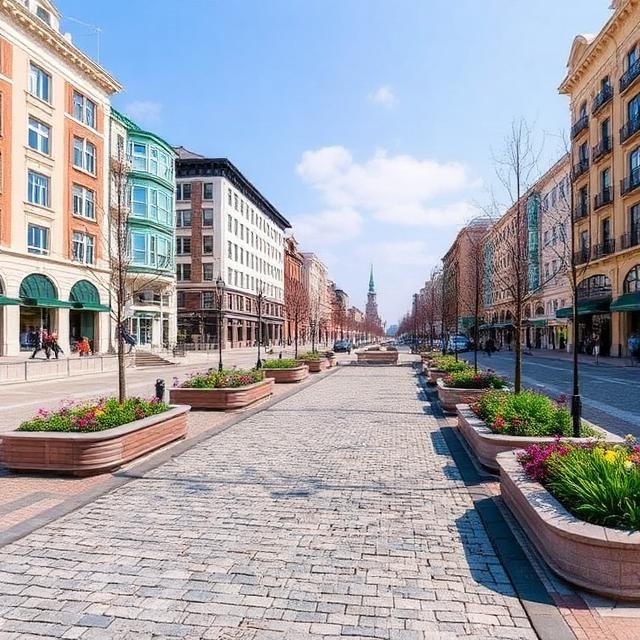
As modern cities face increasing climate stressors, foot high traffic, and changing mobility demands, landscape architects planners are rediscovering natural stone hardscaping. Specifically, granite cobblestones and pavers are emerging as the gold standard for resilient, sustainable, and timeless public plaza design.
Why Granite? The Material Advantage
Granite is an igneous rock formed under extreme heat pressure, imparting structural properties unmatched by synthetic or concrete alternatives:
- Unrivaled Structural Durability: With a high compressive strength (typically exceeding 200 MPa), granite handles extreme vehicular loads, emergency access vehicles, and relentless foot traffic without cracking or spalling.
- Weather & Freeze-Thaw Resistance: Granite features exceptionally low water absorption rates (<0.2%), rendering it immune to frost-heave damage, de-icing salts, and severe winter weathering cycles.
- Color Permanence: Unlike concrete pavers that fade under UV exposure, natural granite retains its color, texture, and visual character indefinitely.
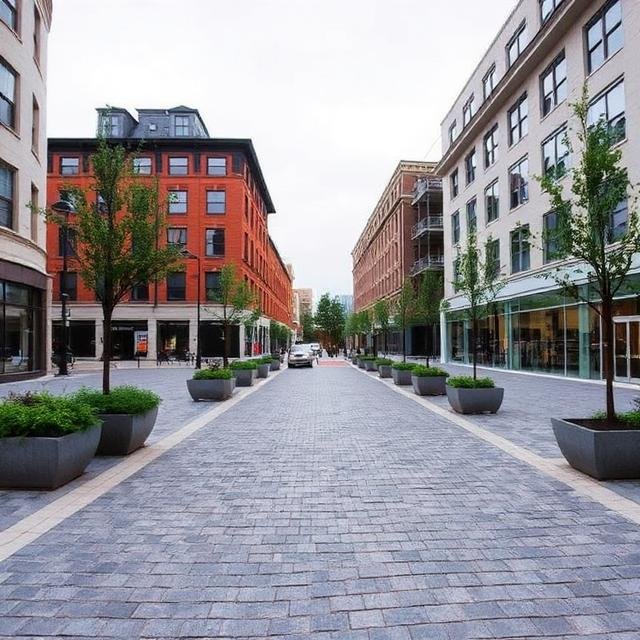
Design & Functional Innovations in Granite Hardscaping
The future of hardscaping goes beyond traditional layouts. Modern manufacturing and installation techniques have unlocked new functional possibilities for public spaces:
A. Permeable Interlocking Systems & Stormwater Management
Urban heat effects and stormwater runoff are major urban challenges. Contemporary plaza designs integrate granite pavers with wider, aggregate-filled joints or permeable bedding systems. This allows rainwater to infiltrate naturally into the aquifer, drastically reducing surface runoff and mitigating urban flooding.
B. Accessibility & Universal Design
Historically, rough cobblestone streets presented barrier hazards for wheelchair users, strollers, and individuals with mobility aids. Today’s landscape architects utilize sawn-cut, thermal-finished granite pavers or guillotine-cut cobblestones with narrow joints. This yields a flat, slip-resistant surface that complies with accessibility standards (such as ADA compliance) while preserving authentic stone aesthetics.
C. Tactile Wayfinding & Acoustic Zoning
Granite’s versatility in finishes ranging from polished and honed to flamed, bush-hammered, and natural split allows designers to incorporate tactile paving markers directly into the hardscape layout. Different textures guide visually impaired pedestrians, denote transit zones, or passively slow down cyclists.
Key Economic Insight: Whole-Life Costing While initial material costs for natural granite are higher than concrete or asphalt, granite hardscaping offers an operational lifespan exceeding 100 years with minimal maintenance. When evaluated over a 50-year life-cycle, granite proves significantly more cost-effective due to zero replacement needs and low maintenance overhead.
Environmental Sustainability & Circular Economy
As cities strive for Net Zero goals, embodied carbon in building materials is heavily scrutinized. Natural granite requires zero chemical processing during manufacturing compared to cement-heavy concrete pavers. Modern quarrying practices prioritize localized sourcing, water-recycling systems, and operational electrification. Furthermore, granite pavers are fully reusable; reclaimed granite cobblestones from century-old plazas are routinely repurposed into contemporary urban projects, embodying circular economy principles.
Modern Visual Trends in Civic Plazas
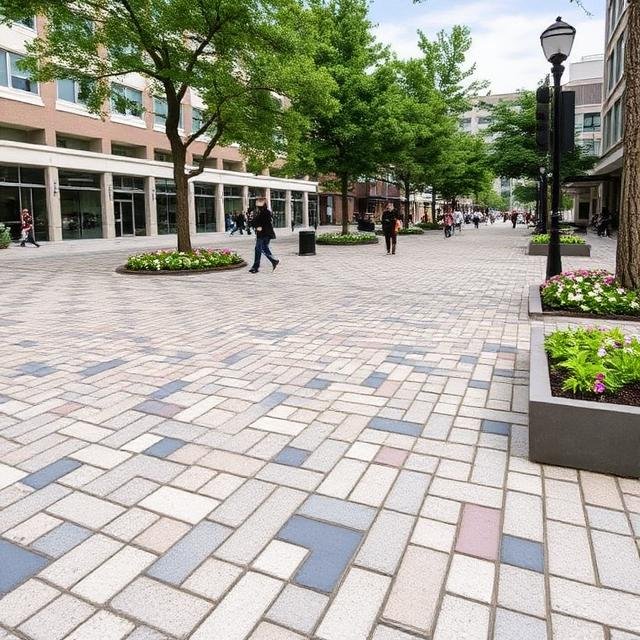
- Dynamic Modular Patterns: Mixing contrasting granite shades (e.g., Charcoal Grey, Imperial Pink, and Basalt Black) in linear, herringbone, or radial patterns to define outdoor seating areas, pop-up markets, and event zones.
- Large-Format Paver Combinations: Blending oversized granite slabs with traditional cubic cobblestone accents to balance modern minimalism with historical texture.
- Integrated Smart Infrastructure: Seamlessly embedding LED strip lighting, retractable power bollards, and smart city sensors into precut granite channels.
Conclusion
The future of hardscaping in public plazas represents a harmonious synthesis of historical durability and forward-thinking urban engineering. Granite cobblestones and pavers provide civic spaces with an enduring foundation that withstands climate pressures, enhances urban ecology, guarantees universal accessibility, and elevates human experience. As cities continue to prioritize human-centric, resilient infrastructure, natural granite remains an irreplaceable investment in the civic landscape.
Frequently Asked Questions (FAQs)
Q1: Are granite cobblestones accessible for wheelchairs and strollers?
A: Yes. Modern granite hardscaping utilizes sawn-top, flamed, or thermal finishes with tight, flush mortar or resin joints. This delivers a smooth, non-slip, wheel-friendly surface while retaining the natural character of granite stone.
Q2: How do granite pavers compare to concrete pavers in public plazas?
A: While concrete pavers are cheaper upfront, they degrade faster under heavy traffic, fade from UV exposure, and require replacement within 15–20 years. Granite lasts 100+ years, maintains its color, resists de-icing salts, and offers significantly lower life-cycle costs.
Q3: Can granite hardscaping assist with urban stormwater management?
A: Absolutely. By utilizing permeable granite paver installations with open-graded aggregate joints, rainwater filters directly into the subgrade, reducing municipal stormwater runoff and replenishing local groundwater.
Q4: How do granite cobblestones hold up in extreme freeze-thaw climates?
A: Granite has a minimal water absorption rate (<0.2%), meaning trapped moisture cannot freeze, expand, and crack the stone. It is highly resistant to spalling, frost action, and chemical de-icers.

