
Cut size Indian marble tiles saves more money upfront, typically 50% to 60% less on total installed costs compared to full Indian marble slabs. The cut-size tiles cost Rs 60 – Rs 200 per sq ft for material and arrive pre-polished; full slabs cost Rs 150 – Rs 450 per sq ft and require higher wastage allowances; and expensive on-site diamond polishing costs around Rs 80 – Rs 200 per sq ft. However, the full marble slab delivers better long durability with a seamless look for decades.
Understanding the Core Difference
Before making your budgets, it is necessary to know how both formats come from the exact same natural stone block:
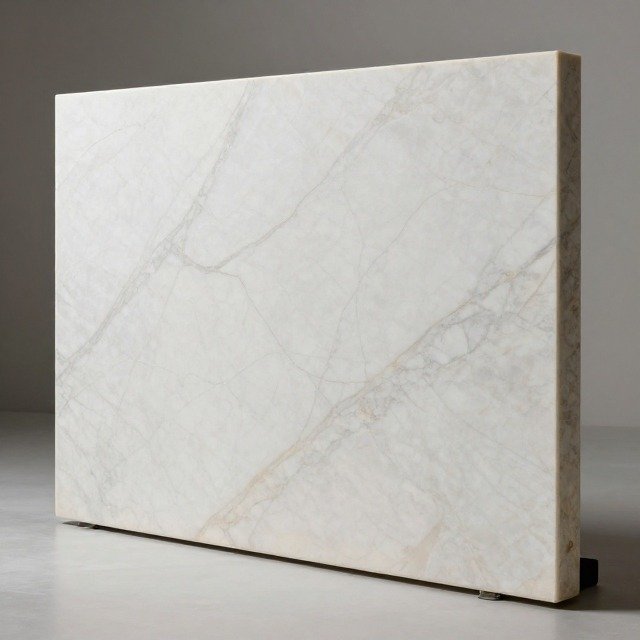
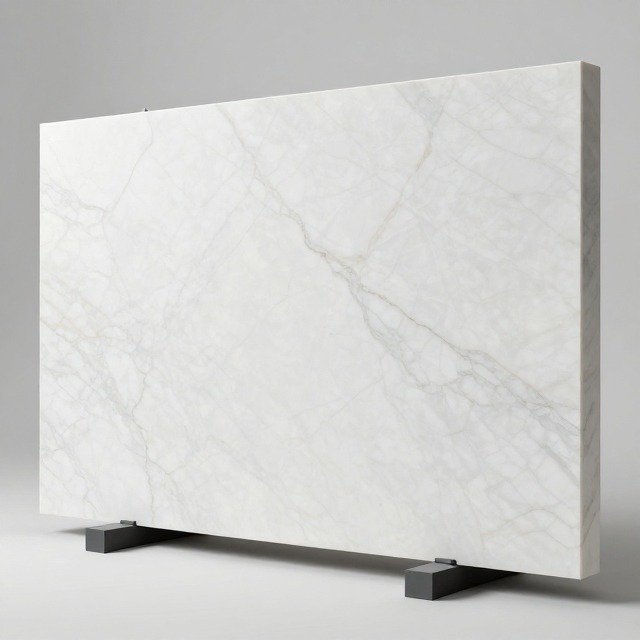
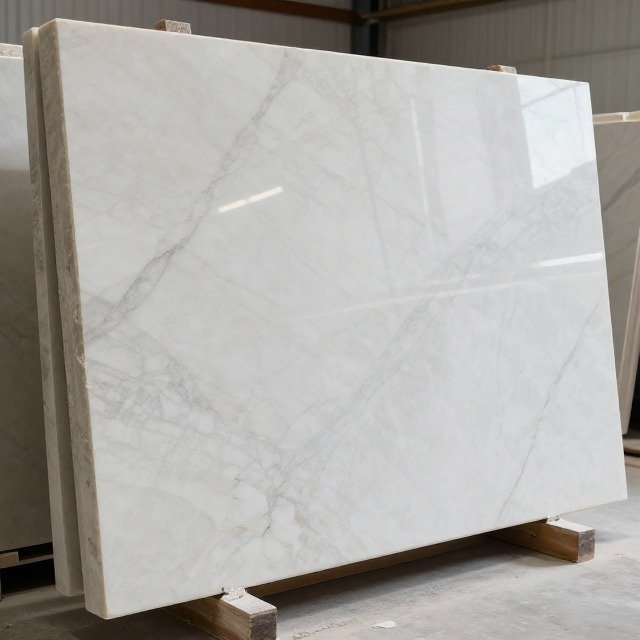
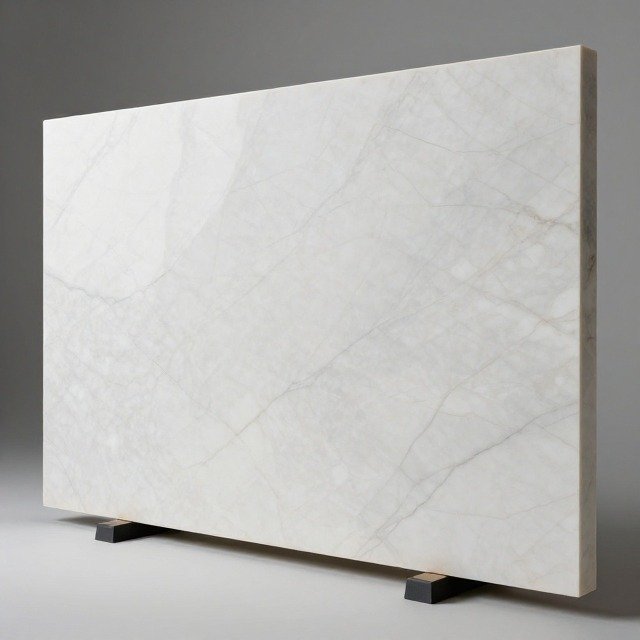
- Indian Marble Slabs: The large-sized, continuous sheets (typically 16 mm to 20 mm thick) cut via gangsaw machines. They showcase uninterrupted natural vein patterns and allow book-matched patterns.
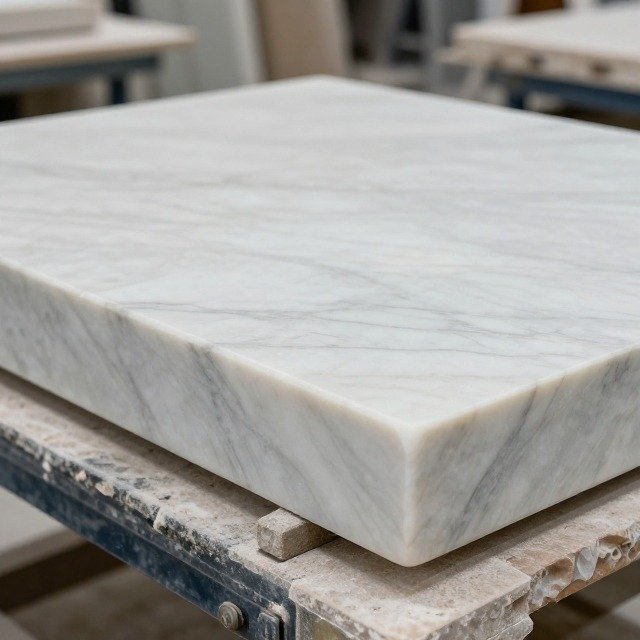
- Cut-Size Marble Tiles: Smaller, standardized modular pieces (such as 2×2 ft or 4×2 ft, typically 10 mm to 12 mm thick) cut from smaller stone blocks or slab off-cuts and factory-polished before delivery.
| Typical Thickness | Typical Thickness: 16 mm to 20 mm | Typical Thickness: 10 mm to 12 mm |
| Wastage Allowance | Wastage Allowance: 15% to 25% | Wastage Allowance: 8% to 12% |
| Polishing Process | Polishing Process: Multi-stage on-site diamond grinding | Polishing Process: Pre-polished at the factory |
| Visual Appearance | Visual Appearance: Seamless with minimal joints and book-matching | Visual Appearance: Modular grid with visible grout lines |
| Best Application | Best Application: Living rooms, foyers, feature walls | Best Application: Bedrooms, renovations, compact rooms |
4 Hidden Factors That Decide Your Final Bill
1. Raw Material & Wastage Costs
Full slabs carry a higher base price because quarries yield fewer defect-free, large-format blocks. When masons cut slabs around pillars, corners, or vein patterns, wastage hits 15% to 25%. Cut-size tiles follow a predictable grid layout, keeping wastage down to 8% to 12%.
2. Installation & Civil Labor
- Slabs: Require heavy manual lifting, crane or pulley rigging for upper floors, and a thick 25–40 mm wet mortar bed. Master stone masons charge ₹120–₹250 per sq. ft. for slab laying.
- Cut-Size Tiles: Lightweight enough for two workers to carry easily. They install quickly using standard polymer thin-set adhesive at ₹45–₹90 per sq. ft.
Rarity Marble
3. On-Site Grinding & Polishing
This is where budgets diverge sharply. Full marble slabs are laid raw or semi-polished and then ground flat on-site using diamond pads and tin oxide crystallization, adding ₹60 to ₹180 per sq. ft. plus weeks of dust and noise. Cut-size tiles arrive factory-polished, skipping on-site grinding altogether.
4. Future Repairs & Structural Load
Slabs add 45–70 kg per sq. meter of dead load to your building structure. If a heavy object cracks one section of a slab, repairing it seamlessly is tough. With cut-size tiles, a mason can chisel out and replace a single damaged tile in hours.
Conclusion
If your primary goal is saving money and finishing construction fast, cut-size Indian marble tiles are the clear financial winner. You get genuine, cool-underfoot natural stone while cutting labor, wastage, and polishing bills nearly in half.
If you are designing a primary living hall, duplex foyer, or statement wall where uninterrupted veins and mirror-like seamless joints matter most, investing in full Indian marble slabs pays off in visual prestige and property resale value. Many smart homeowners use a hybrid strategy: slabs in the main living area and matching cut-size tiles in bedrooms.
Frequently Asked Questions (FAQs)
1. Which is cheaper overall: Indian marble slabs or cut-size marble tiles?
Cut-size marble tiles are significantly cheaper overall. When you combine lower base material rates, minimal cutting wastage, faster adhesive installation, and zero on-site grinding, cut-size tiles cost roughly 40% to 55% less per square foot than installed slabs.
2. Do cut-size marble tiles look as good as full slabs?
Cut-size tiles feature the exact same natural mineral patterns and cooling feel as slabs, but they show regular grout lines every 2 to 4 feet. Slabs look more continuous because their joints are virtually invisible after on-site diamond polishing.
3. Can cut-size marble tiles be installed over existing flooring?
Yes. Because cut-size marble tiles are thin (10–12 mm) and lightweight, they can be laid directly over sound, level existing tile or concrete floors using high-bond polymer thin-set adhesive. Slabs are too heavy and thick for floor-over-floor renovations.
4. Do both marble slabs and marble tiles need sealing?
Yes. Because natural Indian marble is porous, both slabs and factory-polished tiles need a penetrating hydrophobic stone sealer applied every 12 to 24 months to prevent oil, turmeric, and acid stains.
5. Which Indian marble varieties are best for budget-friendly flooring?
Morwad White, Dungri, Banswara Purple, Katni Beige, and Udaipur Green offer strong durability and classic Indian aesthetics at accessible price points in both slab and cut-size formats.

