
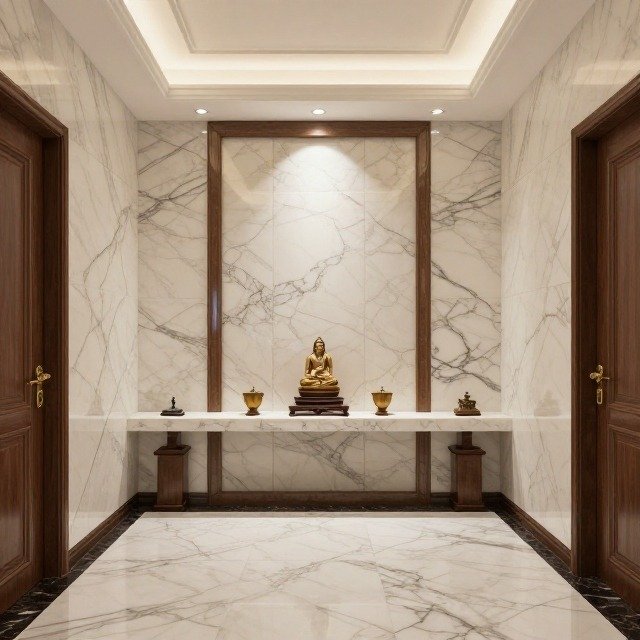
Designing your pooja room involves balancing the culture, tradition, spatial aesthetics, and everyday practicality work. Natural stone remains the best choice for traditional and contemporary Madrid alike, with granite and marble leading the preference.
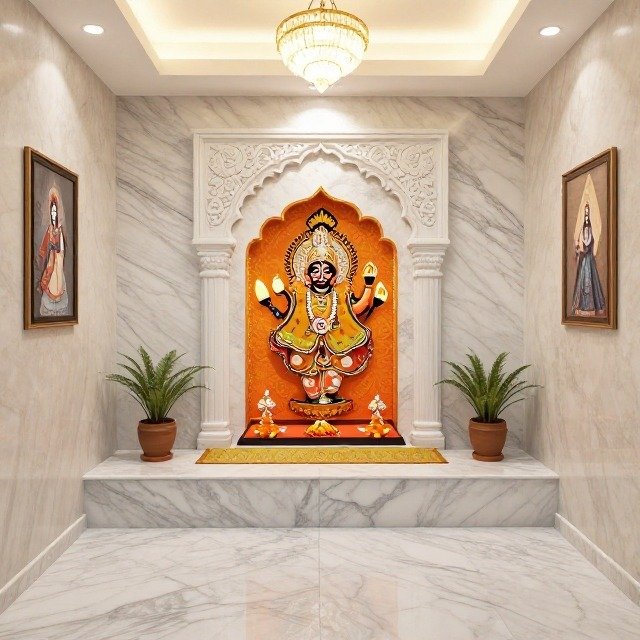
Both natural stones offer distinct features, maintenance requirements, and vastu alignments.
Direct Comparison: Marble vs. Granite
| Feature | Marble Mandir | Granite Mandir |
| Aesthetic Appeal | Soft, luminous, classic; subtle natural veining | Bold, modern, crystalline; speckled or solid grain |
| Porosity | High (absorbs liquids, oils, and pigments easily) | Extremely low (virtually non-porous) |
| Stain Resistance | Prone to staining from kumkum, oil, and turmeric | Highly resistant to oil drips, soot, and organic stains |
| Heat Resistance | Moderate (can discolor under sustained high heat) | Superior (unaffected by burning diyas or camphor) |
| Maintenance | Needs routine sealing and pH-neutral cleaners | Simple wipe-down with warm water and mild soap |
| Vastu Alignment | Strongly recommended (White/Makrana represents Sattva). | Acceptable in lighter shades; black is conditionally used. |
| Relative Cost | Moderate to premium (Makrana/Statuario runs high) | Budget-friendly to moderate |
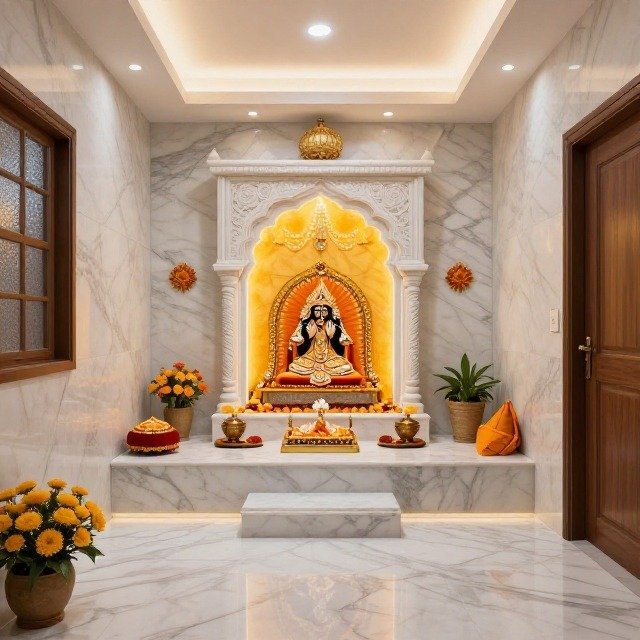
Marble Mandirs: Serenity and Traditional Sanctity
Marble, especially Makrana, Carrara, and Ambaji stones, has represented the Indian temple architecture for centuries.
- Spiritual Atmosphere: Marble reflects the warm lighting and positive ambience and creates a bright calm sanctuary that feels pure.
- Carvability: Because marble is softer than granite, artisans can carve delicate jali screens, floral motifs, fluted pillars, and ornate temple domes (shikharas).
- Maintenance Considerations: Marble consists primarily of calcium carbonate, making it vulnerable to acids and pigments. If it is unsealed marble, it quickly absorbs spilled oil, ghee, and haldi stains. Sustained heat from brass lamps can cause yellowing over time if placed directly on the stone.
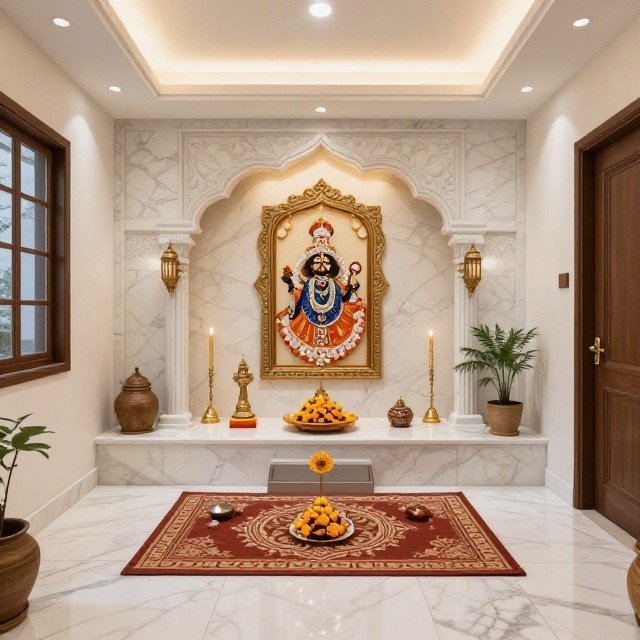
Granite Mandirs: Modern Durability and Resilience
Granite is an igneous rock formed under intense heat and pressure, yielding a dense, scratch-proof surface well-suited to active, daily ritual use.
- Practical Longevity: Burning camphor, direct flame exposure, and spilled panchamrit will not etch or scorch high-grade polished granite.
- Modern Aesthetic: Granite brings grounding, architectural contrast into modern open-plan homes. Finishes range from mirror-polished jet black and steel grey to textured flamed or leathered finishes.
- Maintenance Simplicity: Granite requires virtually zero special care. A microfiber cloth and soapy water can clean off heavy oil residues and dust in minutes.
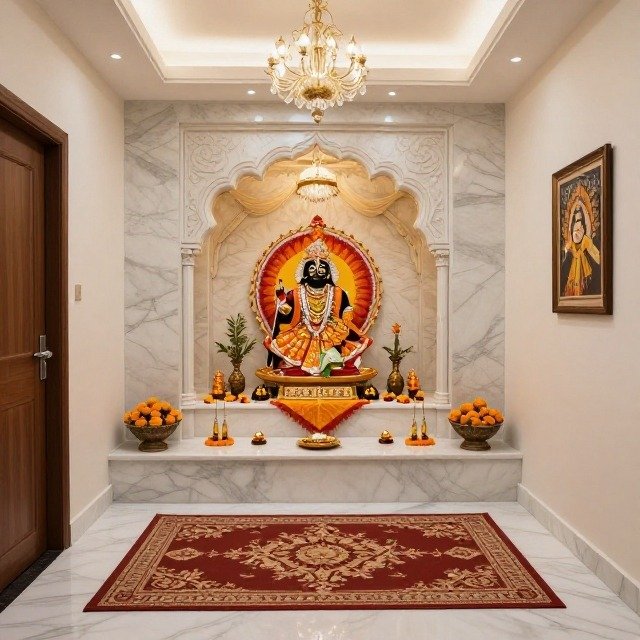
Vastu Shastra Guidelines for Stone Selection
- White Marble: Aligns with peace, tranquility, and clarity. It is the premier choice for Northeast (Ishanya) pooja rooms.
- Granite Usage: Always opt for lighter granite tones such as Kashmir White, Imperial Gold, or beige for primary mandir walls and platforms.
- Black Granite Cautions: While deep black granite creates striking contrast behind brass idols, Vastu practitioners often recommend using it selectively (e.g., as a base countertop or decorative frame) rather than cladding the entire shrine in dark stone, ensuring the space retains an uplifting, luminous vibration.
The Hybrid Approach
Homeowners often combine both materials to get the best of both worlds:
- Granite Countertop: A polished, light-toned granite slab forms the functional altar base to handle brass lamps, agarbatti ashes, and wet offerings.
- Marble Backdrops & Pillars: Intricately carved marble panels or back-lit onyx/marble jalis rise above the counter to preserve temple aesthetics.
Frequently Asked Questions
1. Which stone is better for daily pooja with oil lamps?
Granite is far more practical for heavy daily rituals involving oils, ghee, and fire. It does not stain from spilled oil or char from direct heat. If using marble, place brass or copper plates under every lamp to prevent deep oil discoloration.
2. How do you remove yellowing and oil stains from a marble mandir?
Apply a poultice paste made of baking soda and water over the stain, cover it with plastic wrap punctured with tiny holes, and leave it for 24 hours. The poultice draws the oil out of the stone pores. Seal the marble surface annually with a penetrating stone sealer.
3. Does Vastu allow black granite in the pooja room?
Traditional Vastu Shastra favors light, pure, and reflective colors (white, cream, and light yellow) in the prayer room to cultivate positive energy. Black granite is acceptable as a durable countertop or accent when balanced with warm lighting and light-colored surrounding walls.

