
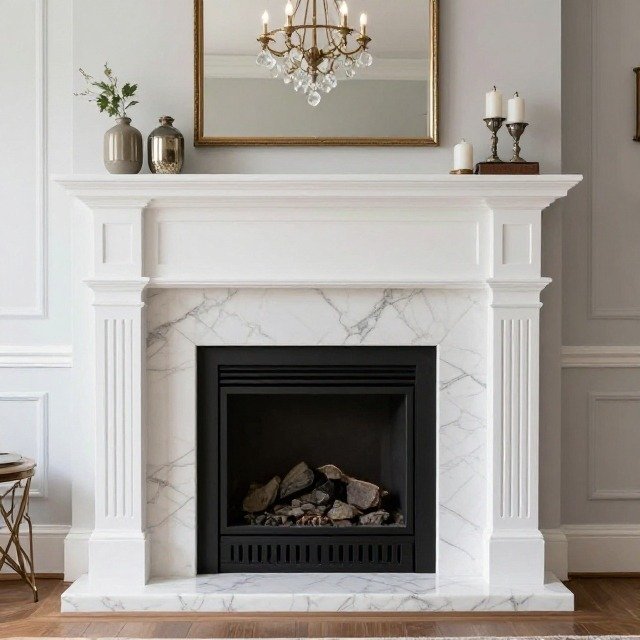
A marble fireplace is surrounded with tiny marble pieces, making it the most adorable focal point in the interior architectural design. Whether framing a crackling wood fire is the historic brownstone or a sleek linear gas unit in a contemporary open concept living area, it elevates the room with timeless elegance and natural veins with an undeniable sense of luxury.
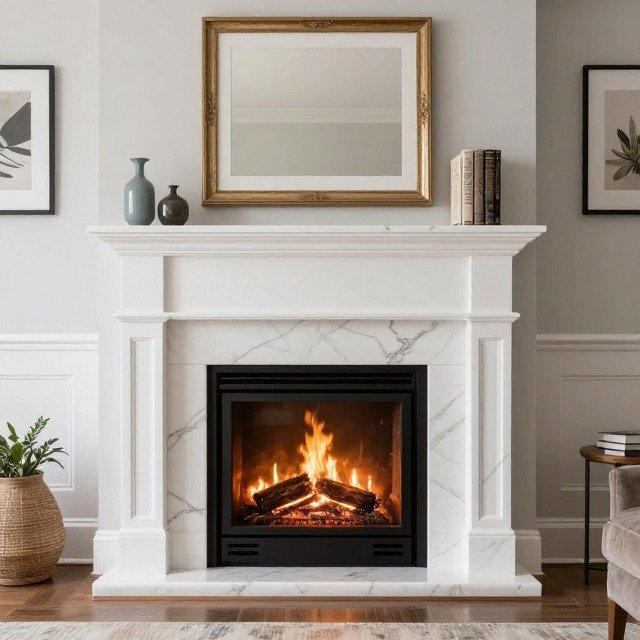
However, incorporating the marble stone around the heat sources demands a good balance of design and technical precision. Because the marble is a porous and metamorphic rock sensitive to extreme heat differentials and acidic liquids. By installing and maintaining it, it requires clearances and structural guidelines.
In this guide, we will understand the core safety standards, architectural clearances, and design strategies that are necessary to create a striking and code-compliant marble fireplace.
Part 1: Safety Requirements & Technical Standards
1. Combustibility and Material Classification
- Non-Combustible Classification: Under international and local residential building standards such as NFPA 211 and the International Residential Code [IRC] Section R1001, the natural marble is classified as a non-combustible material. It will not ignite, burn, and release any kind of toxic fumes when exposed to fire.
- Thermal Shock & Fracturing Risks: Although marble will not burn, it is susceptible to thermal shock. Uneven, intense thermal expansion can cause natural fissure lines to crack. Because of this:
- Marble is best suited as a facing material, mantel, or outer hearth extension, rather than inside the combustion chamber (firebox).
- Direct contact with open flames or continuous temperatures exceeding 150°C–200°C (300°F–400°F) must be avoided. The interior firebox should always be lined with certified refractory firebricks or engineered heat panels.
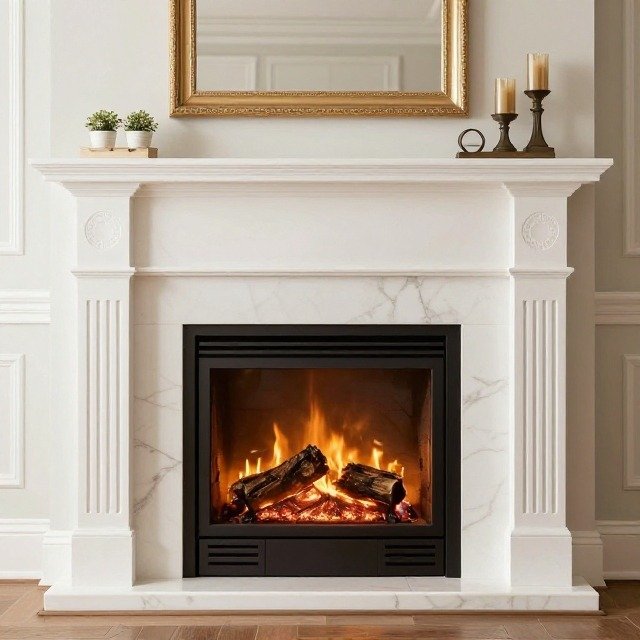
2. Clearance and Hearth Dimensions (IRC & NFPA Standards)
When designing your surround, always refer to local building codes and the fireplace manufacturer’s installation manual. Standard prescriptive IRC requirements generally dictate:
| Element | Minimum Requirement | Safety Function |
| Front Hearth Extension | ≥ 16 inches (for firebox openings < 6 sq. ft.) ≥ 20 inches (for firebox openings ≥ 6 sq. ft.) | Catches falling embers, preventing floor fires. |
| Side Hearth Extension | ≥ 8 inches (opening < 6 sq. ft.) ≥ 12 inches (opening ≥ 6 sq. ft.) | Prevents lateral sparks from contacting flooring. |
| Mantel & Trim Clearances | Minimum 6 inches from opening to combustible trim; +1 inch clearance for every 1/8 inch projection beyond standard depth. | Shields wood framing, drywall, and moldings from radiant heat. |
3. Substrate, Fastening, and Weight Bearing
- Structural Substrates: Never adhere heavy marble slabs over standard paper-faced gypsum drywall. Always install a minimum 1/2-inch thick cementitious backer board (CBU) for high-heat environments.
- Mechanical Anchoring: For solid marble slabs or heavy carved corbels and headers, adhesive alone is insufficient. Use mechanical stainless steel or brass wire tied into structural studs to eliminate the risk of delamination over time.
- Polymer-Modified Mortars: Use heat-resistant, high-bond thin-set mortar. Organic mastics should be avoided, as heat causes them to soften, off-gas, and fail.
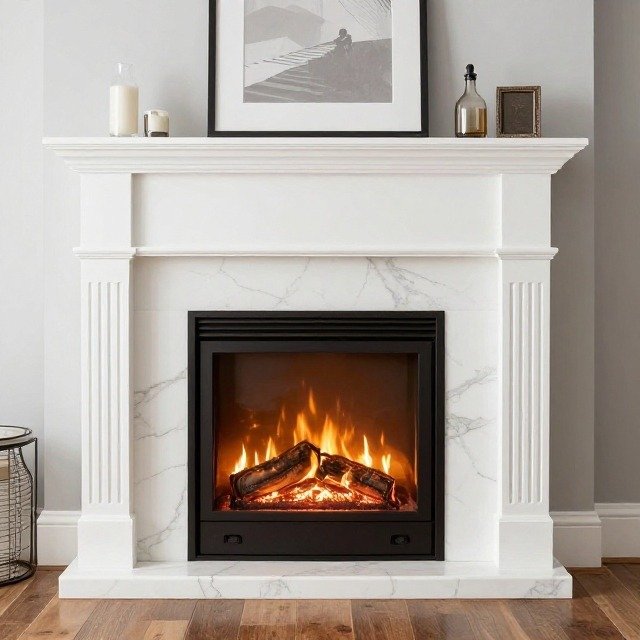
4. Ventilation and Deflection
- Gas & Electric Units: Modern direct-vent gas fireplaces often direct heat upward through built-in convection vents. Ensure the marble design leaves intake and exhaust vents unblocked.
- Heat Deflector Shields: If you are planning to install a flat-screen television or artwork above a marble mantel, install a metal hood or non-combustible mantel shelf to deflect rising convection heat.
Part 2: Styling Tips & Design Aesthetics
1. Curating the Right Marble Variety
The marble you select defines the entire palette and mood of the space:
- Classic & Architectural: Carrara, Calacatta Gold, or Statuario provide crisp white backgrounds with soft grey or dramatic gold-veined accents. They suit Georgian, Victorian, and transitional aesthetics effortlessly.
- Moody & Saturated: Nero Marquina (deep black with contrasting white lightning veins) or Verde Alpi (forest green) anchor modern dramatic living rooms, library nooks, and moody lounge spaces.
- Warm & Grounded: Crema Marfil, Breccia, or Travertine-blend marbles soften minimalist Scandinavian or Mediterranean aesthetics with sandy, beige, and terracotta warmth.
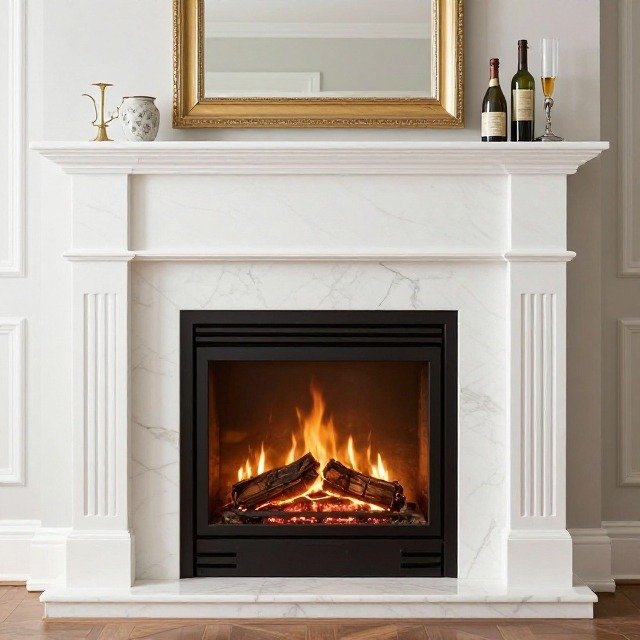
2. Finish Selection: Honed vs. Polished
- Honed Finish: Offers a matte, velvety surface that diffuses light softly and hides fine scratches, light etching far better than high-gloss options, making it the preferred choice for casual or transitional living rooms.
- Polished Finish: Reflects firelight and natural light dynamically, producing a formal, high-glamour focal point. However, direct acidic hearth cleaners will dull the sheen more noticeably, requiring prompt upkeep.
3. Slab vs. Tiled Installations
- Bookmatched Full Slabs: Seamless vertical slab cladding creates an unbroken, dramatic waterfall effect. When two mirror-image slabs meet down the centerline of the chimney breast, it transforms the fireplace into a gallery-worthy art installation.
- Fluted or Reeded Panels: Carved, dimensional marble profiles add tactile shadow lines and mid-century architectural depth.
- Herringbone / Subway Marble Tiles: Smaller formats provide flexibility around curved chimney breasts while offering a more relaxed, historic farmhouse or cottage feel at a lower installation cost.
4. Balancing Hearth Accessories and Mantels
- Contrasting Metal Accents: It can be paired with cool white marble with aged brass, unlacquered copper, or matte black iron fire screens and log holders to add depth.
- Frameless Recessed Surrounds: For minimalist, Scandinavian spaces, run the marble flush with the adjoining wall without an overhanging shelf, creating a seamless, monolith profile.
- Asymmetrical Accents: Balance a classic symmetric surround with an offset floating stone bench or off-center sculpture to introduce modern dynamism.
Part 3: Essential Maintenance and Protection
- Penetrating Sealers: Seal marble prior to fireplace use with a breathable, solvent-based penetrating impregnator. This protects against soot staining without sealing in moisture.
- Soot Cleaning Routine: Clean minor soot immediately using a pH-neutral stone cleaner and a soft microfiber towel. Never use acidic products (vinegar, lemon-based formulas) or abrasive scouring pads.
- Draft Control: Ensure chimney dampers and flues are inspected annually to maintain positive exhaust draw. Inward smoke rollouts cause surface discoloration over time.
Conclusion
A marble fireplace surround represents an investment in architectural character, blending thermal utility with refined luxury. By honoring technical clearances, utilizing proper cementitious substrates and mechanical ties, and safeguarding the stone from thermal shock, you can enjoy a fireplace that is structurally safe, code-compliant, and visually arresting for generations to come.
Frequently Asked Questions (FAQs)
Can direct heat from a fire crack my marble surround?
Yes. While marble will not catch fire, rapid temperature changes and extreme thermal stress can expand natural fissure lines, causing cracking or surface spalling. Always maintain proper standoff distances, use non-combustible backer board, and ensure the interior combustion chamber is lined with refractory firebrick.
Can I install a marble surround around an existing gas or electric fireplace?
Yes. In fact, direct-vent gas fireplaces and electric inserts generate consistent, controlled heat outputs that are often gentler on natural stone than unpredictable wood fires. Check the fireplace unit’s manual for specified clearance distances to non-combustible facing materials.
Honed or polished marble: which is better for a fireplace?
Both function well structurally. However, a honed (matte) finish is often favored for working hearths because it conceals subtle surface etching, microscopic thermal micro-crazing, and dust better than polished stone. A polished finish provides greater drama and light reflection, ideal for showpiece formal living rooms.
How do I clean soot stains off marble without damaging it?
Never use vinegar, bleach, or acidic household cleaners, as they will etch and dull the surface. Use a designated pH-neutral stone soap or make a paste of baking soda and water (a simple poultice) for stubborn stains. Apply the poultice over the soot, cover it with plastic wrap perforated with small holes, leave it for 24 hours to draw out the oil/carbon, and wipe clean with water.

