
When choosing the natural stone for kitchen countertops, bathroom vanities, or any interior design, check the aesthetic and practical weight between granite, soapstone, and marble. The three stones are quarried from the earth crust, and the mineral compositions, vulnerabilities, maintenance demands, and characteristics differ fundamentally.
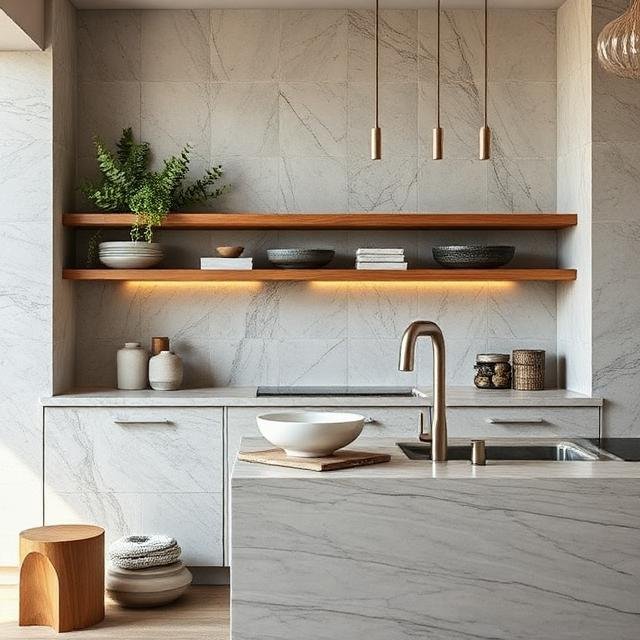
1. Geological Profile & Character
- Granite (Igneous Rock): Formed beneath the Earth’s crust through the slow crystallization of magma, granite is primarily composed of quartz, feldspar, and mica. This interlocking crystalline structure makes it exceptionally dense, rigid, and scratch-resistant, characterized by flecked, granular patterns.
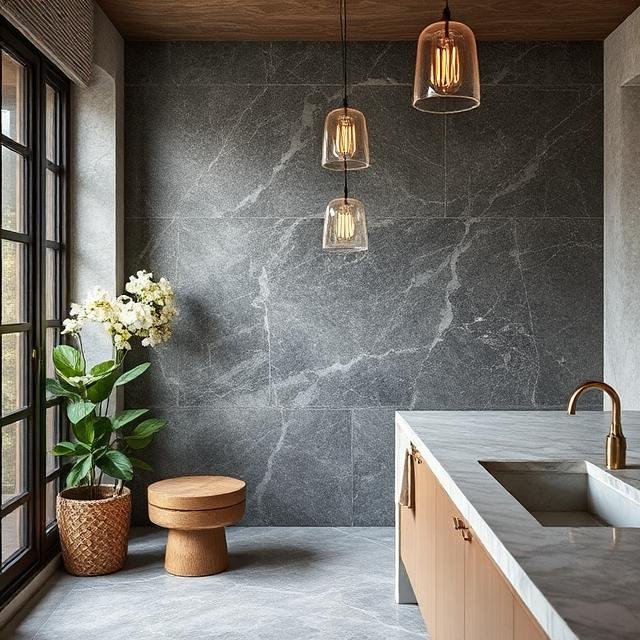
- Soapstone (Metamorphic Rock / Steatite): Composed predominantly of mineral talc combined with chlorite and magnesite, soapstone has a velvety, matte texture. Quarried in shades of light grey, greenish-blue, and deep charcoal with subtle white veining, it is chemically inert and non-porous.
- Marble (Metamorphic Rock / Recrystallized Calcite): It is formed from limestone subjected to geothermal heat and high pressure. Marble consists primarily of calcium carbonate. It is celebrated for its luminous glow, subtle translucency, and sweeping, dramatic veining.
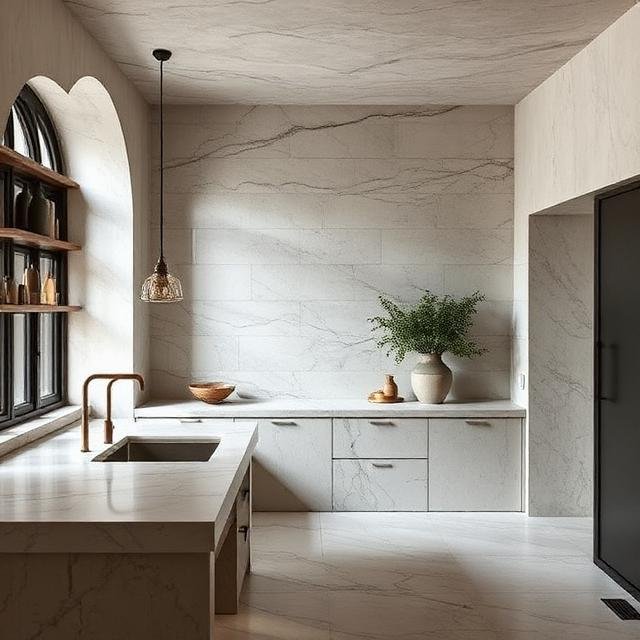
2. Side-by-Side Comparison
| Feature | Granite | Soapstone | Marble |
| Mohs Hardness | 6.0 – 7.0 (Very Hard) | 2.5 – 3.5 (Soft) | 3.0 – 4.0 (Medium-Soft) |
| Porosity | Low–Medium (Requires sealer) | Zero (Naturally impervious) | Medium–High (Absorbent) |
| Acid & Stain Resistance | High (Will not etch; stains if unsealed) | Exceptional (100% acid-proof & stain-proof) | Poor (Vulnerable to acid etching & staining) |
| Heat Tolerance | Up to 480°C / 900°F+ | Extreme (Withstands 1000°F+) | Moderate-High (Thermal shock risk) |
| Maintenance | Annual penetrating chemical sealer | Optional mineral oil/wax for dark patina | Sealing every 6–12 months + strict acid care |
| Aesthetic Tone | Speckled, granular, polished or honed | Matte, velvety, moody charcoal/green | Timeless luxury, luminous, veined |
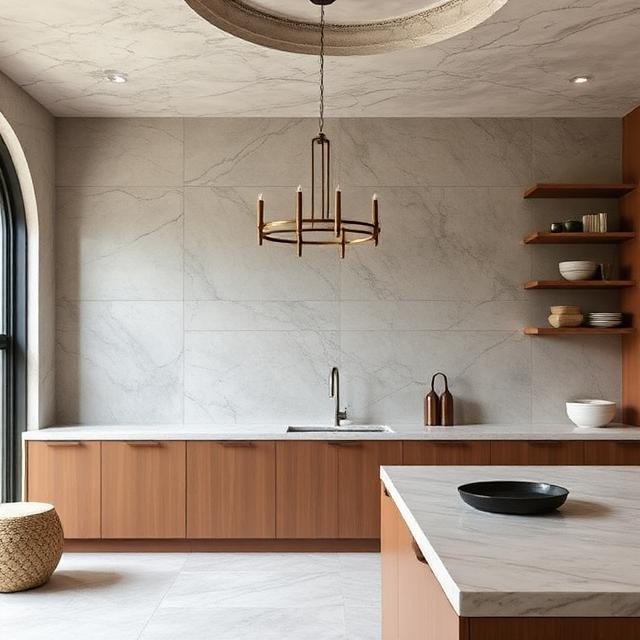
3. Durability & Daily Kitchen Life
- Heat Resistance: Soapstone takes top honors because of its dense thermal storage properties, direct heat from sizzling cast iron will not crack or discolor it. Granite is equally rugged against everyday cooking at high heat. Marble can withstand heat, but rapid thermal shock of hot cookware can singe sealants or cause micro-fissures.
- Scratching & Abrasion: Granite is virtually scratch-proof. Marble scratches from heavy ceramic ware, abrasives, or slipped blades. Soapstone scratches easily due to talc, but shallow scratches can be buffed out at home in under two minutes using 120-grit sandpaper and mineral oil.
- Acids, Oils, & Staining: Acid (citrus, vinegar, wine) reacts instantly with marble’s calcium carbonate, dissolving it to leave dull, cloudy etch marks that sealers cannot prevent. Granite resists acid etching, though light variants can absorb unsealed spills. Soapstone is impervious to all household acids and chemical compounds.
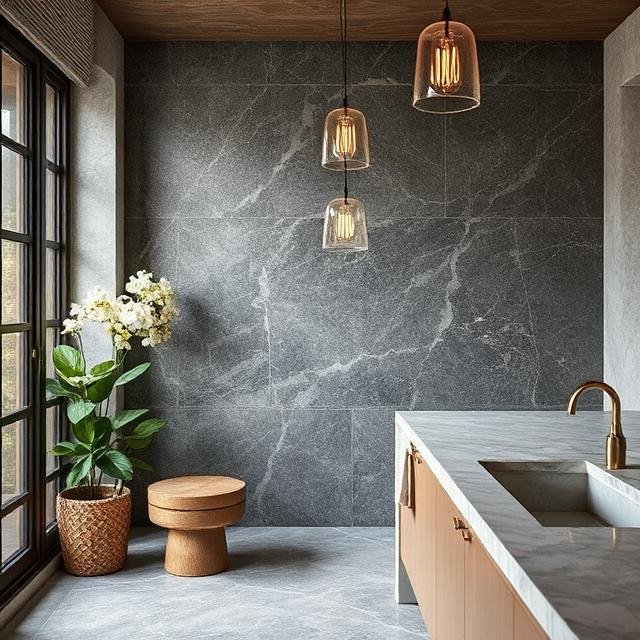
The “Patina” Philosophy: Marble and soapstone are living materials. Marble acquires a soft, historic European patina over decades of authentic kitchen use. Soapstone naturally darkens from surface oils unless treated uniformly with food-safe mineral oil or wax. If you demand factory-fresh perfection ten years into heavy cooking, granite is your match.
4. Decision Matrix & Conclusion
- Choose Granite for a high-durability, low-stress workhorse that resists knife marks and dropped pots with simple periodic sealing.
- Choose Soapstone for an artisanal, warm aesthetic that is completely impervious to heat and acids, paired with easy DIY scratch repair.
- Choose Marble for unmatched architectural luxury and light reflection, provided you embrace organic etching or commit to diligent coaster use.
Frequently Asked Questions
Q: Can hot pans go directly onto granite, soapstone, or marble?
Soapstone and granite tolerate direct high cookware heat without scorch marks. However, trivets are recommended across all natural stones to avoid thermal shock and sealant wear. Marble is especially prone to thermal micro-cracks.
Q: How often does each stone need to be sealed?
Granite requires sealing every 1 to 2 years (test with water drops). Marble requires sealing every 6 to 12 months. Soapstone is non-porous and never requires chemical sealing; mineral oil or wax is applied purely for cosmetic darkening.
Q: Is honed marble easier to maintain than polished marble?
Yes. Honed (matte) marble diffuses light, making acid etching far less visible than on high-gloss polished marble, though it remains vulnerable to absorbing dark oils if unsealed.
Q: Can scratched soapstone really be repaired at home?
Yes. Sand the mark with 120-to-220-grit sandpaper in circular motions, clean the dust, and rub a drop of mineral oil over the area to restore the color.
Q: Which stone offers the highest ROI for home resale?
Granite and marble yield a consistent 60–80% ROI due to universal buyer recognition. Soapstone commands a premium among niche, architectural, and historic-home buyers.

