
High-definition inkjet printing and 3D printing have blurred the difference between stone and engineered surfaces. The porcelain slabs replicate the vein depth and translucency of classic Italian marble so closely that they tell them apart now, requiring looking at cross section and long-term surface wear rather than pattern alone.
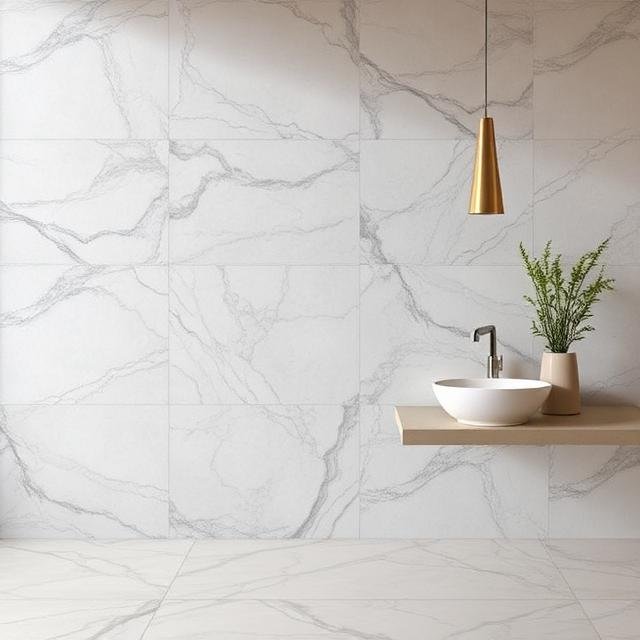
Here is the comparison of how the two materials look and differ in real-world architectural and interior applications.
Key Material Differences at a Glance
| Feature | Natural Marble | Large-Format Porcelain Slab |
| Origin | Metamorphic natural rock (calcite/dolomite) | Engineered clay, feldspar, and silica fired at >1200°C |
| Pattern Depth | Through-body, fully organic, 100% unique | Surface-printed glaze or partial through-body vein |
| Porosity | 0.2% – 0.5% (Requires annual sealing) | < 0.05% (Non-porous, zero sealing required) |
| Acid / Stain Resistance | Prone to chemical etching (lemon, wine, vinegar) | Completely impervious to acids and household chemicals |
| Heat Resistance | Handles moderate heat; thermal shock can crack it | High heat resistant; direct pan contact tolerated |
| Slab Thickness | Typically 18mm – 30mm | 6mm, 12mm, or 20mm |
| Edge Profiling | Unlimited (bullnose, ogee, chiseled, mitered) | Best suited for mitered apron or square edges |
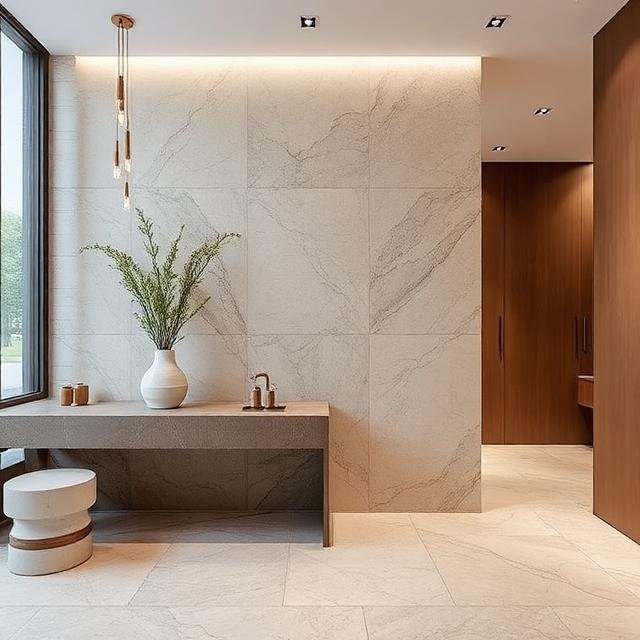
How to Tell the Difference: The Tell-Tale Signs
- The Edge Profile & Cut Test: Check the exposed edge in the natural marble; the vein pattern flows through the slab. In most porcelain slabs, the vein pattern sits on the top glaze, leaving a solid color at raw edges unless an engineered through-body slab is specified.
- Repetition of Veining: Natural marble never repeats the pattern, and while porcelain slabs have high-end bookmatched collections created using high-resolution digital scans. Across the very large floor expanses you may spot repeating vein structures across multiple slabs.
- Tactile Texture and Temperature: Natural marble remains naturally cold to the touch and has micro fissures and subtle variations in surface reflectivity. The porcelain has a uniform vein pattern, is dense in nature, and has a smooth surface across the full surface.
- Chemical Reactivity (Etching): Placing an acidic liquid on unsealed marble causes a chemical reaction with the calcium carbonate, etched spots. Porcelain does not react to any acidic liquids.
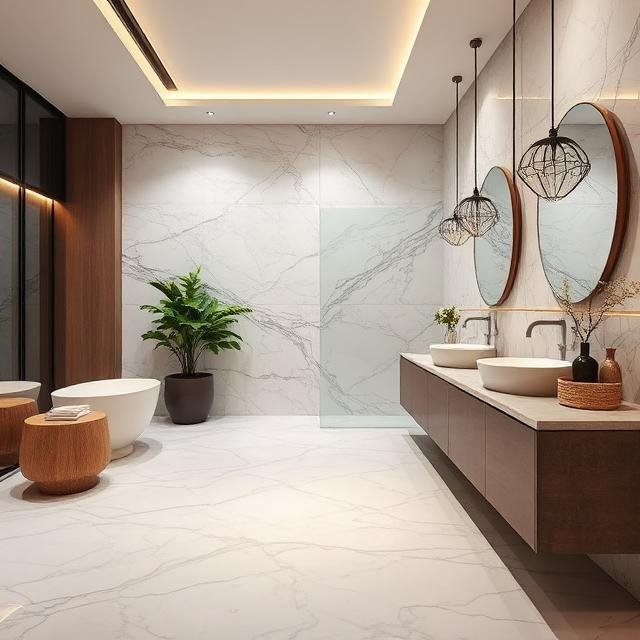
Aesthetic & Practical Verdict
Natural marble has its own standards for luxury, durability, and organic depth. It develops over decades. However, for high-traffic areas like kitchen countertops, living rooms, bathroom vanities exposed to cosmetics, and outdoor patios, it requires sealing regularly. While porcelain slabs offer the visual luxury of varieties like Statuario and Calacatta with near-zero maintenance, superior scratch and UV resistance.
Frequently Asked Questions
1. Are porcelain slabs cheaper than real marble? Material costs for high-end Italian porcelain slabs are comparable to mid-range marble. However, porcelain can reduce lifetime costs because it never requires chemical sealants, restoration polishing, or specialized pH-neutral cleaners.
2. Can porcelain slabs crack easily? While porcelain has high surface hardness (Mohs 7–8 compared to Marble’s 3–4), thin 6mm–12mm slabs require a perfectly level substrate and skilled handling during fabrication. Once installed over a solid substrate, they are exceptionally durable.
3. Which edge profile works best for porcelain countertops? Mitered edges are the industry standard for porcelain slab countertops. A 45-degree mitered apron creates the seamless appearance of a thick, solid block of stone while concealing the printed surface layer.

