
Choosing the right stone for countertop surface is one of the highest impacts on interior design, architectural renovation, and home value optimization. In 2026, the sustainable quarrying and advanced sealing technologies have transformed the engineered stone landscape and natural stone.
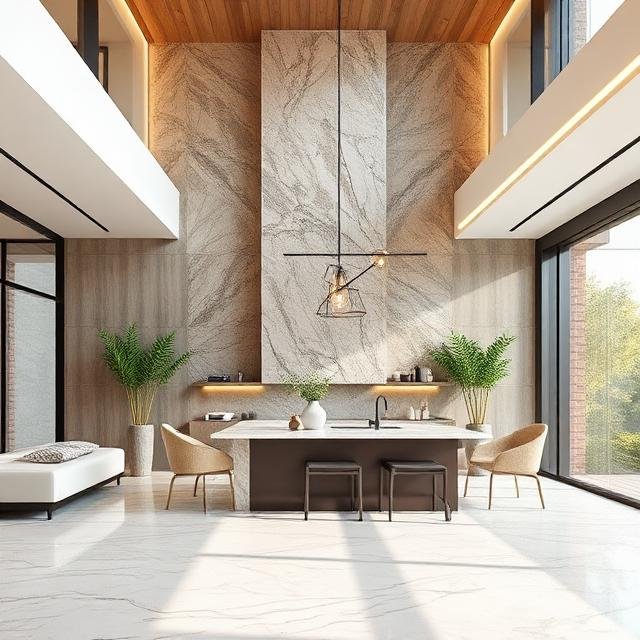
Whether you are designing a high-traffic kitchen or an opulent primary bath, the best choice comes down to the big three: quartz, granite, and marble.
In this comprehensive 2026 guide, you know all three materials across durability, maintenance, heat and stain, aesthetic versatility, 2026 pricing, and environmental impact.
Quick Comparison Matrix: At a Glance
| Feature / Metric | Engineered Quartz | Natural Granite | Natural Marble |
| Material Origin | Engineered (~90% crushed quartz + resin & pigments) | 100% Natural Igneous Rock | 100% Natural Metamorphic Limestone |
| Porosity | Non-porous | Slightly porous (Low) | Highly porous |
| Annual Sealing Needed? | No (Never) | Yes (Every 1–2 years) | Yes (Every 3–6 months) |
| Heat Resistance | Moderate (Up to ~300°F / 150°C; prone to thermal shock) | High (Up to ~1200°F / 650°C) | Moderate to High (Prone to surface scorch/etch) |
| Scratch & Chip Resistance | Very High | Exceptional | Moderate (Prone to scratching & chipping) |
| Acid / Etch Resistance | Immune to citrus/vinegar etching | High resistance | Highly vulnerable to acid etching |
| Outdoor / UV Suitability | Indoor only (Unless specialized outdoor quartz) | Excellent for outdoor installations | Poor to fair (Weathers & discolors outdoors) |
| Aesthetic Consistency | Highly uniform, bookmatching, predictable veining | Unique organic patterns, granular specks | Timeless, deep dramatic veining (e.g., Calacatta, Carrara) |
| Average Installed Cost (2026) | $60 – $160 / sq. ft. | $50 – $140 / sq. ft. | $80 – $250+ / sq. ft. |
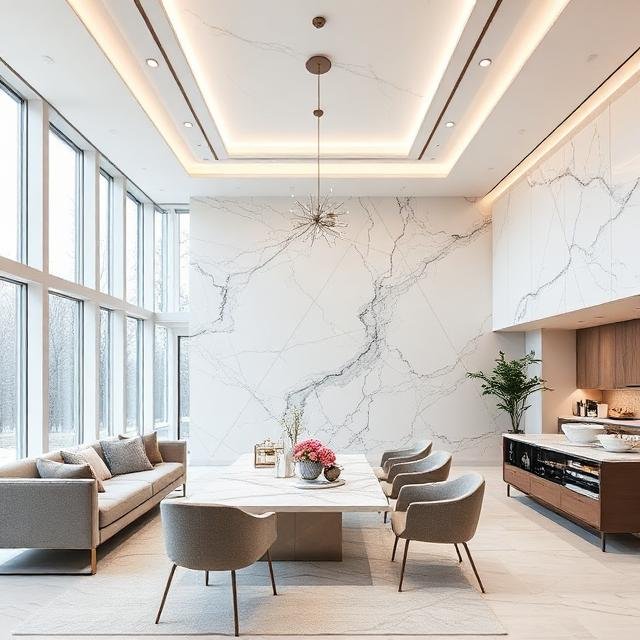
1. Material Composition & Science
Engineered Quartz
The mined stone slabs, quartz surfaces are engineered using approximately 80-90% pulverized natural quartz crystals bonded with 10% high grade polymer resins and mineral pigments.
Natural Granite
Granite is formed deep within the earth’s crust through the slow crystallization of magma over many years. It consists primarily of feldspar, mica and amphiboles, quartz resulting in dense surface, interlocked crystalline structures. Single slab qurried from Brazil, Italy is entirely unique with mineral flecks and iridescent sheens.
Natural Marble
Marble is a metamorphic rock formed when sedimentary limestone is subjected to intense heat and tectonic pressure. This process recrystallizes calcite, producing smooth crystalline textures intertwined with dramatic mineral veins of iron and clay. Famous varieties include Carrara, and Statuario.
2. Durability, Scratch & Stain Performance
- Stain & Acid Vulnerability: Quartz is chemically non porous lemon juice, coffee wipe off effortlessly without chemical penetration. Granite is a good resistant for stains if it is sealed properly. While marble is chemically reactive to acidic liquids and it results in dull spots known as etching.
- Heat Exposure: Granite is virtually indestructible to everyday cooking heat, quartz may cause discolor, blister or suffer thermal shock if it is exposed to high temperature. Always use trivets on quartz and marble is good resistant of heat.
- Scratch Resistance: On the Mohs Hardness Scale, Granite rates 6 to 7, Quartz rates 7, and Marble rates 3 to 5. While cutting directly on quartz or granite will dull kitchen knives, cutting on marble will leave visible scratch grooves.
3. Maintenance & Long-Term Care Protocols
Quartz (Low-Effort Living)
- Daily Care: Warm water, mild dish soap, and a microfiber cloth.
- Sealing: Never required.
- Precautions: Avoid harsh chemical cleaners (bleach, oven cleaner, acetone) and abrasive scrub pads.
Granite (Moderate Maintenance)
- Daily Care: pH-neutral stone cleaner or damp microfiber cloth.
- Sealing: Requires penetrating impregnator sealer application every 12 to 24 months. Perform the “Water Drop Test”: if water droplets absorb within 10 minutes, resealing is required.
Marble (High-Touch Prestige)
- Daily Care: Dedicated marble-safe, pH-neutral cleansers. Spills must be blotted immediately.
- Sealing: Requires quarterly or bi-annual sealing with fluoropolymer sealers.
- Finish Option: Honed (matte) finishes hide scratches and etching far better than high-gloss polished finishes.
4. Aesthetics, Design Trends & Applications (2026 Trends)
- Integrated Sinks and Waterfall Islands: Quartz dominates contemporary waterfall islands and seamless integrated sinks due to structural flexibility and structural miter joints.
- Moody, Leathered Natural Stone: Honed and leathered Black Cosmic or Absolute Black granite provides tactile, low-sheen sophistication in modern minimalist and Japandi kitchens.
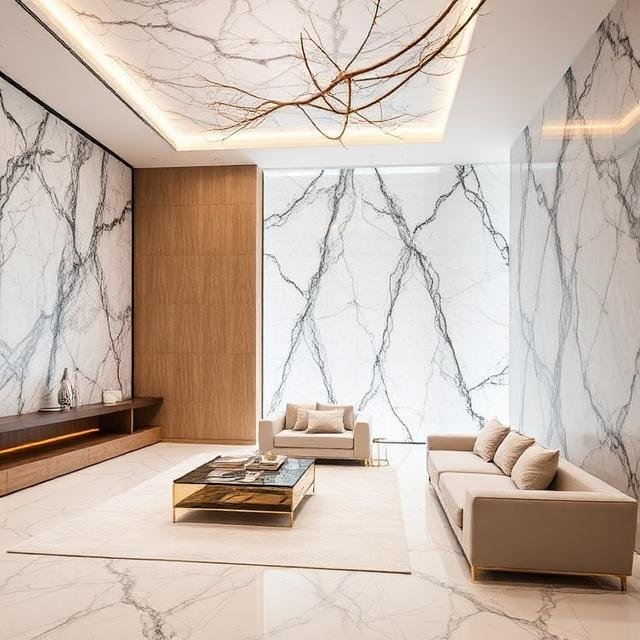
- Dramatic Biophilic Marble Statements: Calacatta Viola, Arabescato, and green Verde Alpi marbles are trending heavily as full-height backsplashes, fluted bar fronts, and luxury bathroom vanity focal points.
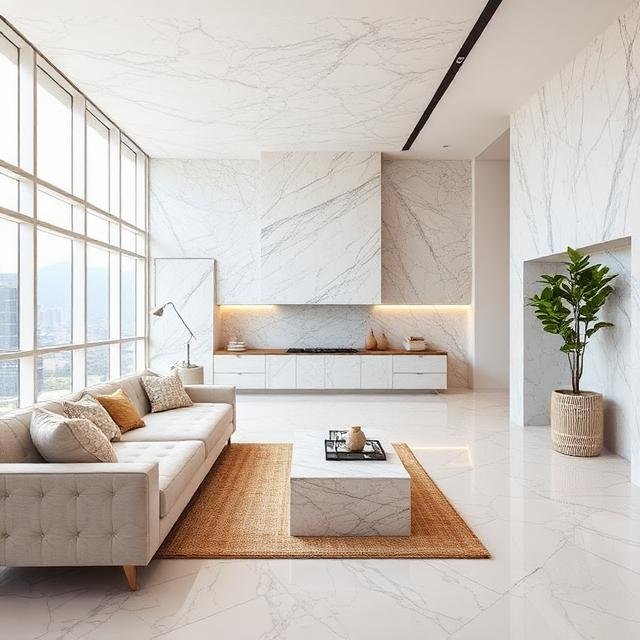
Conclusion: Which Surface Should You Choose in 2026?
- Choose Engineered Quartz if: You want a luxurious, marble-like aesthetic with zero maintenance, complete stain immunity, and consistent slab patterns for modern waterfall islands and busy family kitchens.
- Choose Natural Granite if: You prioritize bulletproof heat resistance, heavy-duty durability, natural organic uniqueness, or need a resilient countertop for outdoor kitchens and barbecue stations.
- Choose Natural Marble if: You desire unmatched prestige, heritage architectural luxury, cooler baking work surfaces, and embrace the organic patina that comes with living materials in low-acid zones or primary bathrooms.
Frequently Asked Questions (FAQs)
Q1: Which countertop increases home value the most in 2026?
A: Quartz and premium Granite deliver the highest and most consistent return on investment (ROI) for kitchen renovations, typically recovering 75% to 85% of their cost upon home resale. Buyers appreciate the virtually zero-maintenance profile of modern quartz.
Q2: Can you put hot pans directly on quartz countertops?
A: No. Quartz surfaces contain polymer resins and binders that can scorch, yellow, or crack under sudden thermal shock at temperatures above 300°F (150°C). Always use silicone mats or trivets.
Q3: How do I stop marble countertops from staining and etching?
A: While penetrating sealers prevent liquid pigments (like wine and oil) from deep absorption, sealers cannot prevent acid etching (dull spots caused by lemon juice or vinegar reacting with calcite). Choosing a honed (matte) finish makes acid etching significantly less visible than a polished finish.
Q4: Is granite going out of style in 2026?
A: Outdated, heavily speckled yellow/brown granites from the 1990s are declining in popularity. However, exotic granites featuring sweeping, river-like movement, quartzite-granite blends, and textured leathered or flamed finishes are seeing massive demand in high-end architecture.
Q5: Is quartz or granite better for outdoor kitchens?
A: Natural Granite is vastly superior for outdoor installations. Engineered quartz resins are sensitive to UV radiation and will yellow or warp when exposed to prolonged sunlight and outdoor weather fluctuations (unless using specialized outdoor-certified lines).

