
Choosing between marble and granite for kitchen or bathroom countertops is one of the most significant design decisions you will make during a remodel. Both are natural stones extracted directly from the quarries, and they offer unmatched luxury, unique aesthetics, and lasting real estate value.
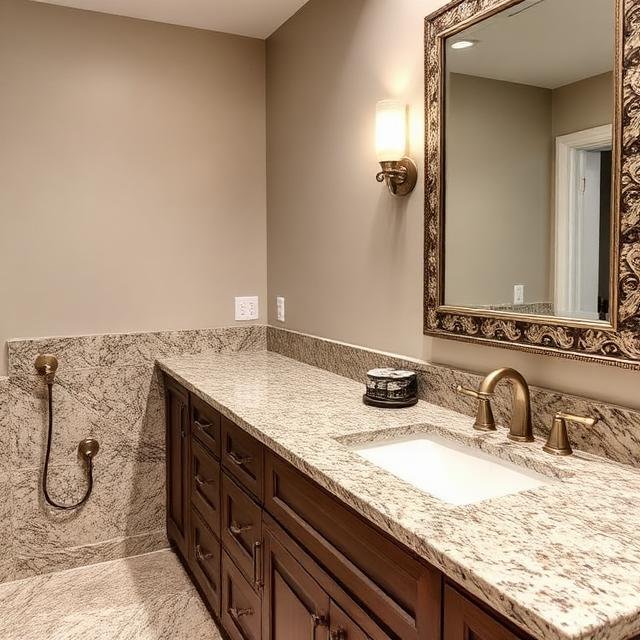
However, the geological origins render them completely distinct in terms of daily maintenance and overall durability. Let us understand how these structural differences impact real-world use and will ensure you pick the surface that matches both your visual preferences and lifestyle.
The Core Difference: Geology & Composition
To understand how these two stones perform in a home, it helps to start beneath the surface.
NATURAL STONE ORIGINS & PROPERTIES
| Property / Feature | Marble Countertops | Granite Countertops |
| Geological Type | Metamorphic (formed from compressed limestone) | Igneous (formed from cooled volcanic magma) |
| Mineral Composition | Primarily Calcite / Calcium Carbonate | Primarily Quartz and Feldspar |
| Mohs Hardness Scale | 3 to 4 (Relatively soft) | 6 to 7 (Very hard) |
| Porosity Level | High (Highly absorbent) | Moderate to Low (Dense structure) |
| Acid Sensitivity | High (Etches easily with citrus, wine, vinegar) | None (Resistant to household acids) |
| Scratch Resistance | Low to Moderate (Scratches with knives & heavy items) | High (Resists daily blade and metal contact) |
| Heat Resistance | High (heat-safe, but thermal shock risk remains) | Very High (Superior heat tolerance) |
| Estimated Cost Range | $60 – $200+ per sq. ft. installed | $40 – $100+ per sq. ft. installed |
- Marble is a metamorphic rock formed when sedimentary limestone experiences extreme pressure and with high temperature. It consists of calcite, and marble is relatively soft and chemically reactive to acidic liquids.
- Granite is an igneous rock created by the slow crystallization of molten magma deep beneath the Earth’s crust. And it is composed of quartz and feldspar; granite is significantly harder and denser and practically impervious to scratch damage under normal household conditions.
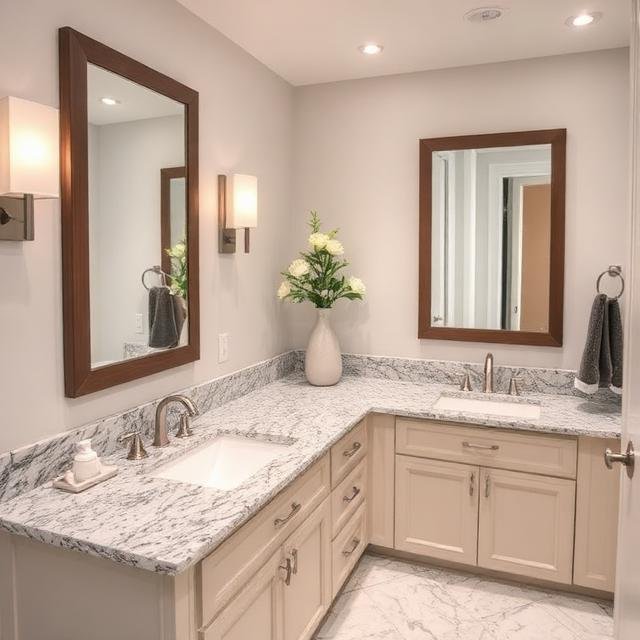
Aesthetic Appeal & Visual Variety
Both stones bring organic beauty into interior spaces, but their visual patterns serve vastly different architectural styles.
| Visual Attribute | Marble Countertops | Granite Countertops |
| Patterns | Soft, fluid veining running through a solid backdrop. | Flecked, granular, or speckled crystal structure. |
| Color Spectrum | Classic whites, subtle greys, warm beiges, and deep green/burgundy tones. | Vast color palette including black, pink, blue, green, speckled gold, and deep charcoal. |
| Finish Options | Honed (matte, hides etching) or Polished (glossy, accentuates veins). | Polished (high shine), Leathered (textured/matte), or Flamed. |
| Best Suited For | Timeless, classic, minimal, or high-end luxury interiors. | Versatile, rustic, modern-industrial, or high-contrast kitchen layouts. |
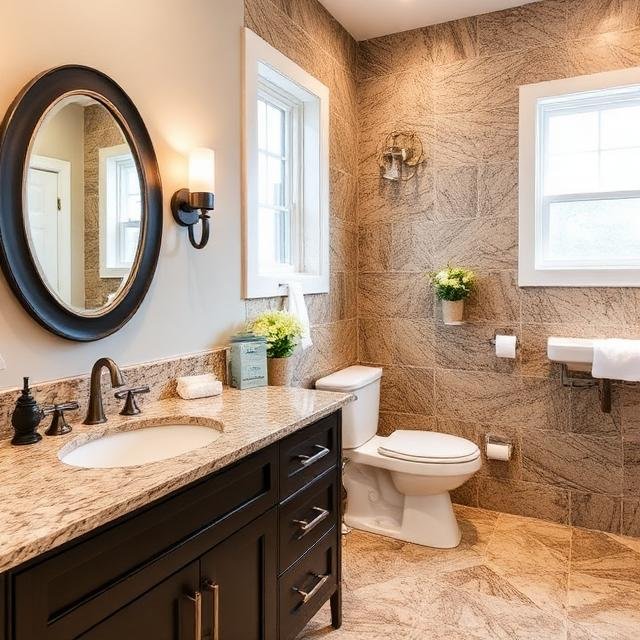
Durability & Everyday Performance
When evaluating daily usage in a busy kitchen, granite generally outpaces marble in raw durability.
Heat Resistance
Both natural stone handle heat far better than engineered quartz. You can briefly place hot cookware near granite or marble without melting the surface. However, the thermal shock remains the same for both.
Scratch & Impact Resistance
- Granite: it ranks between 7 and 8 on the Mohs Hardness Scale. Can cut directly on granite without scratching the surface.
- Marble: it ranks between 3 and 4 on the Mohs Hardness Scale. Knives, heavy metal pots, and sharp utensils will easily scratch the surface.
Staining & Chemical Etching
- Granite: Highly stain resistant after being sealed properly. It does not react to acidic liquids like vinegar or lemon juice.
- Marble: Highly porous and chemically reactive. The acidic liquids dissolve the calcium carbonate in the stone, creating dull white scars called etching. Even sealed marble remains susceptible to etching.
Maintenance & Long-Term Care
Neither natural stone is entirely set it and forget it, but marble requires a much higher level of care.
CARE & SEALING SCHEDULE
Granite Countertops:
- Sealing: Once every 1 to 3 years
- Daily Cleaning: Mild soap + warm water
Marble Countertops:
- Sealing: Every 6 months
- Daily Cleaning: Specialized pH-neutral stone cleaner
Sealing Protocols: Both materials require professional-grade penetrating sealers to block liquid absorption. Granite generally needs resealing every 1 to 3 years; the marble benefits from resealing every 6 months.
Cleaning: Never use vinegar or abrasive scouring pads on marble. Always use pH-neutral stone cleaners with mild soap. Granite can handle a wider array of mild household cleaners; the harsh chemicals should still be avoided.
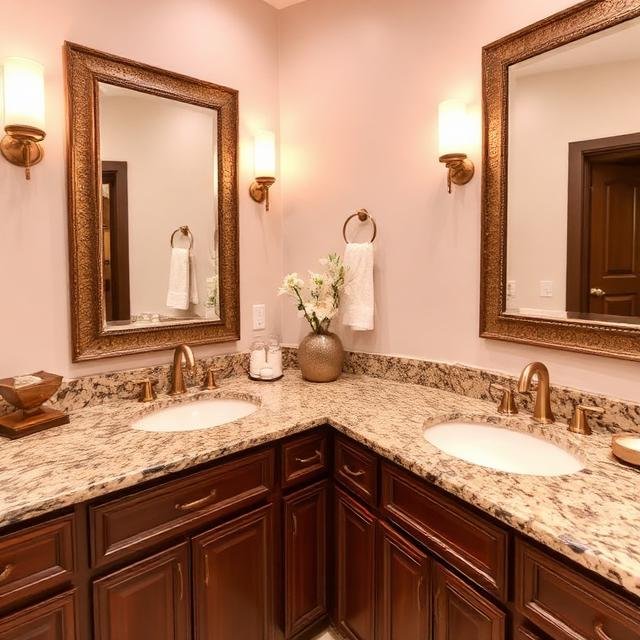
Cost Comparison
Pricing for both materials depends heavily on slab origin, thickness, edge profile, and fabrication complexity.
- Granite Countertops: Typically range from 2000 rs to 5000 rs per square foot, including installation. Standard entry-level granites offer exceptional value for budget-conscious remodels.
- Marble Countertops: Typically range from 5000 rs to 7000 rs per square foot, including installation. The explicit varieties like Calacatta Gold or Statuario easily command higher price points due to limited global supply.
Final Verdict: Which Stone Should You Choose?
- Choose Marble if you crave a luxury visual signature with distinct fluid veining, love baking and embrace the natural “patina” or aging process that comes with living on a natural surface.
- Choose Granite if: You want a low-maintenance, highly durable workhorse for a busy household kitchen that resists scratches, heat, heavy spills, and daily wear without requiring specialized care routines.
Frequently Asked Questions
Can you put hot pans directly on marble and granite?
While both natural stones are inherently heat-resistant, placing hot pans directly on either surface can cause thermal shock, potentially cracking the slab or damaging the sealant. Always use trivets or hot pads.
How do I test if my countertops need resealing?
Perform the Water Drop Test: place a few drops of water on the stone surface and wait 10 to 15 minutes. If the water beads up, your seal is intact. If the water darkens the stone, liquid is penetrating the surface and it is time to reseal.
Can etched marble be repaired?
Minor surface etching on honed marble can often be buffed out using a specialized marble polishing powder. Deep etch marks on polished marble typically require professional restoration and repolishing.

