
A natural stone used in kitchen backsplash turns into a functional splash zone. The full height seamless slabs, hand cut stone brings tactile depth, organic character that synthetic materials cannot match.
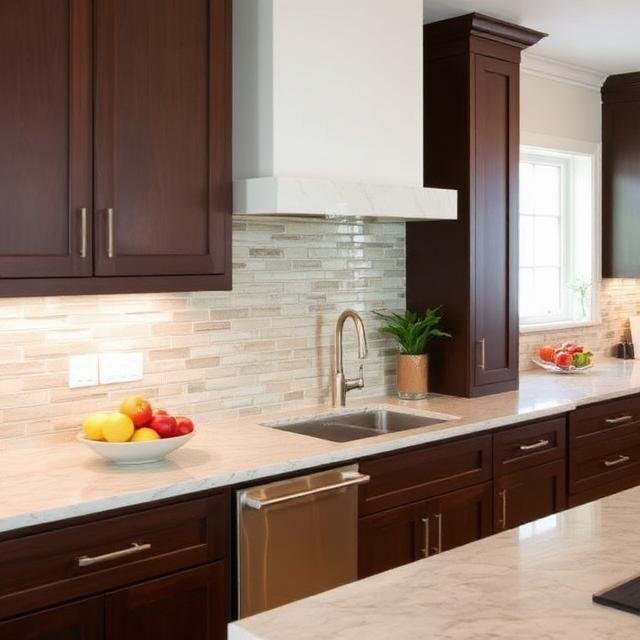
In this article you can understand the key natural stone options, performance considerations, design layouts and maintenance guidelines to help plan your kitchen renovation.
Why Choose a Natural Stone Kitchen Backsplash?
- Unmatched Authenticity: Every natural stone has distinct veins pattern and subtle color variations.
- Thermal Resistance: Natural stone can withstand the cooking heat.
- Long-Term Value: Premium graded natural stone remains a sought after featured that adds value to the home.
- Design Versatility: Natural stone effortlessly to modern minimal and rustic European aesthetics.
Top Natural Stone Options for Kitchen Backsplashes
| Stone Type | Visual Characteristics | Maintenance Need | Ideal Kitchen Style |
| Marble | Fine veining, elegant luster | High (Sealing + Care) | Classic, Modern Luxury |
| Quartzite | Glass-like depth, rich movement | Moderate (Penetrating Seal) | Transitional, High-Traffic |
| Granite | Speckled or sweeping wave | Low to Moderate | Contemporary, Industrial |
| Limestone/Travertine | Warm earthy tones, soft matte | High (Sealing Required) | Organic Modern, Rustic |
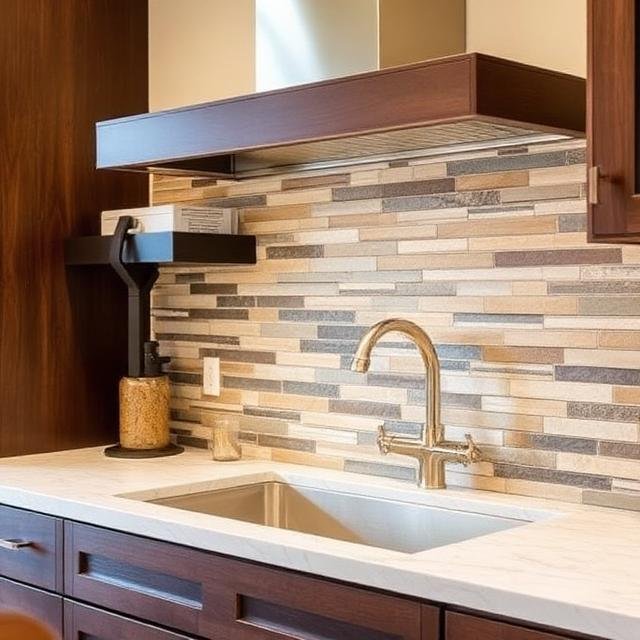
1. Marble: Timeless Elegance
Marble always remain as classic choice for any luxurious kitchen design. Some famous marbles like Calacatta, Carrara and Statuario has distinct grey, violet or gold veins pattern across white and off white backdrops.
- Honed vs. Polished: Honed marble provides a soft matte finish that can hide the surface etching and it is best compared to polished marble finish.
2. Quartzite: High Durability with Dramatic Movement
Quartzite has free flowing visual character of marble and has superior hardness of granite. The Taj Mahal bring a translucent warm undertones that respond beautifully to under-cabinet LED task lighting.
3. Granite: Uncompromising Strength
Granite resists heat, and scratching and it makes it more reliable choice for heavy use cooking zones. The granite slabs create symmetry behind a statement range hood.
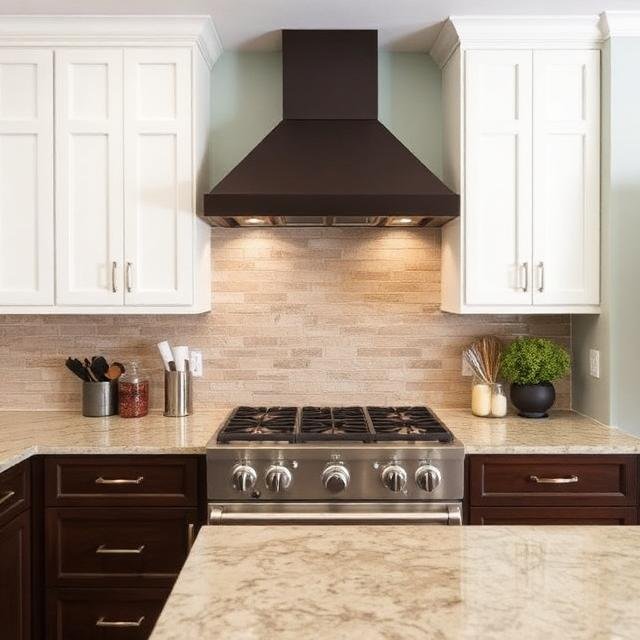
4. Travertine & Limestone: Earthy, Tactile Warmth
For rustic kitchen limestone and travertine adds a natural warmth. Honed finishes offer visual texture though periodic sealing is necessary to prevent oil absorption.
Trending Natural Stone Backsplash Layouts
Full-Height Continuous Slabs
Extending the countertop stone vertically to wall creates a seamless look with zero grout lines. This technique gives a compact look and feel larger while highlighting dramatic stone veins.
Herringbone and Chevron Patterns
Small format stone set in a herringbone layout adds geometric movement. Using a grout color close to the stone maintains a subtle and cohesive texture.
Subway and Stacked Formats
Traditional 3″x6″ stone subway tiles offer timeless proportion stacking them straight vertically adds a modern architectural feel.
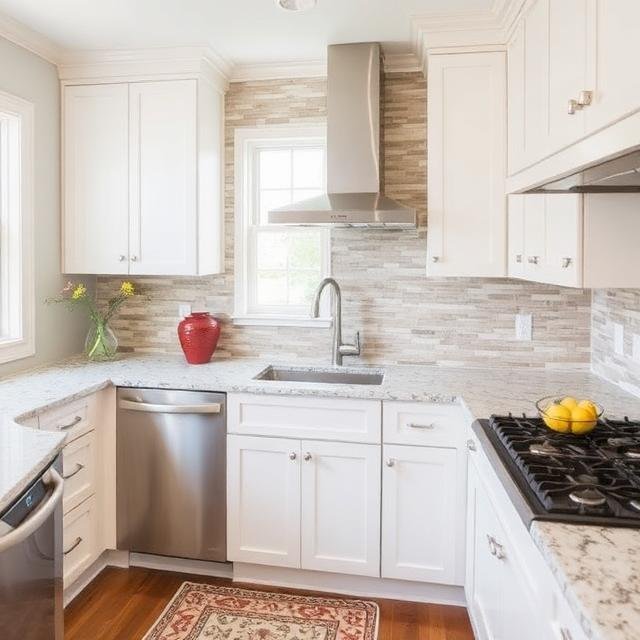
Practical Maintenance and Installation Essentials
- Substrate Preparation: Stone is heavy; backer boards must be securely fastened and level to support the weight of full-height slabs or thick tile cladding.
- Impregnating Sealer: Natural stone is porous. Apply a high-quality penetrating sealer upon installation and reapply every 12 to 24 months to prevent grease stains.
- Daily Cleaning: Use pH-neutral stone cleaners or warm water with a soft microfiber cloth. Avoid vinegar, lemon juice, or abrasive scrubbing pads.
Conclusion
A natural stone kitchen backsplash bridges raw organic beauty with enduring utility. Whether opting for a dramatic full-height quartzite slab or warm travertine tiles, choosing the right material finish and maintaining a regular sealing routine ensures your kitchen wall remains a stunning focal point for years to come.
Frequently Asked Questions (FAQs)
Is natural stone difficult to maintain as a kitchen backsplash?
When properly sealed, natural stone is straightforward to maintain. Wiping splatters promptly with a soft microfiber cloth and a pH-neutral cleaner keeps the stone looking pristine.
Should my backsplash match my countertop material exactly?
Not necessarily. While extending the countertop material creates a sleek, unified look, pairing a bold countertop with a neutral stone backsplash or vice versa creates balanced visual contrast.
How often should a natural stone backsplash be sealed?
Most natural stones require sealing once every 12 to 24 months, depending on the stone’s porosity and cooking frequency behind the range.

