
Onyx has long held a revered position in luxury architecture and premium interior design. It is renowned for its vein pattern, vivid translucent strata,, and exquisite organic depth; onyx is not merely surface material.
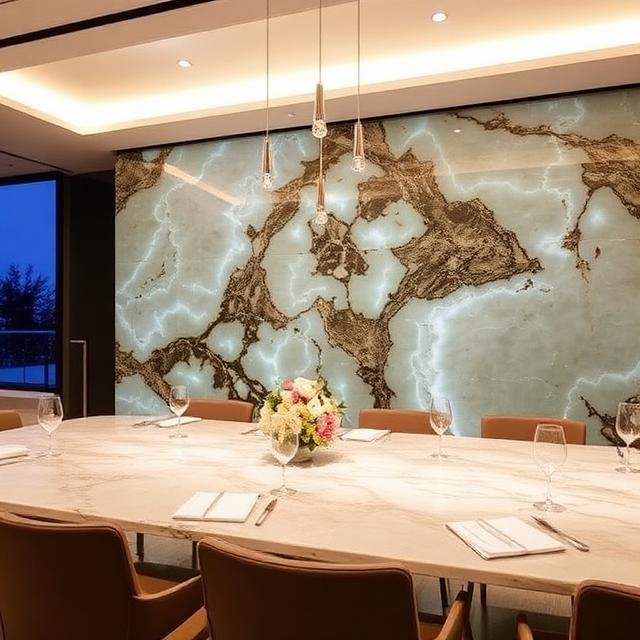
It is a functional work of art; however, static white backlighting no longer suffices in today’s digitally integrated interior environments. By combining translucent onyx features with cutting-edge smart LED lighting, interior designers and homeowners can unlock unprecedented visual versatility and spatial emotion.
1. Understanding Translucent Onyx & Light Interaction
Unlike standard marble, onyx is a microcrystalline form of quartz and calcite with significant light transmissivity. When light passes through the translucent onyx, the mineral structure refracts the rays, intricate veins, warm honey brands, and crystalline pockets that remain invisible under surface-level ambient lighting.
Key architectural applications include:
- Feature accent walls in living rooms and grand entryways
- Backlit kitchen islands and dining bar counters
- Illuminated hotel reception desks and luxury spa surrounds
- Custom bathroom vanity backdrops and shower feature panels
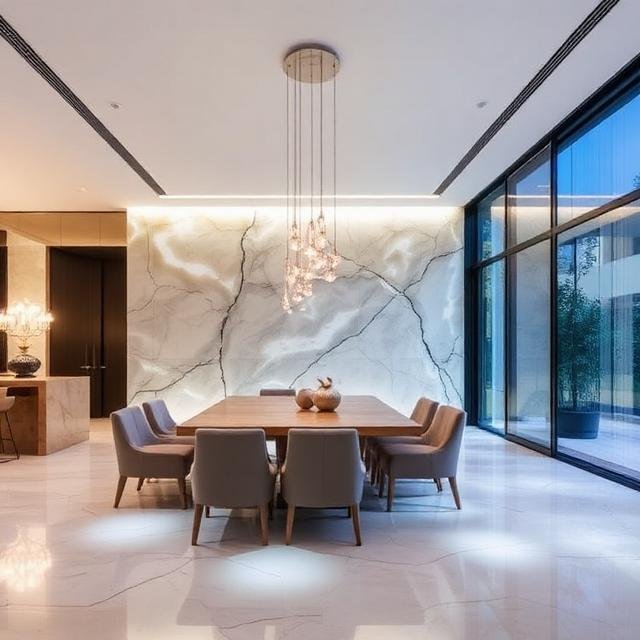
2. The Evolution to Smart Lighting Integration
Traditional backlit onyx installations on uniform fluorescent tubes and single-temperature static LED panels. These setups often suffered from hotspots, uneven diffusion, and fixed color temperatures that felt glaring during daylight hours.
Integrating smart lighting system such as RGBW smart LED sheets, DMX controllers like Lutron Ketra, Philips Hue, and Control4 revolutionizes this dynamic:
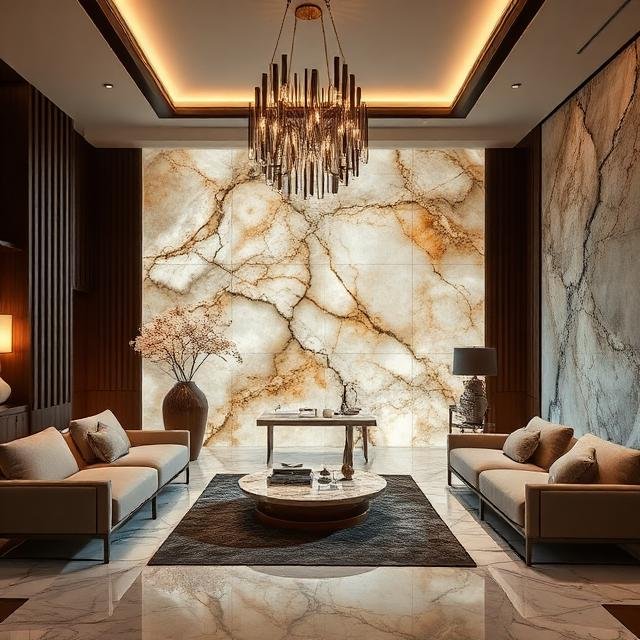
- Circadian Rhythm Alignment (Tunable White): Transition from crisp 5000K white light in the morning to emphasize the crisp crystal elements of the onyx to amber glow in the evening that brings out the stone’s rich gold and brown veins.
- Dynamic RGBW Mood Scenes: Program custom color palettes that highlight specific color zones with multi onyx slabbing, deep rubies, and soothing oceanic blues.
- Automated Dimming & Scene Control: Integrate backlighting with home automation systems, triggering dramatic modes with simple voice commands or ambient sensor triggers.
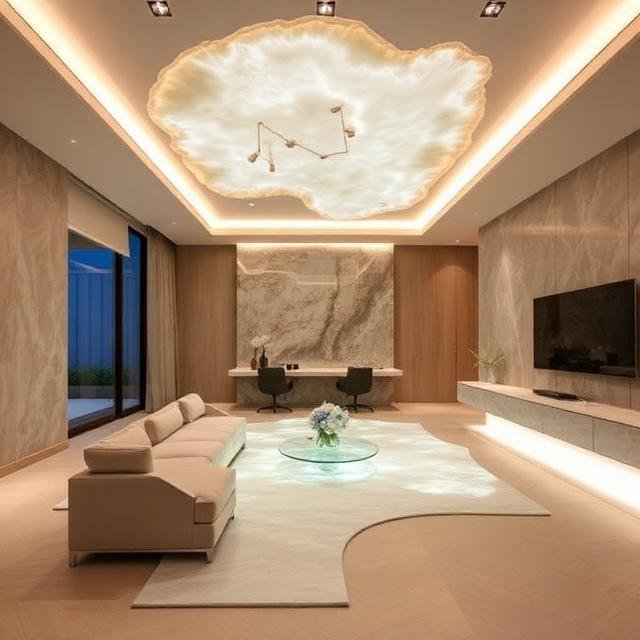
3. Engineering & Installation Best Practices
Achieving a flawless backlit onyx installation requires seamless collaboration between stone fabricators, and smart home automation specialists:
- Diffusion Distance & Acrylic Panels: Never place LED elements directly against the stone. Maintain an optical cavity depth of at least 2 to 4 inches and it is paired with a high grade frosted optical acrylic diffuser to eliminate diode and shadow lines.
- Matrix LED Sheets vs. Edge Lighting: Custom cut matrix LED light sheets provide the uniform flux density required for large slab installations whereas edge lighting works bet for custom framed panels.
- Thermal Management & Accessibility: High density LED arrays generate heat. Ensure adequate perimeter ventilation and install smart LED drivers in accessible, ventilated remote locations for effortless long term maintenance.
Frequently Asked Questions (FAQs)
Q1: How thin should onyx slabs be cut for backlit smart lighting installations?
Answer: Onyx slabs are typically honed to a thickness of 10mm to 20mm (3/8″ to 3/4″) for backlit applications. Thinner cuts allow maximum light transmission, while fiberglass mesh backing adds structural stability without blocking light flow.
Q2: What is the best type of smart LED system for translucent onyx?
Answer: High-CRI (Color Rendering Index >95) Tunable White + RGBW LED flexible matrix sheets are recommended. Tunable white allows continuous Kelvin adjustments (2000K to 6500K) to complement natural daylight and enhance specific mineral hues in the stone.
Q3: Can smart lighting control onyx backlighting based on time of day?
Answer: Yes. Using protocols like Zigbee, Z-Wave, or DMX linked to platforms like Lutron, Control4, Apple Home, or Google Home, you can automate circadian schedules so your onyx wall smoothly shifts tone and intensity automatically throughout 24 hours.
Q4: How do you prevent visible hotspots behind the onyx slab?
Answer: Hotspots are avoided by ensuring a minimum cavity depth of 2 to 4 inches between the LEDs and the stone, utilizing opal/frosted optical diffusers, and opting for high-density LED sheets rather than traditional single-line light strips.
Conclusion
Integrating smart lighting with translucent onyx features elevates natural stone from a passive luxury material to an active, architectural centerpiece. By combining dynamic color spectrums, automated circadian dimming, and proper engineering techniques, designers can tailor spatial atmospheres while honoring the timeless, organic beauty of onyx.

