Marble floors are the best statement of luxury, elegance, and beauty in any home. Whether you have classic white marble varieties like Calacatta or Statuario, the natural brilliance is unmatched.

However, the stunning beauty comes with a catch: marble is a soft and porous metamorphic rock made of calcium carbonate. It is incredible sensitive to everyday cleaning products and habits.
You can understand the type of floors looking like a luxury hotel lobby; make sure you are not committing these five marble cleaning mistakes.
1. Using Acidic Cleaners (The Ultimate Marble Sin)
Many homeowners reach for DIY cleaning staples like lemon juice or white vinegar, or rely on standard supermarket floor cleaners. This is a massive mistake. Because marble is alkaline, acids react chemically with the stone on contact. This process is called etching—it literally eats away a microscopic layer of the surface, leaving behind dull, cloudy, whitish marks that cannot be washed off.
- The Fix: Always use a pH-neutral cleaner specifically formulated for natural stone.
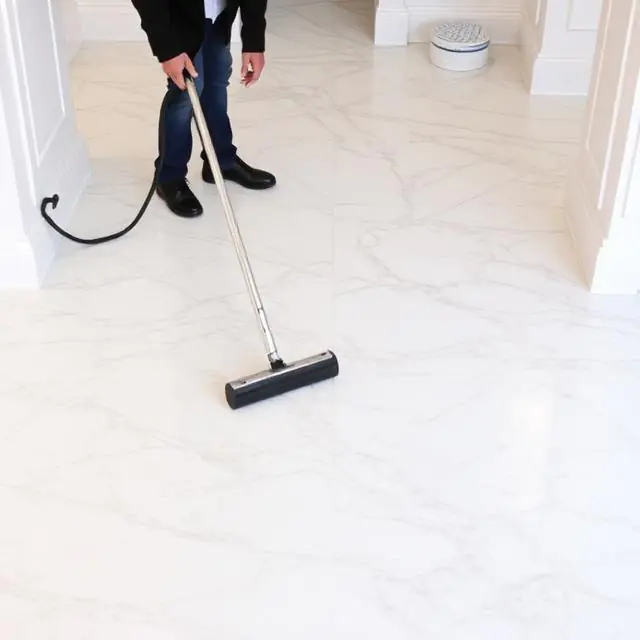
2. Leaving the Floor to Air Dry
Allowing dirty water or even plain rinse water to pool and air dry on your marble is a recipe for dullness. Water contains dissolved minerals like calcium and magnesium. When the water evaporates, it leaves behind efflorescence (white mineral powder) and unsightly water spots that ruin the uniform sheen of the stone.
- The Fix: After damp-mopping, always go over the floor a second time with a dry microfiber cloth or a clean towel to buff it dry.
3. Mopping Without Sweeping First
If you drag a damp mop over a marble floor covered in fine grit, sand, or dirt, you are essentially running sandpaper across a polished surface. The tiny abrasive particles get trapped under the mop and create microscopic scratches that destroy the floor’s reflective finish over time.
- The Fix: Thoroughly sweep with a soft-bristle broom or use a vacuum without a spinning beater bar (which can also scratch the stone) before letting any moisture touch the floor.
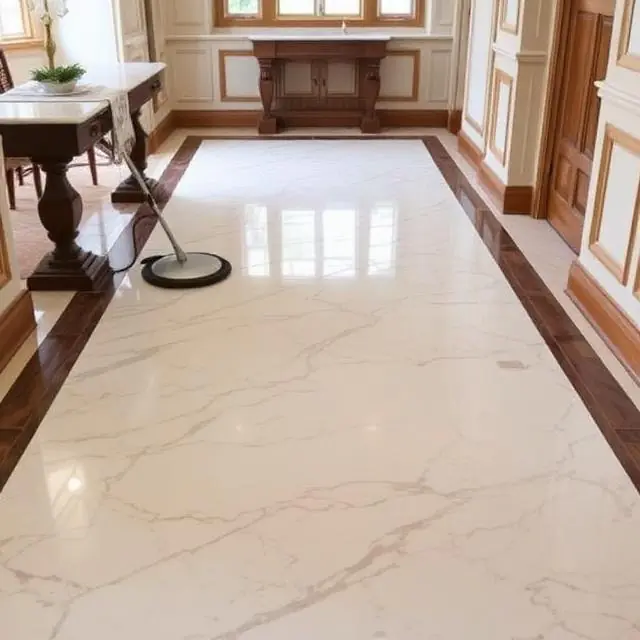
4. Using Abrasive Scrubbing Pads
When dealing with a stubborn, dried-on spill, it is tempting to grab a green kitchen scrubbing pad or a stiff-bristled brush. Doing this will scratch polished marble instantly.
- The Fix: Treat stubborn spots by letting a pH-neutral stone cleaner sit on the area for a few minutes to soften the residue, then gently wipe it away using a soft microfiber cloth.
5. Neglecting to Reseal the Stone
Marble is inherently porous, meaning it acts like a hard sponge. If it isn’t sealed regularly, spills like coffee, wine, or oils will seep deep into the pores of the stone, causing permanent deep stains rather than simple surface marks.
- The Fix: Test your sealer by dropping a few beads of water on the floor. If it absorbs within a few minutes, it’s time to apply a high-quality penetrating sealer. Generally, marble floors should be resealed every 6 to 12 months depending on foot traffic.
Conclusion
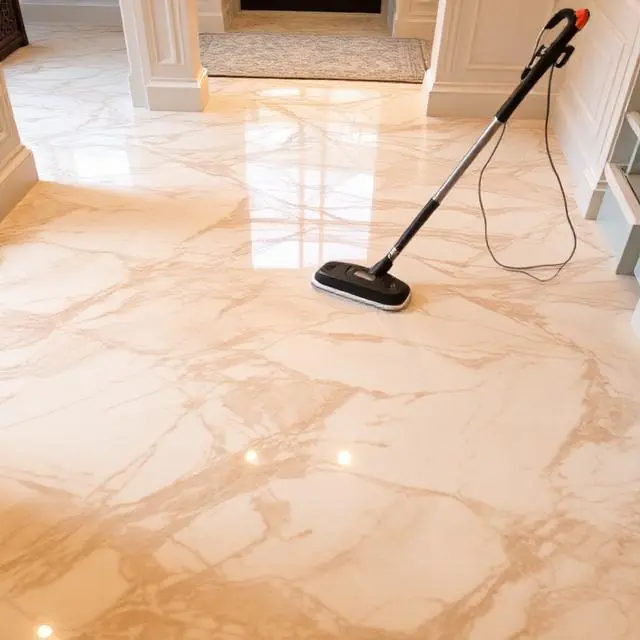
Caring for marble floors doesn’t have to be exhausting, but it does require mindfulness. By ditching acidic DIY hacks, sweeping before you mop, and always drying the surface completely, you protect your investment and preserve its breathtaking, luminous shine for decades. When in doubt, treat your marble like fine jewelry—with gentle care and the right specialized products.
Frequently Asked Questions (FAQs)
Q1: Can I use baking soda to clean stubborn stains on marble?
Answer: Use it with extreme caution. While baking soda is a great cleaner for many household surfaces, it is mildly abrasive. Scrubbing with it can scratch polished marble. For stubborn organic stains, it is safer to use a specialized commercial marble poultice or a professional-grade stone stain remover.
Q2: Is soapy water (dish soap) safe for marble floors?
Answer: Yes, a highly diluted mixture of mild, pH-neutral dish soap and warm water is safe for occasional cleaning. However, regular use can leave behind a greasy soap film that builds up over time, making your beautiful glossy floor look cloudy and dull. A dedicated no-rinse stone cleaner is always best.
Q3: How do I know if my marble is etched or just stained?
Answer: Look closely at the floor under a light source from an angle. A stain changes the color of the stone (like a dark coffee ring) but the surface remains smooth. An etch mark looks cloudy or dull, and if you run your fingers over it, you might feel a slight rough patch or a change in texture where the acid ate into the polish.