
When engineering premium interiors, the choice between porcelain slabs and natural stone is a classic tension between technological innovation and luxury. Both materials dominate luxury countertop surfaces and flooring layouts; they function under vastly different mechanical and economic laws. This analysis breaks down their characteristics and financial metrics to guide your next specification.
1. Material Profiles & Engineering
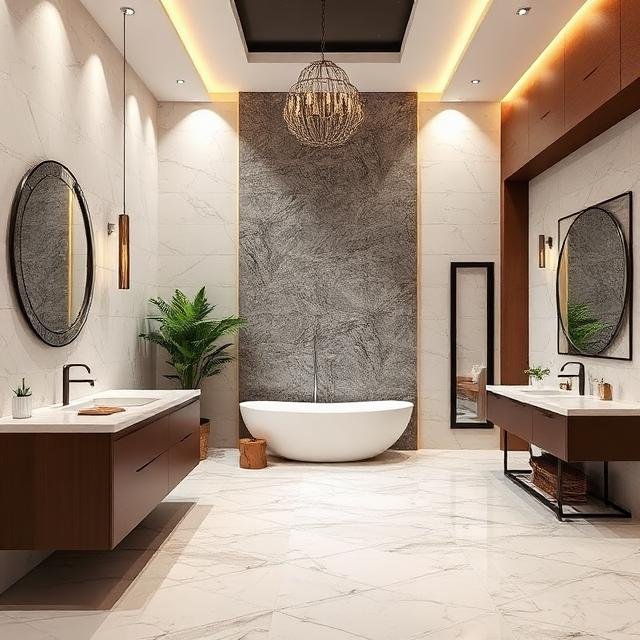
- Natural Marble: Formed through the metamorphic recrystallization of limestone under intense geological heat and pressure, marble is composed primarily of calcite or dolomite crystals. This organic genesis delivers unparalleled depth, unique veining patterns (such as those found in Statuario or Calacatta varieties), and a luminous quality that synthetic materials struggle to replicate flawlessly.
- Porcelain Slabs: Engineered from high-purity kaolin clay, feldspar, and quartz silica, modern large-format porcelain slabs are manufactured using hyper-compaction presses and fired at temperatures exceeding 1200°C. Advanced ink-jet printing technologies apply high-definition scans of authentic natural stones directly to the surface, achieving remarkable visual replication.
2. Pros And Cons Matrix
Natural Marble
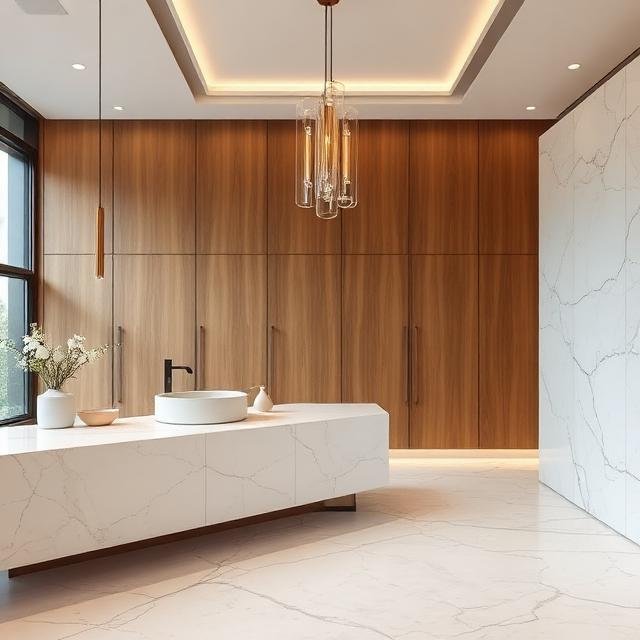
– Pros: Peerless aesthetic prestige, distinct unique slabs, long-term real estate value appreciation, and the ability to be repeatedly re-polished and restored in situ if scratched or etched.
– Cons: Highly porous structure susceptible to acid etching (from citrus, wine, or vinegar), prone to scratching (Mohs Hardness ≈ 3), requires annual sealing, and possesses natural fissures that can present structural vulnerabilities during fabrication.
Porcelain Slabs
– Pros: Virtually zero porosity (Water Absorption ≤ 0.5%), highly scratch-resistant (Mohs Hardness ≥ 7), completely UV stable, immune to thermal shock, chemical resistant, and available in ultra-thin profiles (down to 6mm) for weight-sensitive applications.
– Cons: The printed design is only surface-deep; chipped edges expose the unpatterned base clay core. Mitered edges are technically demanding to fabricate, and the material cannot be easily re-polished if a deep surface fracture occurs.
3. Comprehensive Comparison Table
– Composition
* Natural Marble: Metamorphic Limestone (Calcite/Dolomite)
* Porcelain Slabs: Sintered Kaolin, Feldspar, & Silica
– Porosity & Stain Resistance
* Natural Marble: High; highly prone to acidic liquids
* Porcelain Slabs: Impermeable; inherently stain-proof
– Scratch Resistance
* Natural Marble: Soft (Mohs ~3)
* Porcelain Slabs: Extremely Hard (Mohs ~7-8)
– UV & Heat Stability
* Natural Marble: Heat resistant; susceptible to UV discoloration
* Porcelain Slabs: 100% stable; completely fireproof
– Maintenance
* Natural Marble: Periodic sealing, specialized pH-neutral cleaners
* Porcelain Slabs: Wipe clean; zero sealing required
– Repairability
* Natural Marble: Excellent; can be sanded and re-honed
* Porcelain Slabs: Poor; chips require resin fills
4. Full Cost Breakdown
The total economic investment of a surface project is determined by raw material tiering, fabrication complexity, and installation mechanics:
Total Cost = Material (Slab) + Fabrication (Detail) + Installation (Labor)
– Material Costs: Standard natural marble ranges from ₹4,750 to ₹14,250 per square foot, while rare varieties like Calacatta Gold easily exceed ₹23,750 to ₹47,500 per square foot. Premium large-format porcelain slabs run a consistent ₹3,325 to ₹7,125 per square foot, offering predictable pricing structures.
– Fabrication & Installation: Porcelain requires specialized diamond-tipped water jets, continuous-bed cutting tables, and specific handling frames to prevent handling fractures. This keeps porcelain installation costs high (₹5,700–₹11,400/sq.ft.), frequently matching or exceeding standard marble fabrication labor due to the precise skill set required for flawless mitered edges.
5. Frequently Asked Questions (Faqs)
– Q: Does porcelain look completely identical to real marble?
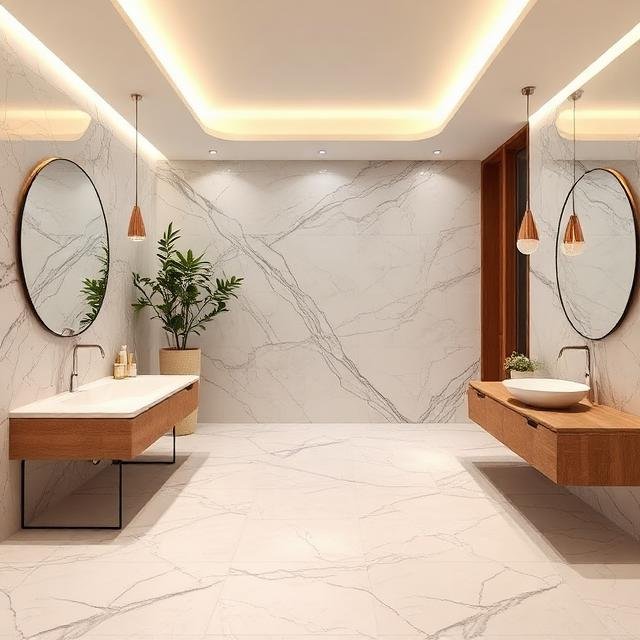
* A: From a distance, premium porcelain mimics marble perfectly. Up close, however, porcelain lacks the organic translucent depth of true calcite crystals, and the pattern is limited to the surface layer.
– Q: Can porcelain slabs be used outdoors?
* A: Yes. Porcelain is entirely frost-proof and UV-resistant, making it a superior choice for outdoor kitchens, cladding, and patios where natural marble would quickly weather, fade, or crack.
– Q: How do you fix a chip in a porcelain slab counter?
* A: Chips are repaired using color-matched acrylic or epoxy resins. While functional, the fix may remain slightly visible because the printed pattern cannot be seamlessly restored across the repair zone.
6. Conclusion
Choosing between these two premium surfaces involves balancing performance goals against architectural prestige. If your design prioritizes absolute durability, zero maintenance, and clean modern aesthetics for a high-traffic kitchen or outdoor area, porcelain slabs offer a technically superior solution. However, if the project demands an irreplaceable organic soul, authentic material depth, and the long-term investment value that only historical stone can provide, natural marble remains the definitive luxury standard.

