
When we think of architectural elegance and luxurious stone, then white Indian marble remains an ultimate choice for a design statement. The white Italian marble quarries often dominate high-end conversations. India boasts the most structurally resilient, visually stunning white marble varieties in the world. Quarried predominantly across the mineral-rich landscapes of Rajasthan, white marble blends timeless beauty aesthetics with remarkable durability.
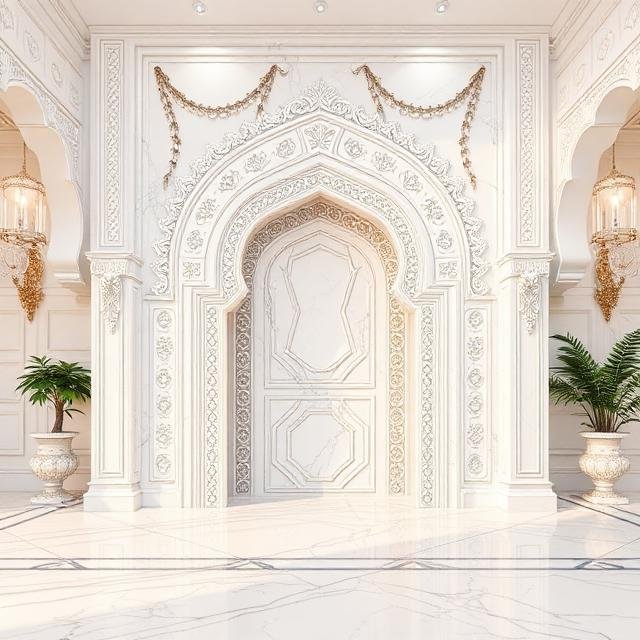
Let’s understand the white Indian marble varieties and analyse their unique characteristics, current market applications, and mineral profiles.
1. Makrana Marble: The Heritage Calcite King
Makrana marble is not just a stone; it is historical royalty. Famous for building the Taj Mahal and the Victoria Memorial, it is one of the oldest and finest marbles known to mankind.
- Mineral Composition: What sets Makrana apart is its exceptionally high calcium carbonate content (often exceeding 98%). It is a dense, non-porous calcite marble with an ultra-low water absorption rate.
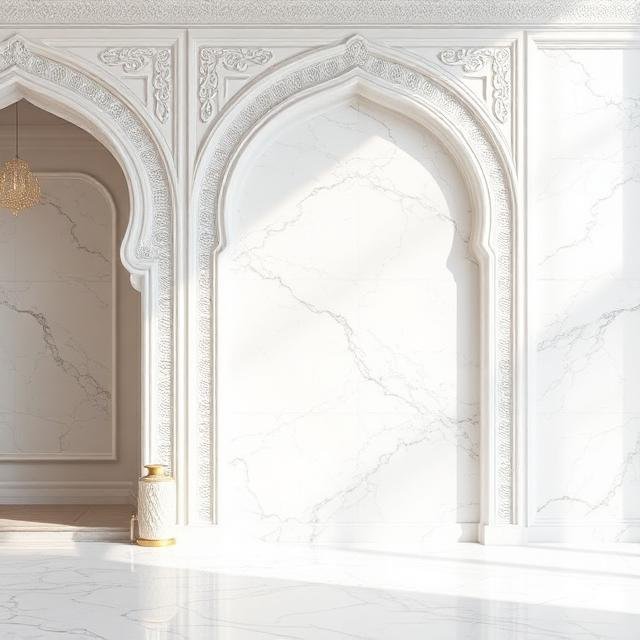
- Aesthetic Profile: It offers a luminous, milky white backdrop that grows glossier over time. Unlike dolomitic marbles, Makrana does not turn yellow as it ages; it becomes more radiant.
- Key Cultivars:
- Makrana Pure White: Pristine, bright white with almost no visible veining.
Sudarshan Stoneix - Albeta: Characterized by soft, warm white tones intertwined with delicate grey or beige intersecting lines.
- Dungri: A more affordable variant showcasing strong, dramatic grey veins against a white field.
- Makrana Pure White: Pristine, bright white with almost no visible veining.
- Ideal Use: Luxury living room flooring, temples (pooja rooms), courtyards, and bespoke monuments.
Price Range (2026 Indicative Market Rates): ₹120 to ₹700+ per square foot depending on the purity and grade (Albeta commands the highest premium).
2. Morwad White Marble: The Modern Minimalist Choice
It is quarried near Rajsamand, Rajasthan, Morwad marble has emerged as one of the most sought-after alternatives to imported Italian Carrara due to its clean background and cost-efficiency.
- Design Character: Morwad is celebrated for its bright, snowy white background decorated with ultra-fine, wavy grey or pale greenish mineral streaks. It delivers a seamless, expansive look when laid across massive floor plans.
Vardhman Sagar Marbles - Structural Integrity: It possesses excellent compressive strength, making it highly resistant to daily foot traffic and abrasion.
- Ideal Use: Open-concept residential flooring, hotel lobbies, wall cladding, and expansive bathroom vanity setups.
- Price Range (2026 Indicative Market Rates): ₹50 to ₹150 per square foot, making it an incredibly high-yield, affordable luxury choice.
3. Beyond Makrana and Morwad: Other Notable White Varieties
The landscape of premium Indian white marble extends far beyond these two titans. Designers looking for specific texturing frequently turn to these exceptional varieties:
- Ambaji White Marble: Hailing from the Gujarat-Rajasthan border, Ambaji is a premium, velvety white marble with remarkably dense patterns. Its smooth grain and exceptional hardness make it a favorite for intricate carving and heavy-traffic flooring.
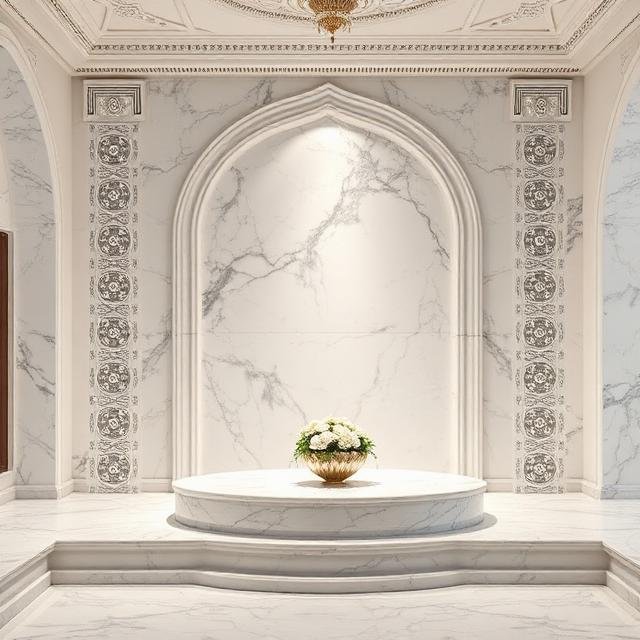
- Agaria White: Famous for its dramatic linear patterns, Agaria marble features an icy white surface cross-cut by thin, undulating grey or brown leheriya (wave-like) veins. It is frequently book-matched to form stunning geometric statement walls.
- Indian Statuario: Imitating its famous Italian counterpart, this stone offers a crisp white base layered with bold, intersecting ash-grey veins. It delivers the ultra-luxury Italian look at a fraction of the cost.
Performance Comparison Table
| Feature | Makrana Marble | Morwad Marble | Agaria White Marble |
| Primary Hue | Milky White / Luminous | Snowy White | Icy / Translucent White |
| Vein Patterns | Fine, geometric or absent | Delicate, wavy grey/green | Sharp, linear leheriya |
| Porosity | Extremely Low (Calcite-rich) | Low to Medium | Low |
| Longevity | Centuries (Resists yellowing) | High (Requires sealing) | High (Requires sealing) |
| Best Suited For | High-end heritage & luxury floors | Large-area seamless floors | Feature walls & book-matching |
Conclusion
Choosing the right white Indian marble variant comes down to balancing heritage value, aesthetics, and project budgets. If you seek an heirloom stone that retains its translucent brilliance for generations without discoloration, Makrana is an unbeatable lifelong investment. If you are designing an expansive, contemporary space where a bright, uniform look is desired without breaking the budget, Morwad White or Agaria provide spectacular visual equity. Whichever stone you choose, ensure proper sealing and pH-neutral maintenance to let the natural brilliance of Indian stone shine for decades.
Frequently Asked Questions
Q. Why does Makrana marble cost more than other Indian white marbles?
A: Makrana marble is historically significant, scarce, and possesses an unmatched chemical composition. Because it is nearly pure calcite, it absorbs almost zero moisture and will not turn yellow over time, unlike dolomite-heavy varieties. This structural permanence drives its premium value.
Q. Does Morwad white marble require high maintenance?
A: Like all natural stones, Morwad is a calcareous material sensitive to acids (like lemon juice or vinegar). However, regular polishing and application of a high-quality impregnating sealer every few years will completely safeguard it against everyday stains in kitchens and bathrooms.
Q. What is the difference between Indian white marble and Italian white marble?
A: While Italian marbles (like Carrara or Statuario) are softer and valued for their high-contrast, dramatic veining, Indian white marbles are generally much harder, less porous, and structurally more resilient to heavy foot traffic, making them highly practical for Indian residential conditions.

