
The Return of Saturated Luxury: Calacatta Viola and Burgundy Marbles
For centuries, the interior architect was defined by quiet understatement, like bleached oaks, pristine Carrara slabs, and monochromatic greige palettes. The minimalist restraint offered serenity has pivoted towards drama and tactile indulgence.
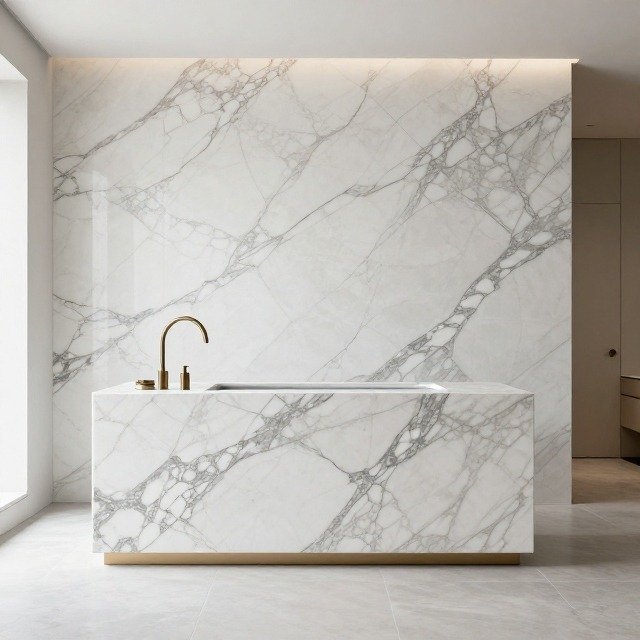
At the forefront is Calacatta Viola, which has deep burgundy marbles. It has creamy crystalline backgrounds fractured by deep cabernet, plum, and oxblood veins. The stone does not whisper what they demand. By incorporating such jewel-toned marble slabs into the commercial or residential space, it requires a deft understanding of balance, color theory, and textural counterpoints.
Here is an architectural guide to curating and styling rich, wine-veined marbles with sophistication.
Understanding the Materials: Viola vs. Burgundy Varieties
| Marble Variety | Origin / Geological Type | Dominant Color Palette | Veining & Texture Profile | Best Suited Applications |
| Calacatta Viola | Apuan Alps, Carrara, Italy | Milk white/warm cream base with vibrant violet-burgundy veins | Brecciated, dynamic flow; high contrast | Kitchen waterfall islands, powder room vanities, statement coffee tables |
| Rosso Levanto | Liguria, Italy | Deep oxblood to dark cherry-brown with fine white/grey calcite lines | Tight, spiderweb-like crystalline webbing | Fireplace mantels, entryway borders, bar counters |
| Rosso Francia (Languedoc) | Occitanie, France | Vivid carmine and burnt terracotta with ivory clouds | Bold, painterly clusters; dramatic movement | Powder room claddings, pedestals, dining tabletops |
| Breccia Medicea | Tuscany, Italy | Polychromatic: plum, olive, ivory, and violet inclusions | Angular, mosaic-like clasts set in rich mineral paste | Architectural columns, statement console tops, wainscoting |
Design Principles: How to Style Rich Jewel-Toned Marbles
1. The Art of the Single Hero Moment
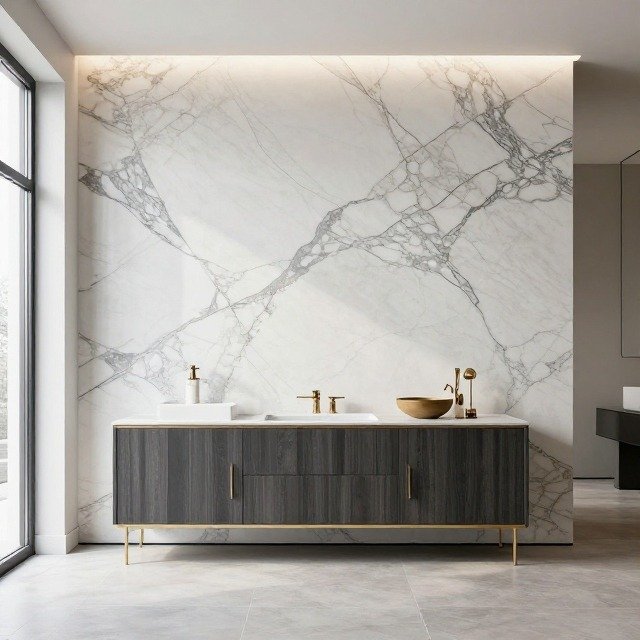
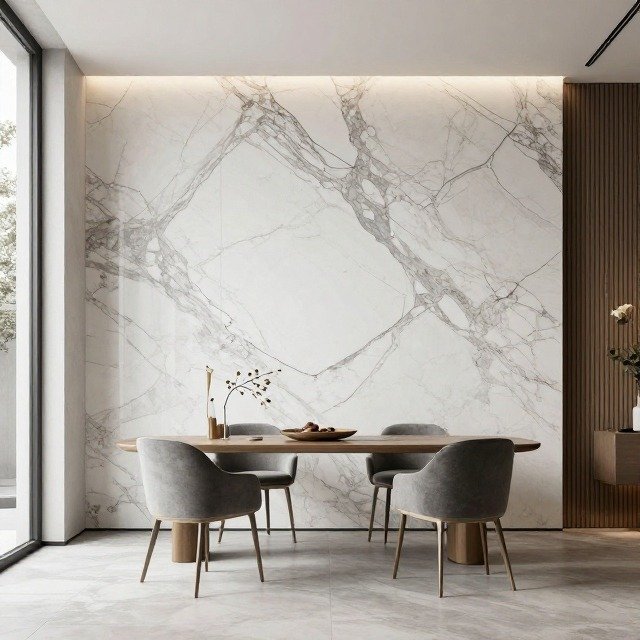
Because stones like Calacatta Viola boast striking movement and emotional weight, they thrive best when they are treated as an architectural anchor rather than wallpapering an entire room.
- The Monolithic Island: In kitchens, pair with a monolithic Viola island with neutral perimeter cabinetry like warm mushroom, pale travertine, or putty-toned lacquer.
- The Powder Room Jewel Box: Use floor-to-ceiling burgundy marble solely in compact secondary spaces, where high drama creates an intimate, atmospheric cocoon.
- Carved Vessels & Floating Vanities: An integrated marble sink with sharp edge detailing highlights the natural geological fracture of the stone.
2. Harmonizing Finishes: Honed vs. Polished
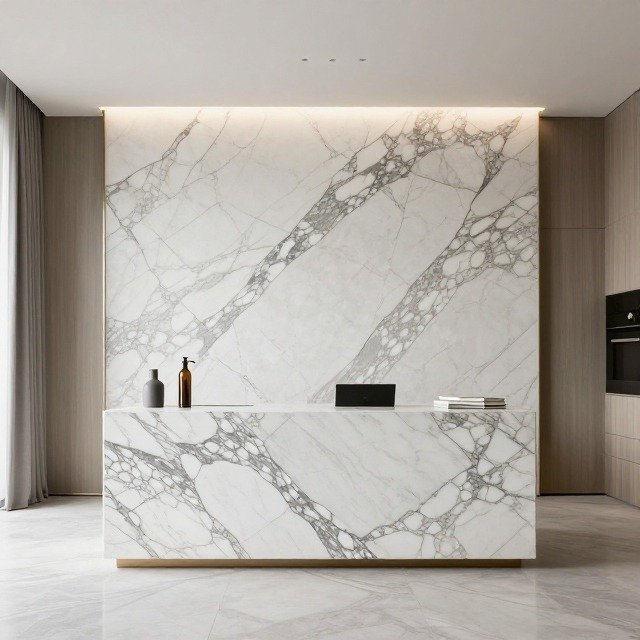
The finish determines the visual weight of jewel-toned stones:
- Honed / Matte: Softens the contrast between the pale matrix and dark burgundy veins, giving the stone a modern, velvety, sculptural feel. Recommended for high-touch surfaces, kitchens, and Scandinavian-modern.
- Polished: Amplifies depth, translucency, and jewel-like reflectivity. Best suited for dramatic bar facades, side tables, and dim, moodily lit entertaining rooms.
3. Complementary Color Palettes
To prevent burgundy marble from looking dated or overly baroque, contrast it with deliberate, contemporary hues:
- Soft Earth & Plaster Neutrals: Lime wash, Roman clay, raw linen, bone, and warm taupe soften the stone’s sharp contrasts.
- Saturated Counterparts: Forest green (mohair or velvet), deep mustard/ochre, and midnight navy provide a regal, high-contrast juxtaposition.
- Smoky Pastels: Dusty rose, sage green, and celadon balance the deep wine undertones without competing for dominance.
4. Material Layering: Woods and Metals
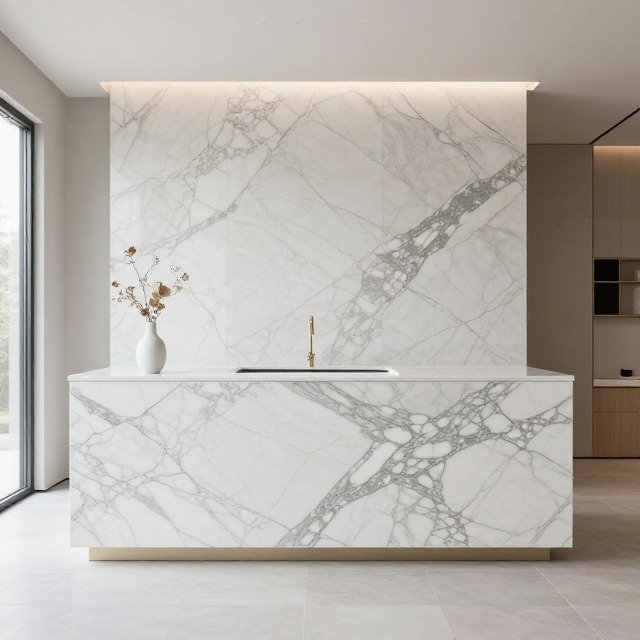
- Timber: Pair with dark fumed oak or walnut for brooding mid-century romance, or with white rift-sawn oak to maintain airiness and modern Scandinavian balance.
- Metals:
- Unlacquered Brass & Bronzed Gold: Offer classic warmth that echoes the red and violet mineral tones.
- Brushed Nickel & Burnished Steel: Provide an industrial, unexpected tension that pulls Viola firmly into the 21st century.
Maintenance & Longevity
Calacatta Viola and Burgundy marbles are calcitic, meaning they are naturally porous and acid-sensitive.
- Sealing: Apply a penetrating, breathable impregnating sealer upon installation and reapply every 6–12 months.
- Daily Care: Clean only with pH-neutral stone detergents; immediately clean the spills involving citrus, red wine, or vinegar to avoid etching.
- Patina Acceptance: Embrace the living nature of the stone. Micro-abrasions and minor etch marks contribute to the storied European patina seen in historic palazzos.
Conclusion
Calacatta Viola and rich Burgundy marbles are the antidote to sterile, timid interiors. By combining their geological intensity with tailored joinery, textured neutrals, and refined metal accents, these jewel-toned stones transcend fleeting trends, imbuing any space with enduring luxury and unmistakable architectural identity.
Frequently Asked Questions (FAQs)
Q1: Is Calacatta Viola suitable for busy kitchen countertops?
A: Yes, provided you embrace natural patina. As a true marble, it is vulnerable to acid etching and staining. Opting for a honed finish rather than polished hides etch marks far better, making it more practical for active kitchens. Regular sealing with a professional penetrating sealer is essential.
Q2: What is the main difference between Calacatta Viola and Rosso Levanto?
A: Calacatta Viola features a creamy white or pale ivory ground fractured by intense violet and wine-red veins. Rosso Levanto, by contrast, is predominantly dark cherry, oxblood, or deep maroon throughout, interlaced with fine white calcite veins. Viola feels brighter and more graphic, while Levanto is darker, moodier, and more classical.
Q3: Which paint colors pair best with Calacatta Viola?
A:
- Warm neutrals: Farrow & Ball’s Elephant’s Breath, Skimming Stone, or Benjamin Moore’s Swiss Coffee.
- Moody hues: Deep plum, burnt espresso, or Benjamin Moore’s Salamander (a rich black-green that flatters the wine veins).
- Soft accents: Dusty plaster pinks like Farrow & Ball’s Setting Sun.
Q4: How do I incorporate Calacatta Viola without remodeling my entire kitchen or bath?
A: Start with portable, sculptural accents: a round Calacatta Viola plinth coffee table, a hand-carved marble fruit bowl, bookends, or a custom marble-topped credenza. Small accessories bring the same geological drama without structural intervention.

