
Italian marble is renowned for its elegance, beauty, and durability. The high glossy finish with a delicate vein pattern showcases the rich heritage and culture, especially Statuario, Calacatta, Carrara, and Botticino Marbles, that represent the luxury for the interior design. The dream kitchen of homeowners and interior design that sweeps slabs across the central island.
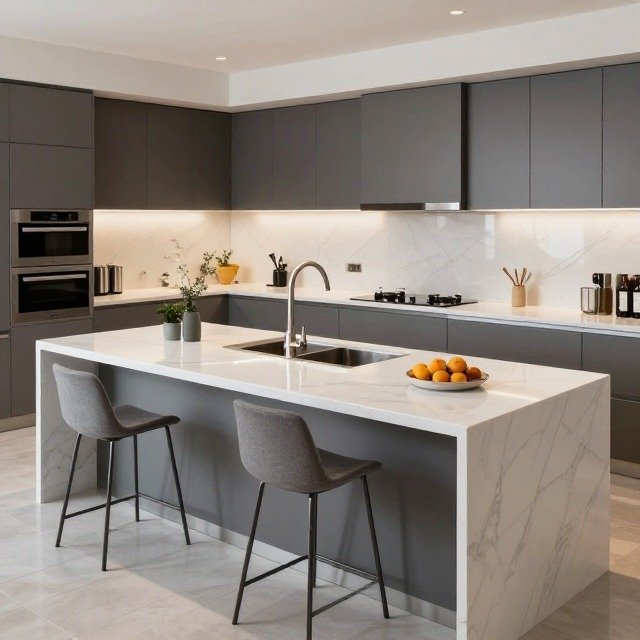
However, the Italian marble design in the kitchen is heat resistant, but it is highly reactive to acidic liquids that are used in everyday cooking, such as turmeric, lemon juice, tamarind pulp, and mustard splatters.
Hence, before planning Italian marble for Indian kitchen countertops, it is necessary to understand the pros, cons, and the ground reality of using Italian marble in the cooking area.
The Core Science: Why Italian Marble Differs from Granite and Quartz
Italian marble is composed of calcium carbonate, and it is formed under high pressure and extreme heat.
- Hardness: On the Mohs hardness scale, Italian marble rates between 4 and 5, whereas granite rates between 7 and 8, and engineered quartz rates around 8. Therefore, marble is much softer and more susceptible to any scratching, etching, and chipping.
- Porosity: Natural marble has micro-pores and fissures throughout the slab. Without rigorous, continuous sealing, liquids seep beneath the surface.
- Reactivity: Calcium carbonate reacts immediately with acids. When acidic substances come into contact with unsealed marble, an irreversible chemical reaction known as acid etching occurs, dissolving the stone’s surface polish and leaving dull marks.

The Pros of Italian Marble Countertops
1. Unmatched Aesthetic Elegance
No engineered surface can replicate the depth, soft glow, and fluid, non-repeating vein pattern of Italian marble. Marble slabs like Calacatta Gold or Statuario add an instant, five-star luxury feel to any space.
2. Naturally Cool Surface Temperature
Marble retains a naturally cool temperature, making it the best option for baking, rolling dough, and working with bread.
3. High Resale and Prestige Value
In premium residential developments, genuine Italian marble installations are considered the most luxury assets that enhance overall property appeal and interior valuation.
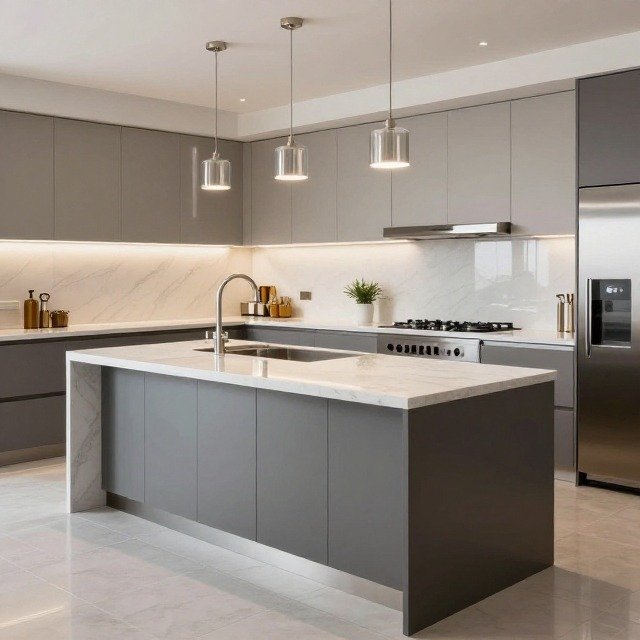
The Cons in an Indian Kitchen Context
1. Severe Acid Etching
Indian cooking relies heavily on acidic ingredients:
- Lemon and lime juice
- Tamarind (imli)
- Tomatoes and purees
- Curd and yogurt
- Vinegar
A splash of lemon juice or tomato juice left on polished Italian marble can cause the chemical etching in a matter of minutes. Etching is not a surface stain that can be scrubbed away; it is physical damage to the top layer of the stone that dulls the surface of the stone permanently unless re-honed or polished professionally.
2. High Susceptibility to Deep Stains
Ingredients like turmeric, saffron, mustard oil, red chili paste, and coffee can easily penetrate the pores. Once a stain seeps past the surface layer, standard household cleaning cannot remove it without deep chemical poulticing or regrounding.
3. Vulnerability to Heavy Impact and Thermal Shock
Indian kitchens use heavy equipment, such as wet grinders, heavy-gauge pressure cookers, mortar and pestles, sil-batta, and cast-iron cookware. Dropping a heavy pot can chip the edges or crack a soft marble slab. Therefore, placing a scorching-hot pan straight from the burner can cause thermal shock, discoloration, or hairline cracking.
4. Ongoing, High-Effort Maintenance
Unlike granite, which requires minimal maintenance, Italian marble requires:
- Routine application of high-grade penetrating sealers (every 6 to 12 months).
- Strict use of pH-neutral cleaning solutions (no standard dish soap, acidic cleaners, or abrasive pads).
- Immediate clean-up of any spill within seconds.

The Ground Realities: Can It Ever Work?
| Factor | Italian Marble | Black / South Indian Granite | Engineered Quartz |
| Porosity | Moderate to High | Very Low | Non-porous |
| Acid Etch Resistance | Poor (dissolves surface) | High | Very High |
| Stain Resistance (Turmeric/Oil) | Low | High | High to Very High |
| Scratch Resistance | Mohs 3–4 (Soft) | Mohs 6–7 (Very Hard) | Mohs 7 (Very Hard) |
| Maintenance Level | High | Low | Low to Moderate |
Smart Workarounds for Lovers of Italian Marble:
If you are interested in incorporating Italian marble into your dream kitchen without setting yourself up for endless maintenance headaches, consider following these hybrid approaches:
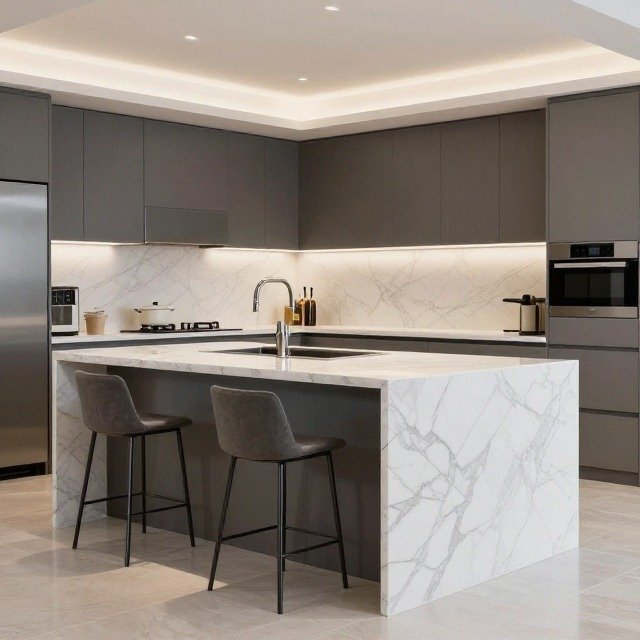
- Use It Exclusively on the Dry Island / Breakfast Counter: Keep the primary cooking platform, gas hob, and sink area in hardy granite, while using Italian marble on a dedicated breakfast counter or dry prep zone.
- Opt for a Honed (Matte) Finish: A honed finish eliminates the high-gloss shine. While it still stains if unsealed, it conceals minor acid etching and micro-scratches far better than mirror-polished slabs.
- Use It for the Backsplash: An Italian marble book-matched slab makes a breathtaking vertical backsplash where it encounters far less direct impact, standing water, and acidic pooling.
- Consider Marble-Look Engineered Quartz or Sintered Stone: High-end porcelain slabs or sintered stones like quartz replicate Italian marble veining with zero porosity, extreme heat resistance, and total immunity to acids and turmeric.
Conclusion
Is Italian marble suitable for an Indian kitchen countertop? For primary, everyday cooking counters, the practical answer is no.
The chemical composition of Italian marble is fundamentally incompatible with the heat, deep oils, heavy pressure, and acidic components characteristic of Indian cooking. Unless you are prepared for regular professional sealing, patina development, and constant vigilance with spills, natural Italian marble will quickly lose its pristine look.
However, if utilized thoughtfully—on dry breakfast bars, decorative backsplashes, or paired with a secondary, heavy-duty utility kitchen—Italian marble can provide timeless luxury without compromising everyday functionality.
Frequently Asked Questions (FAQs)
1. Can sealing Italian marble make it completely stain-proof against turmeric (haldi)?
No. High-quality penetrating sealers slow down absorption, buying you time to wipe spills away, but they do not make marble impervious. Turmeric contains potent natural dyes that can bond quickly to stone pores if left standing, even on sealed surfaces.
2. What is the difference between etching and staining on marble?
A stain happens when a colored substance (like coffee or oil) penetrates the stone’s pores and alters its color. An etch is a physical chemical reaction caused by acids (like lemon or vinegar) that eats away the calcium carbonate surface, leaving a dull, rough spot regardless of the liquid’s color.
3. How can I remove turmeric stains from an Italian marble slab?
For fresh stains, apply a paste of baking soda and water or a specialized commercial stone poultice. Cover it with plastic wrap, tape down the edges, let it sit for 24 hours to draw out the pigment, and rinse with warm, pH-neutral water. Avoid scrubbing with abrasive scrubbers or acidic cleaners.
4. Which is better for an Indian kitchen: Italian marble or Indian granite?
For durability, ease of maintenance, and longevity under rigorous daily cooking, Indian granite (such as Jet Black, Steel Grey, or Tan Brown) is far superior. It is denser, significantly harder, acid-resistant, and virtually stain-proof.

