
Marble has stepped out of traditional interior design and has a high-contrast personality, tactile finishes, and organic movement. Homeowners and interior designers are moving away from sterile and standard polished surfaces, opting instead for material that has the beautiful story, color, and texture of marble. The following sections explore the two trending marble topics transforming luxury commercial projects.
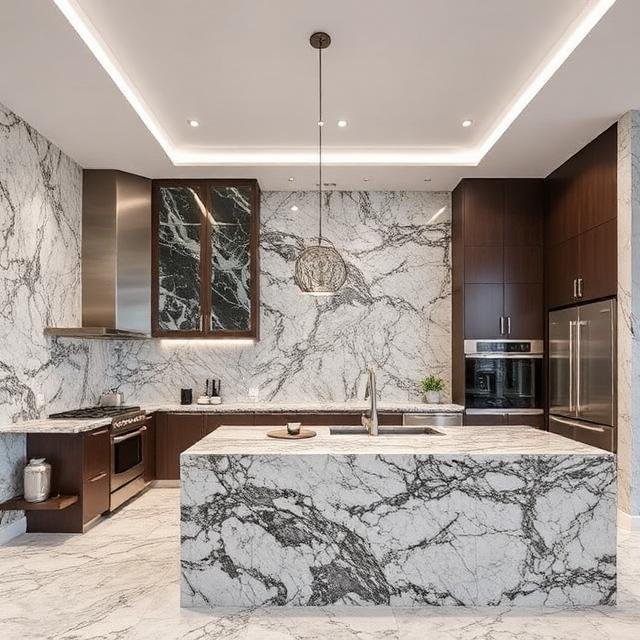
The Rise of “Statement Slabs” & High-Contrast Veining
For years, minimalist design has used subtle white marble like Carrara with barely there veining. That understated approach is being replaced by highly dramatic stone. The slabs with intense, colorful veins are treated as functional art installations rather than simple building material.
Bold Tones and Rich Textures
Instead of hiding the natural variations of the stone, modern architecture highlights them. Calcutta Viola, Panda White, and Emerald Greens are highly sought after for focal points.
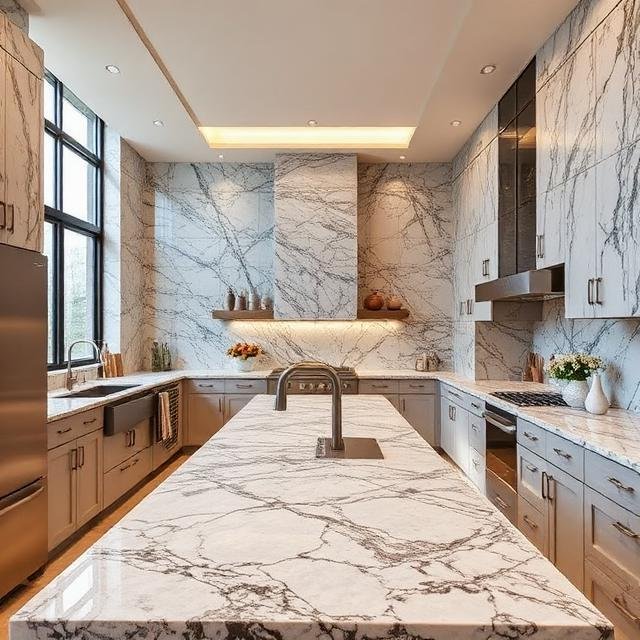
The Art of Bookmatching
In order to maximize the impact of these dramatic patterns, designers depend heavily on bookmatching. This technique places two consecutive marble slabs side by side in a mirrored layout and creates a butterfly wing pattern. It is most commonly applied to:
- Full-height fireplace surrounds in living rooms.
Forever Precious Tile & Marble - Waterfall kitchen islands where the veining pours seamlessly over the edges.
Forever Precious Tile & Marble - Master bathroom feature walls, offering a dramatic backdrop for freestanding tubs.
Warm Neutrals and Tactile Honed Finishes
The dramatic slabs take care of high-impact accent areas; the foundational spaces of the home, such as continuous flooring and large-scale wall cladding, are undergoing the massive shift toward comfort and biophilic design. The cool white palettes of the past decade are yielding to warm neutrals.
A Shift to Earthy Palettes
Marbles featuring sandy tones, rich creams, taupes, and soft beige-infused grays are establishing a warmer architectural foundation. These stones bounce light efficiently throughout the room without creating any clinical brightness associated with white synthetic surfaces. The visual ground a space pairing effortlessly with natural wood elements and soft textiles.
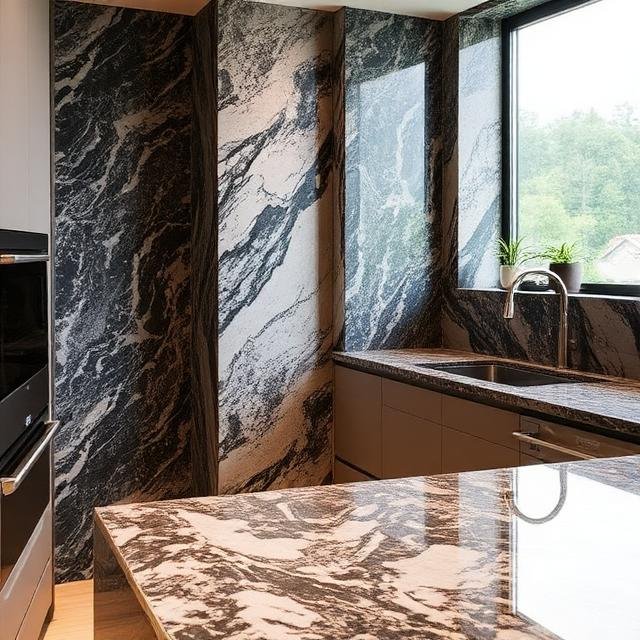
Embracing the Matte Surface
It is crucial to this warm aesthetic that the high glossy mirror shine. The honed, leathered finishes are now preferred over polished surfaces.
- Visual Softness: A honed finish eliminates harsh glare from overhead lighting and allows the true color depth and organic texture of the stone to come forward.
- Practical Longevity: Matte surfaces are exceptionally forgiving in high-traffic areas. They naturally conceal etches, scratches, and high traffic wear over time far better than polished alternatives.
Conclusion
Marble continues to solidify its place as the definitive material of architectural luxury, but its application has evolved. The current movement balances two distinct desires: the craving for unforgettable drama through high-contrast statement slabs and the pull toward grounding, serene spaces created by warm neutrals and soft, honed textures. By stepping away from uniform perfection and embracing the unpredictable, organic art of natural stone, modern spaces achieve a sense of permanent, character-rich luxury.
Frequently Asked Questions
Are bold, heavily veined marbles a passing trend?
No. Because natural stone is a permanent architectural material, these choices are viewed as timeless expressions of individuality rather than fleeting fads. Pairing a dramatic stone with clean, minimalist cabinetry or understated furniture ensures the room remains visually balanced and sophisticated for decades.
What is the practical difference between a polished and a honed marble finish?
A polished finish is buffed to a high shine, reflecting light like a mirror; it enhances the color contrast but easily shows scratches and acid etching from everyday items like lemon juice or coffee. A honed finish is smooth but completely matte. It diffuses light gently and hides everyday wear and tear significantly better, making it the superior choice for floors and high-use countertops.
Is natural marble a sustainable material choice?
Yes, natural marble is intrinsically sustainable due to its extreme durability and long life cycle. It requires zero synthetic chemical manufacturing, outlasts engineered alternatives by decades, and can be dynamically restored or re-honed over time rather than requiring full replacement.

