
Italian marble is known for its luxury flooring and countertop design. The intricate vein pattern, soft crystalline luster, and timeless beauty. However, Italian marble is composed of calcium carbonate, and it is soft in nature and more porous compared to quartz and granite. For daily foot traffic areas, fine grit and everyday use gradually etch the surface of marble, and it dulls the mirror-like finish.
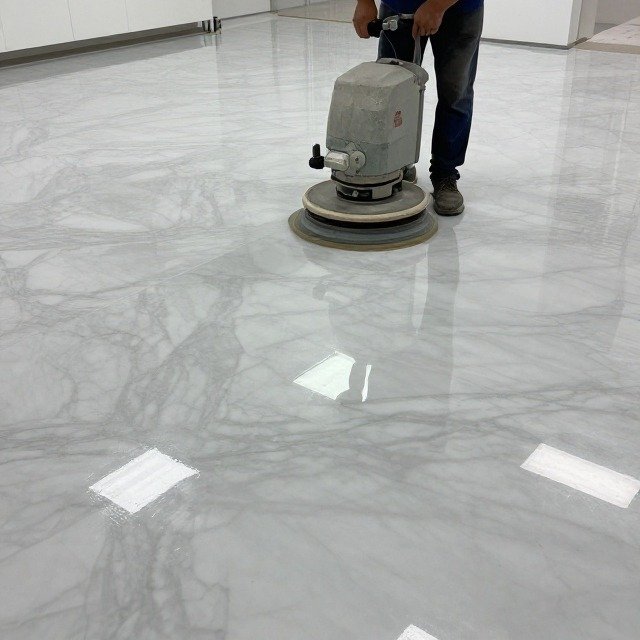
When it comes to restoring the beauty of marble, there are two famous treatments, such as diamond polishing and epoxy polishing. Understanding how each treatment works, the mechanical profile, and durability before deciding for the floor to restore.
What Is Diamond Polishing?
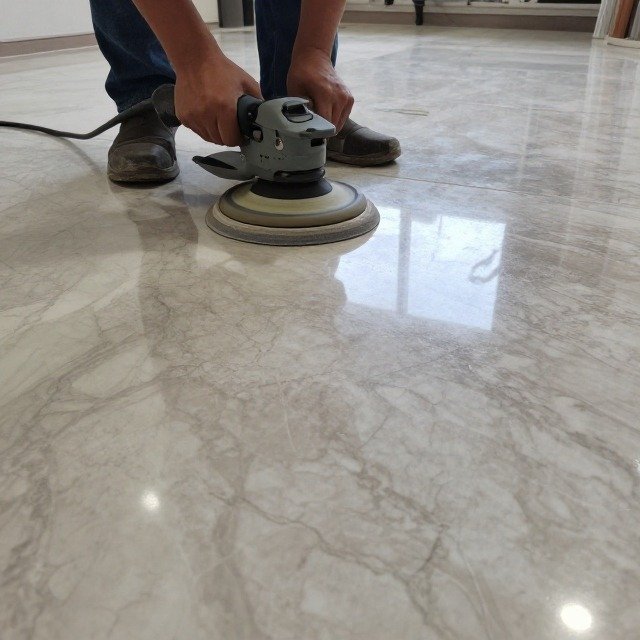
Diamond polishing is a chemical-free resurfacing process. It utilizes heavy flooring grinding machines that are equipped with diamond-impregnated pads from coarse 50- or 100-grit up to 3000-grit.
How the Process Works
- Lipping and Leveling: The coarse diamond discs will grind down the uneven slab joints and remove deep surface scratches.
- Honing: The mid-grade grits smoothen out grinding marks, closing micro-pores and evening out the stone’s texture.
- Micro-Polishing: Ultra-fine diamond abrasives buff the natural crystals within the marble, bringing out its natural optical reflection.
- Crystallization/Impregnating Seal (Optional Finishing): A breathable, penetrating sealer or light crystallization spray is applied to lock out stains without suffocating the stone.
What Is Epoxy Polishing?
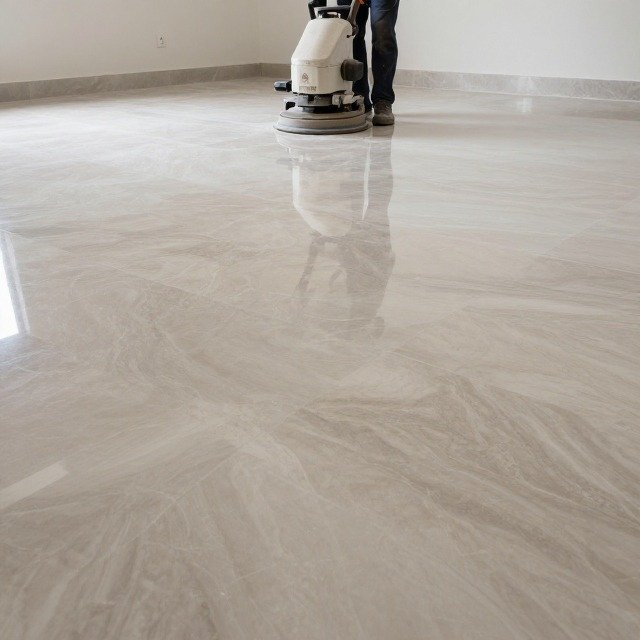
Epoxy polishing, which is referred to in commercial stone care as epoxy coating, resin coating, or topical sealing. It involves applying a liquid synthetic epoxy layer over the prepared marble floor, which is then cured, leveled, and buffed to an artificial high gloss.
It is also distinct from spot-filling pinholes with transparent epoxy paste: full epoxy polishing treats the floor primarily with a synthetic topcoat to mimic reflectivity.
How the Process Works
- Surface Prep: The stone is cleaned and lightly abraded so the resin can adhere.
- Resin/Epoxy Application: A clear epoxy formulation is spread across the surface, filling superficial voids, cracks, and hairline pores.
- Curing: The polymer layer undergoes a curing period between 24 and 48 hours.
- Buffing: The top resin layer is buffed and polished to achieve a uniform sheen.
Key Comparisons: Diamond vs. Epoxy Polishing
| Parameter | Diamond Polishing | Epoxy Polishing |
| Primary Mechanism | Mechanical abrasion & natural crystal honing | Synthetic resin topcoat application |
| Luster Quality | Deep, organic, crystal-clear mirror finish | Plasticized, glassy, high-gloss sheen |
| Breathability | Fully breathable; stone expels moisture naturally. | Non-breathable barrier; can trap sub-floor moisture |
| Durability & Longevity | High (3 to 6+ years with basic maintenance) | Moderate (1 to 2 years before wearing unevenly) |
| UV Resistance | 100% UV stable; will never yellow | Can oxidize, turn amber, or yellow under sunlight |
| Scratch Resistance | High; the stone surface itself is hardened. | Prone to surface micro-scratches on resin |
| Restoration Cost | Higher initial labor/equipment cost | Lower initial application cost |
Longevity, Breathability, and Maintenance
1. Moisture Vapor Permeability (Breathability)
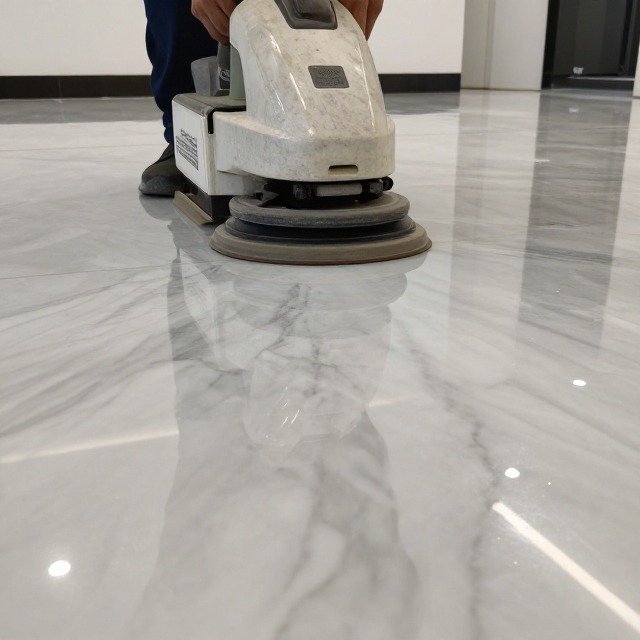
Natural stone floorings, especially over concrete areas, continually release subsurface moisture vapor. Diamond polishing leaves the pore matrix open, allowing this moisture to evaporate harmlessly.
Epoxy coating forms a plastic barrier. The moisture trapped beneath the epoxy seal cannot escape. It leads to efflorescence, cloudy white spots, and eventual delamination of the resin sheet.
2. Surface Aging and Traffic Lanes
When high-grit diamond-polished marble experiences heavy foot traffic, the wear is uniform and gradual. Rebuffing traffic lanes requires minimal spot-honing.
Epoxy resin surfaces, by contrast, develop visible scuffs and dull walking paths quickly because resin is softer than stone. Repairing an epoxy coat often requires stripping off the entire layer chemically or physically before reapplication.
3. Yellowing and UV Exposure
Italian marble varieties such as Statuario, Botticino, and Carrara feature pure white and cream matrices. Epoxies, particularly standard amine-cured formulas, degrade and yellow when exposed to UV light from windows and doors. Diamond polishing works directly on the calcite minerals, ensuring zero color distortion.
Verdict: Which Should You Choose?
- Choose Diamond Polishing for genuine Italian marble floors, hotel lobbies, high-end residences, and sunlit living spaces. It is the gold standard for preserving the stone’s intrinsic value, structural health, and crystalline clarity.
- Choose Epoxy/Resin Treatments strictly for localized flaw correction (such as stabilizing loose fissures, filling natural pitting in travertine/rustic slabs, or repairing chips) rather than a wall-to-wall surface finish.
Frequently Asked Questions (FAQs)
Q1: Does diamond polishing reduce the thickness of Italian marble significantly?
No. Standard maintenance diamond polishing removes only microns of the top layer—just enough to level microscopic scratches and oxidation. Unless aggressive lippage removal is required, stone loss is negligible over decades of care.
Q2: Can I apply diamond polishing over a floor that already has an epoxy coat?
Yes, but the existing epoxy coating must first be completely stripped using coarse diamond grinding pads or safe stripping compounds to expose the raw stone underneath before beginning the honing sequence.
Q3: How do I clean and maintain marble after diamond polishing?
Use only pH-neutral stone cleaners with microfibre mops. Avoid vinegar, bleach, lemon juice, or generic acid-based bathroom cleaners, as acids instantly etch calcium carbonate.
Q4: Is epoxy polishing cheaper than diamond polishing?
Yes, epoxy application often has a lower upfront cost and takes fewer specialized machine hours initially. However, because it requires stripping and recoating every 12 to 24 months, diamond polishing proves far more cost-effective over its lifecycle.

