
Italian marble from timeless Carrara and dramatic Calacatta to warm Botticino and Statuario remains the gold standard of architectural elegance. Whether specifying stone for an open-concept living area, an ensuite sanctuary, or an expansive kitchen island, the natural stone you choose is only half the equation.
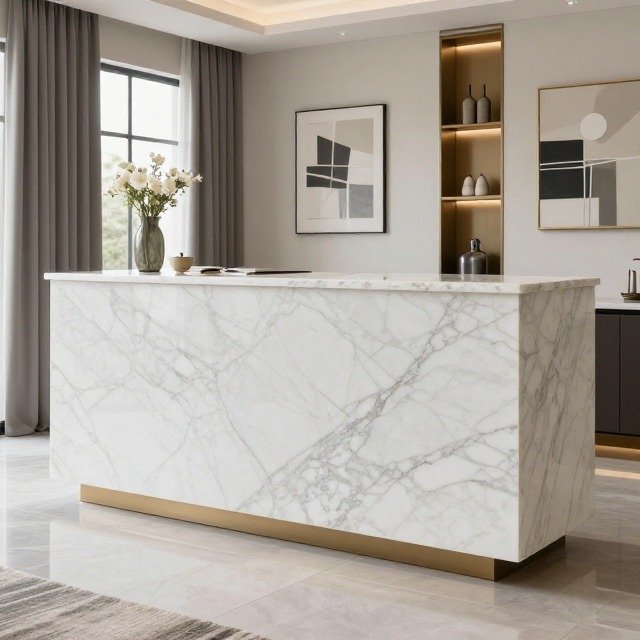
The surface finish fundamentally dictates how the marble interacts with light, resists wear, and complements the overall tactile aesthetic of your home.
When investing in genuine Italian marble, the choice almost always comes down to two classic treatments: Honed and Polished. Here is an architectural and practical comparison to help you choose the ideal finish for your layout and lifestyle.
1. What Is Polished Italian Marble?
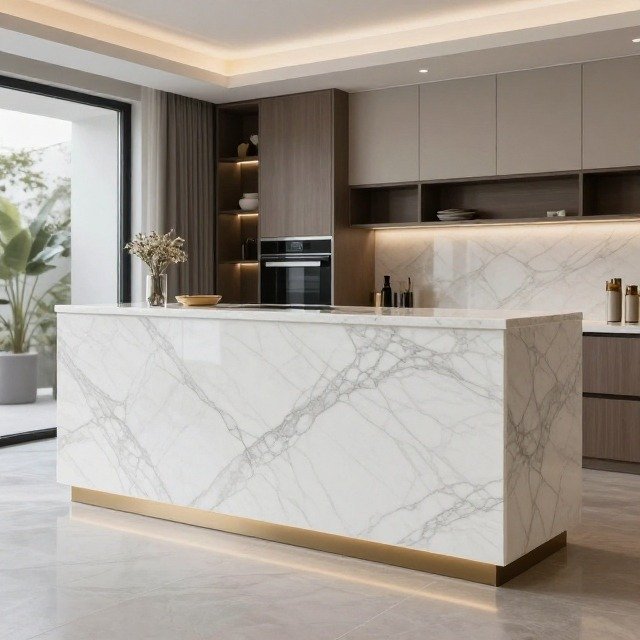
A polished finish is achieved by repeatedly grinding the surface with progressively finer diamond abrasives until the natural crystals of the calcium carbonate achieve a high-gloss, mirror-like luster.
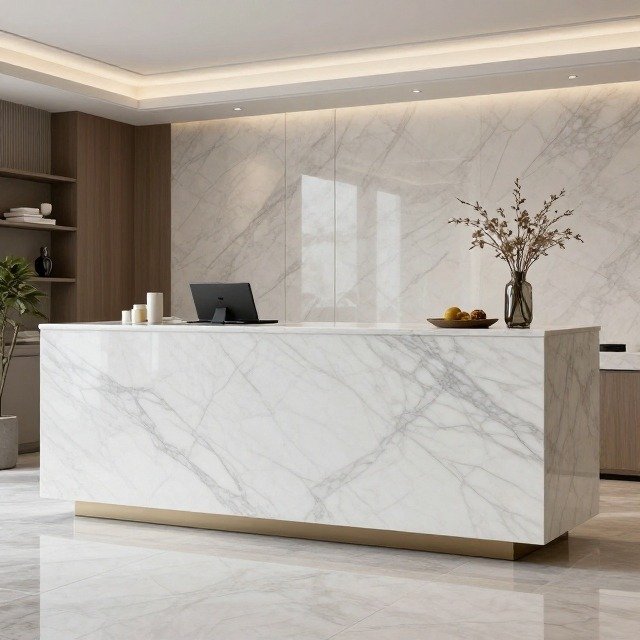
- Visual Profile: Reflective, vibrant, and luminous. Polishing brings out the deepest contrasts in the stone, making subtle veining pop with crystal clarity.
- Texture: Perfectly smooth, slick, and non-porous feeling to the touch.
- Light Play: Bounces natural and artificial light across the room, creating an illusion of expanded space and heightened luxury.
Best Used For:
- Formal foyer and entryway floors
- Living room accent feature walls
- Powder room vanity tops
- Fireplace surrounds and ornamental columns
2. What Is Honed Italian Marble?
A honed finish stops short of the polishing phase. The surface is ground smooth and flat using coarser abrasives, yielding an organic satin or matte texture without reflective shine.
- Visual Profile: Soft, muted, contemporary, and understated. Honing preserves the authentic veining patterns while softening high-contrast streaks into subtle gradients.
- Texture: Velvety, smooth, and tactile with a gentle grip.
- Light Play: Absorbs rather than reflects light, eliminating harsh glare and creating a calm, grounded ambiance.
Best Used For:
- High-traffic kitchen flooring and kitchen islands
- Master bathrooms, walk-in shower pans, and wet areas
- Outdoor covered patios and transition walkways
- Modern organic or minimalist architectural interiors
3. Head-to-Head Comparison: Honed vs. Polished
| Feature | Polished Italian Marble | Honed Italian Marble |
| Aesthetic / Vibe | Classical luxury, glamorous, opulent | Modern organic, subtle, understated |
| Light Reflection | High mirror shine; reflects light sources | Matte to low-satin; diffuses light evenly |
| Slip Resistance | Lower slip resistance (slippery when wet) | Higher traction; safer for foot traffic |
| Vulnerability to Etching | High (acidic dull marks stand out prominently) | Low-to-Moderate (etch marks blend into matte texture) |
| Vulnerability to Staining | Lower (tighter surface pores resist liquids slightly longer) | Higher (more open microscopic pores absorb spills faster) |
| Scratch Visibility | Visible under directional lighting | Minimal (scratches soften into the matte surface) |
| Maintenance Routine | Frequent buffing to preserve gloss; re-polishing over time | Regular penetrating sealer; easy routine sweeping |
4. Key Decision Factors
A. Living Room & Main Flooring
If your goal is to maximize natural light and evoke grandeur, polished Italian marble creates dramatic impact. However, in busy households with heavy daily foot traffic, a honed finish hides micro-scratches caused by dust and shoes much better over time.
B. Kitchen Countertops & Wet Bars
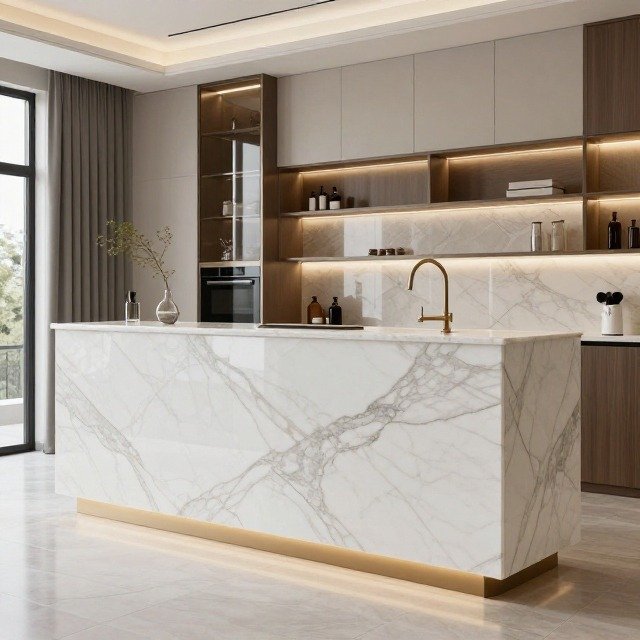
Marble contains calcium carbonate, which reacts with acidic substances (lemon juice, tomatoes, wine, vinegar) to create dull spots known as etches. On a polished slab, an etch mark breaks the mirror finish and becomes instantly visible. On a honed slab, an etch mark simply blends into the existing matte texture, making honed marble the preferred choice among culinary enthusiasts.
C. Bathrooms and Shower Floors
Safety is paramount in wet zones. Polished marble becomes slick when wet, making it less suitable for shower stalls or family bathroom floors unless broken up into small mosaic tiles with abundant grout lines. A large-format honed slab provides inherent traction and a serene, spa-inspired feel.
Conclusion
Neither honed nor polished Italian marble is objectively superior the right choice hinges entirely on your functional priorities and stylistic vision.
Opt for polished Italian marble when you desire unmatched grandeur, amplified light, and a timeless, glossy focal point in low-traffic or formal settings. Choose honed Italian marble when your design calls for effortless, modern warmth, touchable velvet textures, and an forgiving surface suited for everyday high-traffic living. With proper sealing and routine maintenance, both finishes will mature gracefully and anchor your interiors for decades to come.
Frequently Asked Questions (FAQs)
Q1: Does honed Italian marble stain more easily than polished marble?
Yes. Honing leaves microscopic pores slightly more open than a polished finish. However, applying a high-grade penetrating, solvent-based stone sealer twice a year creates an invisible hydrophobic barrier that prevents stains effectively.
Q2: Can I change a polished marble slab to honed (or vice versa) after installation?
Yes. Professional stone restoration technicians can hone a polished surface or mechanically polish a honed floor on-site using specialized wet-grinding diamond pads.
Q3: Which finish is better for an open-concept kitchen island?
Honed is widely recommended for kitchen applications. While polished marble looks pristine initially, acidic everyday foods (citrus, vinegar, coffee) cause etching. Etch marks are far less noticeable on a honed surface.
Q4: How do I clean and maintain both finishes?
Always clean marble with a pH-neutral stone cleaner and warm water using a soft microfiber mop or cloth. Never use bleach, acidic cleaners, vinegar, or abrasive scrub pads on either finish.

