
Natural marble is renowned for its timeless beauty, elegance, vein pattern, and architectural prestige in any commercial and residential design. However, one of the most critical decisions during specification is choosing natural stone with Carrara, Calacatta, or Statuario and deciding between a honed marble and polished finish.

The finish alters not only the stone’s light reflect and aesthetic mood, but it also needs regular maintenance demands, etching vulnerability, scratches, and slip ratings. Here is the definitive guide to how polished
The finish alters not only the stone’s light reflectance and aesthetic mood but also directly dictates daily maintenance demands, slip ratings, etching vulnerability, and scratch repair methods. Here is a definitive guide to how polished and honed marble stack up across real-world performance factors.
1. Defining the Finishes: Polished vs. Honed
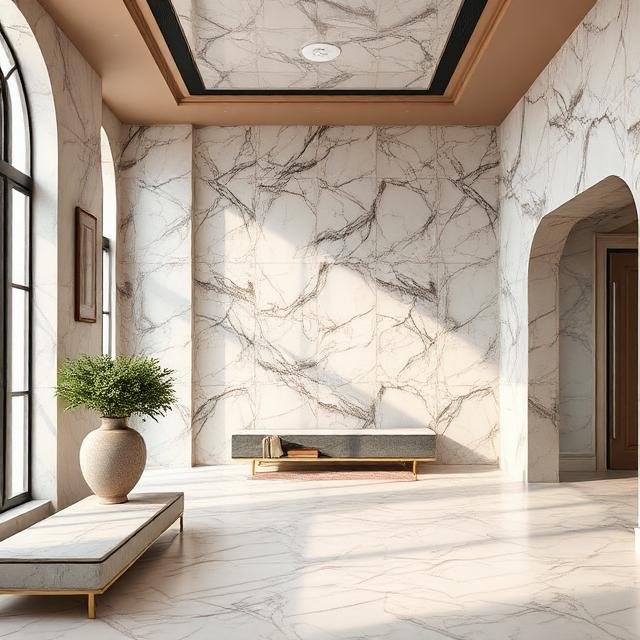
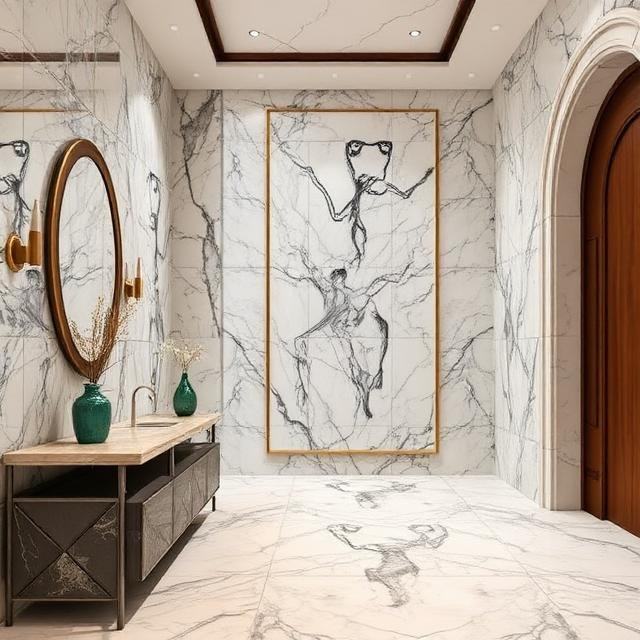
- Polished Marble: Created through sequential grinding using progressively finer industrial diamond abrasives, followed by buffing with fine polishing powders (often tin oxide or oxalic acid compounds). The process closes microscopic pores and produces a high-gloss, mirror-like surface with vibrant color saturation and razor-sharp vein definition.
- Honed Marble: Ground only up to a medium-grit abrasive stage (typically 200–400 grit). The process yields a flat, smooth, matte, or satin sheen without specular reflection. The colors appear slightly softer and more muted, evoking an organic, lived-in warmth.
2. Maintenance & Chemical Vulnerability
Marble is composed predominantly of calcite (calcium carbonate, CaCO₃), making it inherently sensitive to acidic substances (vinegar, lemon juice, wine, and tomato sauce) and alkaline cleansers.
Etching and Staining Dynamics
- Polished Finish:
- Etching: Acid reacts instantly with calcite, dulling the micro-smooth surface. On a polished slab, an etch mark appears as an unmistakable chalky, dull blemish against a brilliant, reflective plane.
- Staining: The ultra-fine mechanical compaction of polishing slightly decreases liquid absorption speed, granting a short buffer window to wipe up topical spills before they penetrate.
- Honed Finish:
- Etching: Because the surface is already matte, mild acid etching blends seamlessly with the surrounding texture and is far less noticeable to the casual eye.
- Staining: The open microscopic texture makes unsealed honed marble more porous than polished stone. It absorbs oils and dark pigments faster, making penetrating sealers strictly mandatory.

Sealing & Everyday Cleaning Protocol
- Cleaning Routine: Use strictly pH-neutral natural stone cleaners. Avoid bleach, acidic descalers, ammonia, or abrasive powders.
- Sealing Frequency:
- Polished: Penetrating impregnator sealer every 12–18 months.
- Honed: Premium fluorochemical impregnating sealer every 6–12 months, particularly in kitchen countertops and wet vanity zones.
3. Slip Resistance & Safety (COF)
Slip safety is assessed via the Dynamic Coefficient of Friction (DCOF) under wet and dry conditions (tested via ANSI A326.3 standards; the baseline for interior wet walkways is ≥0.42).
| Surface Finish | Dry Slip Resistance | Wet Slip Resistance | Best Recommended Applications |
| Polished | High (DCOF≈0.60–0.70) | Very Low (DCOF<0.35–0.40) | Grand foyers, formal living rooms, accent walls, vertical cladding |
| Honed | High (DCOF≈0.65–0.75) | Moderate to High (DCOF ≥ 0.42–0.55) | Master bathrooms, shower pans, pool decks, high-traffic commercial corridors |
- Wet Zones: Polished marble becomes slick when exposed to water, creating hazardous conditions in walk-in showers or pool surroundings. Honed marble provides superior microscopic traction, making it the architect’s standard for wet zones and main residential traffic paths.
4. Scratch Care, Scuffs, and Surface Restoration
Daily abrasion from pet claws, grit tracked under footwear, cutlery, or sliding kitchen appliances affects both finishes differently.
Scratch Visibility
- Polished Marble: Prone to fine hairline scratches, swirl marks, and micro-abrasions. When light reflects across the gloss finish, scratches refract light differently, making them visible even at shallow angles.
- Honed Marble: Highly forgiving. The matte micro-texture masks light micro-abrasions, scuffs, and daily wear patterns effortlessly.
Repair & Restoration Strategies
- Honed Surface Repairs: Minor scratches can often be buffed out locally using fine scouring pads (such as a green Scotch-Brite pad) or wet 400–600 grit diamond sanding discs lubricated with water, restoring the uniform matte field without calling a specialist.
- Polished Surface Repairs: Deep scratches or dull spots cannot be resolved with spot sanding without leaving a flat, mismatched patch. Restoration requires specialized marble polishing compounds (5-extra powder), variable-speed polishers, and sequential diamond pads to rebuild optical clarity.
Comparative Summary
| Feature | Polished Marble | Honed Marble |
| Visual Appearance | Formal, high-gloss, deep color contrast | Contemporary, matte/satin, organic warmth |
| Etch Concealment | Poor (etches appear starkly dull) | Excellent (etches blend into matte plane) |
| Stain Resistance (Raw) | Moderate (tighter surface pore closure) | Lower (more porous; requires regular sealing) |
| Scratch Concealment | Low (scratches catch specular light) | High (scuffs disperse into the finish) |
| Wet Foot Traction | Slippery when wet | Safe, slip-resistant |
| Primary Placement | Feature walls, formal living floors, fireplace surrounds | Kitchen counters, bathroom floors, shower surrounds |
Conclusion
Choosing between polished and honed marble comes down to balancing aesthetic lighting with a functional environment:
- Specify polished marble where visual drama, high-contrast veining, and formal luxury are paramount—such as entryway feature floors, fireplace surrounds, vertical wall panels, and powder room accents.
- Specify honed marble in high-utility, wet, or heavy-traffic spaces—such as open-concept kitchen islands, master bath suites, shower floors, and busy residential hallways—where superior slip safety, forgiving scratch care, and hidden acid etches outweigh mirror-gloss reflections.
Frequently Asked Questions (FAQs)
1. Can you change honed marble to polished (or vice versa) after installation?
Yes. Professional stone restoration technicians can hone a polished floor or polish a honed slab on-site using weighted rotary floor machines equipped with diamond abrasive discs and polishing powders.
2. Does honed marble stain more easily than polished marble?
In an unsealed state, yes. Honed marble has a slightly more open surface structure that absorbs liquids faster. However, applying a high-grade penetrating fluoropolymer sealer effectively balances stain resistance across both finishes.
3. Which finish is better for kitchen countertops?
Honed marble is widely preferred for culinary surfaces. While neither finish stops acidic liquids from reacting chemically with calcite, honed surfaces conceal the inevitable etching caused by lemons, wine, and vinegars far better than polished slabs.
4. How can I test if my marble floor needs resealing?
Perform the “water drop test”: place a few drops of water on the surface and let them sit for 10–15 minutes. If the water beads up cleanly, the seal is intact. If the stone darkens under the water, moisture has penetrated, indicating it is time to reapply an impregnating sealer.

