
Natural stone marble floors are timeless architectural luxury, but centuries of heavy traffic areas, spillage, and settling can leave aged slabs dull, stained, and uneven.
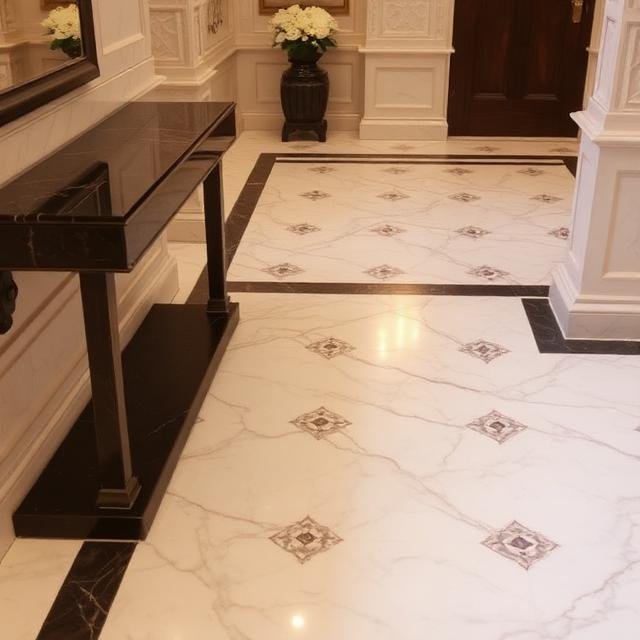
When aged marble begins to lose its luster, homeowners often assume replacement is the only recourse. However, the marble is serviceable and can be cut, honed, and repolished back to the factory fresh mirror finish for the cost of re-tiling.
Here is a comprehensive breakdown of marble floor restoration costs, methods, pricing factors, and practical maintenance insights.
Key Takeaways
- Average Cost: Marble floor restoration ranges between ₹30 and ₹85 per sq. ft. in India depending on the surface, degradation, and repair complexity.
- Restoration vs. Replacement: Restoring aged marble saves 80% to 95% compared to demolition, slab procurement, and reinstallation.
- Multi-Stage Diamond Polishing: The gold standard for aged floors involves progressive diamond abrasive grits, epoxy grout filling, densification, and crystallization.
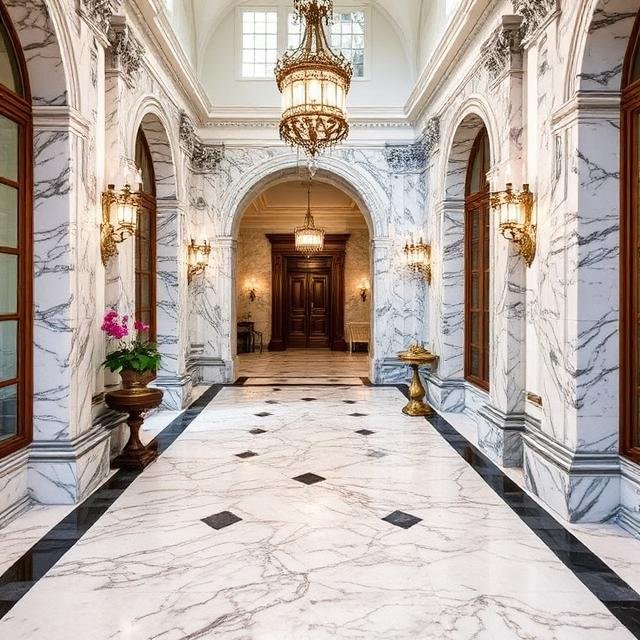
Marble Polishing & Restoration Cost Breakdown (Per Sq. Ft.)
The total expenditure depends largely on whether your aged marble requires superficial buffing or a structural mechanical grind.
| Service Tier | Scope of Work | Estimated Cost (INR / sq. ft.) | Estimated Cost (USD / sq. ft.) |
| Level 1: Buffing & Crystallization | Routine gloss revival, light cleaning, single-pass crystallizer powder buff | ₹15 – ₹25 | $1.50 – $2.50 |
| Level 2: Standard Diamond Honing & Polish | Etch mark removal, fine scratch remediation, medium grits (400–1500#), semi-gloss/satin | ₹25 – ₹45 | $2.50 – $4.00 |
| Level 3: Deep Grinding & Heavy Restoration | Coarse grinding (50–200#), lippage removal, pinhole repair, mirror polish | ₹40 – ₹70 | $4.00 – $6.50 |
| Level 4: Premium Architectural Restoration | Deep crack stitch/epoxy filling, Italian/Onyx stone care, lithium silicate densification & nano-sealer | ₹65 – ₹110+ | $6.50 – $10.00+ |
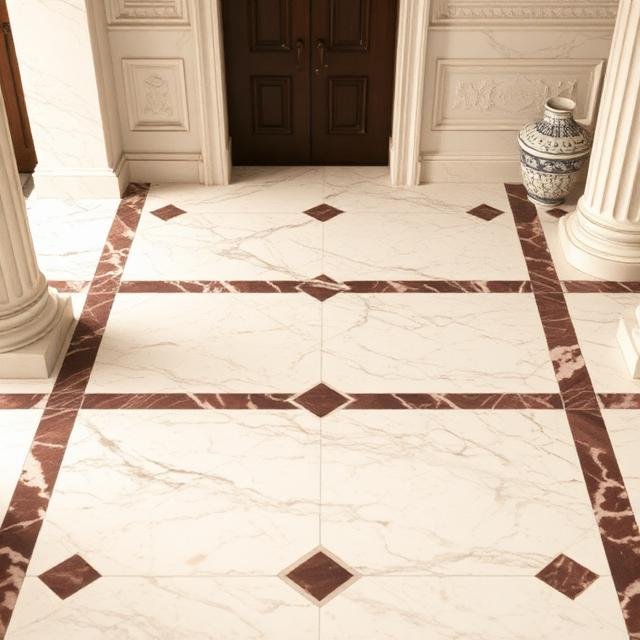
What Factors Drive Marble Restoration Pricing?
1. Type and Origin of Marble
- Indian Marbles (Makrana, Morwad, Rajnagar, Green Marble): Indian marble is denser and harder. They require durable abrasive diamonds but marble is less prone to micro cracking during aggressive grinding.
- Imported/Italian Marbles (Statuario, Botticino, Calacatta, Carrara): Italian varieties are softer, more porous, and chemically highly reactive. They command higher rates because technicians must use resin-bonded diamond pads and precision speed control to prevent surface burning or pitting.
2. Surface Lippage and Tile Unevenness
If settlement has created height discrepancies between slabs, workers must deploy a heavy planetary floor with metal bond, flattering the entire floor increases equipment wear and labor hours.
3. Pinhole, Crack, and Joint Restoration
Aged floors frequently exhibit hollow joints, pitted calcite pockets. Technicians use color-matched polyester to consolidate these crevices before polishing, adding an estimated ₹10 to ₹20 per sq. ft. to material costs.
4. Chemical Densification & Nano-Sealers
Old marble often suffers from weakened mineral cohesion. Applying a lithium silicate hardener compacts the pores from within, while a solvent-based fluoropolymer impregnating sealer prevents organic acid staining.
5. Job Size & Spatial Layout
Open living rooms allow wide planetary machines to operate smoothly, keeping per-square-foot rates low. Conversely, tight corridors, stairways, and small bathrooms require manual edge-grinders and detail work, often pushing rates toward minimum mobilization charges (typically ₹5,000–₹8,000).
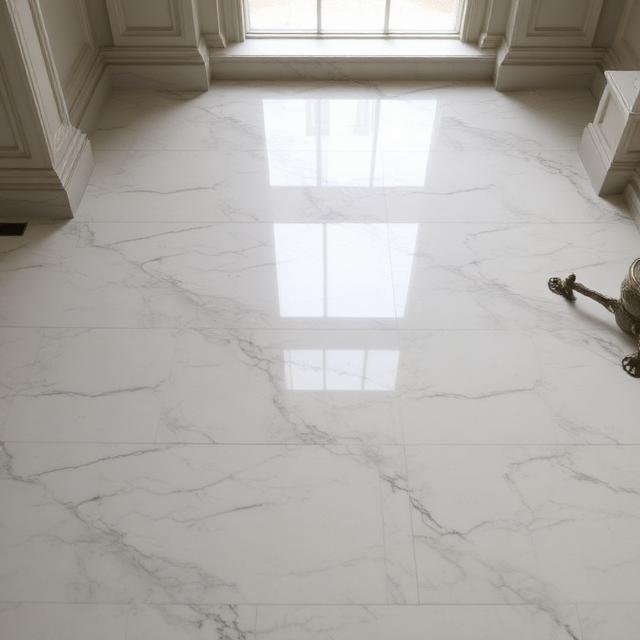
Step-by-Step: The Professional Restoration Workflow
[Deep Cleaning & Degreasing]
│
▼
[Coarse Grinding & Lippage Leveling (50#–100#)]
│
▼
[Epoxy Resin Crack Filling & Joint Grouting]
│
▼
[Progressive Diamond Honing (200#–800#)]
│
▼
[Surface Densification (Silicate Treatment)]
│
▼
[Fine Refinement & Mirror Polishing (1500#–3000#)]
│
▼
[Crystallization & Penetrating Nano-Sealer Application]
- Inspection & Masking: Walls, baseboards, and built-in fixtures are wrapped with protective masking tape and plastic film to prevent slurry damage.
- Coarse Diamond Grinding (Cut Stage): Heavy single-disc or planetary machines running 50 to 100 grit pads remove the damaged top layer (0.5 mm to 1.5 mm), eradicating deep scratches and lippage.
- Epoxy Joint Refill: Loose cementitious grout is routed out and replaced with color-matched fluid epoxy.
- Progressive Honing: Grits step up sequentially through 200, 400, and 800 grits to remove coarse swirl marks and build a smooth, reflective base.
- Densification & Polish: Lithium silicates are applied to harden the stone. Fine diamond pads (1500 to 3000 grit) elevate the surface gloss.
- Crystallization & Sealing: A thermochemical crystallizer containing fluorosilicates is buffed in with steel wool pads to generate a resilient vitrified sheen, followed by an impregnating penetrating sealer.
Conclusion
Polishing and restoring aged marble floors is one of the highest-ROI investments you can make during home renovation. Rather than expending significant capital on tearing out mature stone—which produces airborne dust, requires masonry disposal, and interrupts daily life for weeks—restoration preserves the authentic character of the original stone slabs.
By opting for a multi-pass diamond grind paired with epoxy consolidation and high-grade penetrating sealers, an aged floor can easily last another 10 to 15 years with minimal maintenance.
Frequently Asked Questions (FAQs)
1. How long does the shine last after professional diamond polishing?
A properly diamond-honed, crystallized, and sealed marble floor generally retains its high-gloss mirror finish for 3 to 5 years in active residential environments, and 7 to 10 years in low-traffic bedrooms, provided pH-neutral stone cleaners are used.
2. Is diamond polishing messy? Does it create heavy airborne dust?
Most commercial floor restorers use wet grinding systems. The machine feeds water directly under the diamond plates, converting pulverized stone into a slurry that is continuously extracted with commercial wet vacuums, eliminating airborne silica dust.
3. Can deep yellowing or oil stains on old marble be removed?
Surface stains are ground away during honing. However, if oil or rust has penetrated deep into the crystalline structure, technicians apply an active chemical poultice (such as diatomaceous earth combined with hydrogen peroxide or degreasers) over 24 to 48 hours to draw the contaminant out before polishing begins.
4. Why should I avoid traditional acidic polish powder on Italian marble?
Cheap, quick-fix polishes often use harsh oxalic acid compounds that chemically burn the marble surface into an artificial, brittle glaze. This “acid shine” dulls quickly and leaves the stone vulnerable to pitting. Mechanical diamond refinement creates a genuine physical polish that is far more durable.

