When remodeling a bathroom or kitchen, the natural stone often sit near the top of the wish list. The natural stone, granite, remains an enduring favorite due to its scratch resistance, timeless beauty, and heat resistance.
However, as soon as you step into a stone showroom, you will encounter industry terminology Level 1, Level 2, and Level 3.
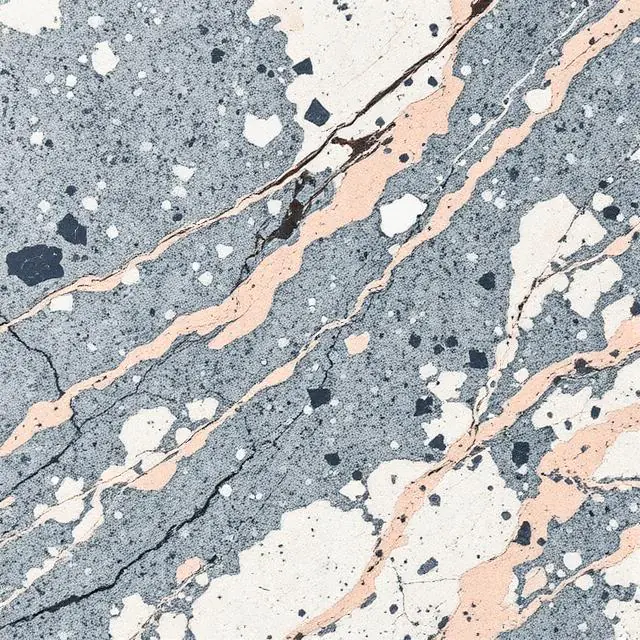
A widespread misconception among homeowners is that higher grade indicates superior density and strength. In reality, granite tiering is entirely about rarity and aesthetics, not structural durability.
In this guide, we break down granite levels, compare Level 1 vs Level 3 in depth, examine the real-world cost implications, and help you determine which tier delivers the best return on investment for your project.
1. What Determines a Granite’s Tier?
Granite grading is categorized based on supply, extraction difficulty, and visual complexity:
| Key Factor | Description |
| 1. Rarity & Availability | Is the stone abundant or sourced from a single, hard-to-reach quarry? |
| 2. Color & Movement | Standard speckles vs. dramatic veins, swirls, and rare mineral pigments? |
| 3. Transport & Freight | Domestic/local quarries vs. remote, high-freight imported sources? |
| 4. Fabrication Complexity | High-vein stones require complex cuts and seam matching, increasing waste. |
The 3 Standard Granite Levels
- Level (Entry-Level / Commercial Grade): Readily available
- Readily available, uniform speckled patterns, standard colorways (greys, tans, basic blacks).
- Level 2 (Mid-Grade): Greater visual movement, moderate color variations, more distinct veining.
- Level 3 to Level 5+ (High-End / Exotic): Rare mineral compositions (e.g., deep blues, vivid emeralds, luminous golds), dramatic wave-like movement, high uniqueness per slab.
2. Level 1 Granite: The Budget-Friendly Workhorse
| Attribute | Details |
| Key Traits | Uniform speckling, consistent pattern, high supply |
| Popular Varieties | Jet Black (Standard), P-White, Tan Brown, Steel Grey, Rosy Pink, Luna Pearl |
| Average Cost | ₹110 – ₹180 per sq. ft. (installed) |
Level 1 granite is abundant in the market and it is sourced in large quantities from major domestic quarry belts and these slabs has uniform pattern.
Characteristics & Aesthetics
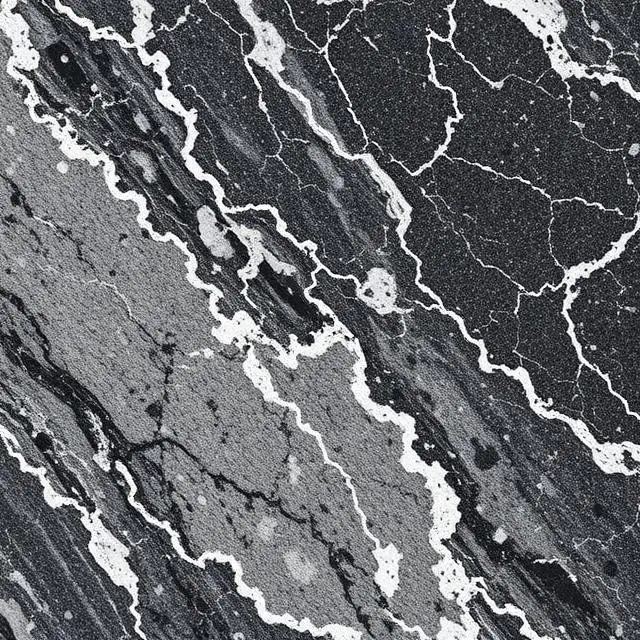
- Pattern Style: Primarily speckled, granular, or pebble-like (“salt-and-pepper” distribution).
- Color Palette: Dominated by greys, charcoals, beiges, muted pinks and standard black.
- Consistency: Slabs look identical and minimize the material waste during the fabrication process.
Advantages of Level 1 Granite
- Maximum Cost Efficiency: Offers genuine natural stone durability starting at ₹90 – ₹100 per sq. ft. for slab material.
- Simplified Seaming: Consistent grain lines blend easily across joints in L-shaped counters.
- High Resale Appeal: Neutral, understated tones suit diverse kitchen styles.
- Equal Durability: Resists heat, pan burns, and knife scratches just as well as premium stones.
Limitations
- Lower Visual Uniqueness: Lacks dramatic, one-of-a-kind veining.
- Familiar Aesthetic: Common across standard residential projects.
3. Level 3 Granite: The Exotic Showstopper
| Attribute | Details |
| Key Traits | Fluid movement, rare mineral deposits, one-of-a-kind |
| Popular Varieties | Blue Dunes, Titanium Gold, Volga Blue, Black Galaxy, Costa Esmeralda, Alaska Gold |
| Average Cost | ₹250 – ₹500+ per sq. ft. (installed) |
Level 3 represents the luxury and exotic tier. These slabs originate from specialized quarries or bedrock deposits rich in distinct mineral inclusions like feldspar crystals, and mica layers.
Characteristics & Aesthetics
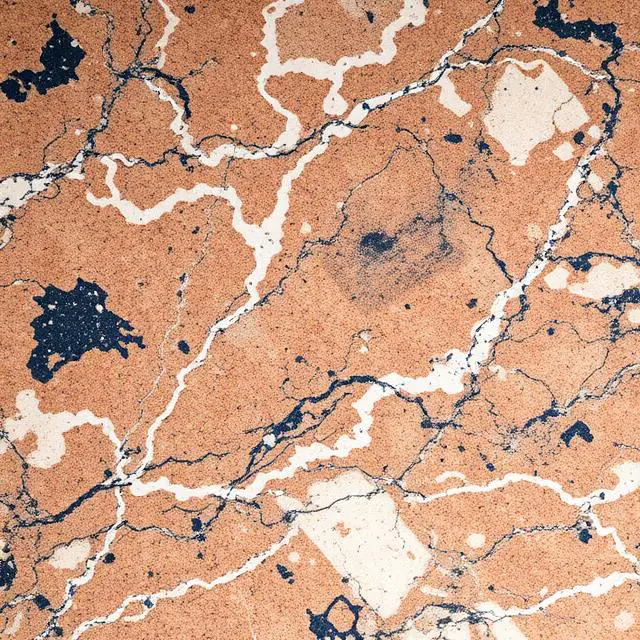
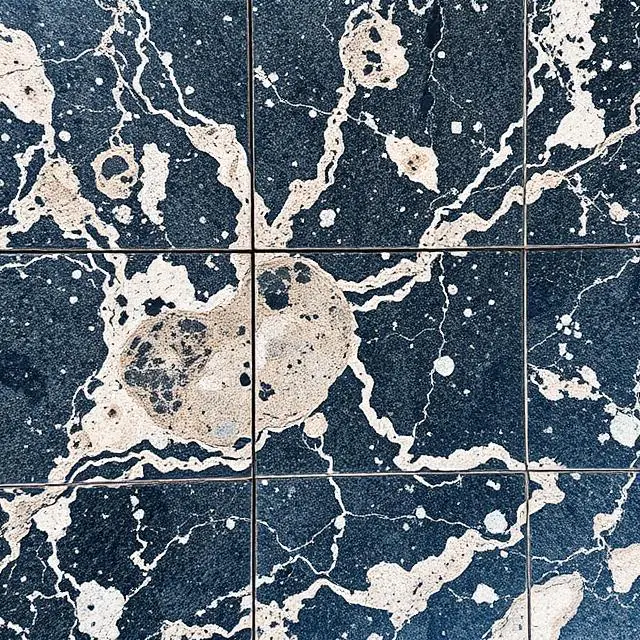
- Pattern Style: Flowing waves, river-like movement, crystalline inclusions, and bold contrast.
- Color Palette: Striking blues, emerald greens, gold-veined blacks, and high-contrast multi-tones.
- Artistic Individuality: Every slab has a distinct pattern, functioning like a natural centerpiece.
Advantages of Level 3 Granite
- Statement Focal Point: Ideal for waterfall islands, breakfast counters, and feature walls.
- Distinct Character: Guarantees a unique visual grain profile.
- Elevated Luxury Feel: Complements high-end custom cabinetry and designer fittings.
Limitations & Trade-offs
- Higher Investment: Material prices range from ₹200 to over ₹600 per sq. ft. before labor.
- Fabrication Precision: Complex patterns require careful layout planning and book-matching, often resulting in 40% to 80% cut wastage.
- Surface Care: Highly crystalline slabs may require sealing to protect micro-fissures.
4. Head-to-Head Comparison: Level 1 vs. Level 3
| Feature | Level 1 Granite | Level 3 Granite |
| Primary Visual Style | Granular, speckled, uniform | Sweeping veins, bold swirls, dynamic movement |
| Color Spectrum | Greys, standard black, tans, creams | Rare blues, rich greens, bright golds, multi-veins |
| Material Cost (Slab Only) | ₹50 – ₹90 / sq. ft. | ₹180 – ₹400+ / sq. ft. |
| Total Cost (Installed) | ₹110 – ₹180 / sq. ft. | ₹250 – ₹500+ / sq. ft. |
| Durability & Heat Resistance | Exceptional (Mohs 6–7) | Exceptional (Mohs 6–7) |
| Seam Matching Difficulty | Low (easy pattern blending) | High (requires strategic vein matching) |
| Waste Factor in Fabrication | ~10% – 15% | ~20% – 30% |
| Ideal Setting | Rental homes, main counters, standard builds | Center islands, luxury remodels, feature cladding |
R.K Marbles India
5. Budget Impact: Real-World Scenario (50 Sq. Ft. Kitchen)
Here is a realistic cost estimate for a 50 sq. ft. kitchen countertop (perimeter L-counter plus basic island), calculated in Indian Rupees:
| Cost Element | Level 1 Granite | Level 3 Granite |
| Stone Slab Material | ₹3,500 | ₹12,500 |
| Edge Moulding & Polishing (Full) | ₹1,500 | ₹3,500 |
| Vein Matching / Extra Waste Slabs | ₹500 | ₹2,500 |
| Sink / Cooktop Cutouts & Core Bits | ₹1,200 | ₹1,800 |
| Labor & Installation | ₹1,800 | ₹2,500 |
| Estimated Total Project Cost | ₹8,500 | ₹22,800 |
| Cost Difference | — | +₹14,300 (~168% increase) |
6. How to Choose the Right Level for Your Space
Choose Level 1 If:
- You want a dependable, hard-wearing natural stone while keeping interior costs lean.
- You are outfitting a rental unit, utility kitchen, or secondary pantry.
- Your kitchen has bold wall tiles, fluted shutters, or patterned backsplashes that need a neutral countertop anchor.
- You want minimal joint visibility with standard seam placement.
Choose Level 3 If:
- You are designing an open-plan kitchen island that acts as the focal centerpiece.
- Your cabinets and backsplash are subtle, giving room for the stone’s veining to shine.
- You are outfitting an executive apartment, villa, or custom home.
- Your budget allows for additional slab buffer and specialized fabrication labor.
7. Conclusion
The distinction between Level 1 and Level 3 granite comes down to visual rarity and logistics—not performance or strength. Both tiers provide standard natural stone benefits: resistance to heat, resistance to scratches, and long service life.
By selecting Level 1 for practical, uniform functionality or Level 3 for artistic character, you can align your countertop selection with your budget and design goals.
8. Frequently Asked Questions (FAQs)
Q1: Is Level 3 granite harder or more scratch-resistant than Level 1?
No. All true granite sits at roughly 6 to 7 on the Mohs Hardness Scale. In fact, many Level 1 granites (like uniform black or grey varieties) feature a dense, uniform mineral matrix that is marginally less porous than certain vein-heavy exotic stones.
Q2: Does Level 3 granite require special maintenance?
Both levels require routine care: wipe spills promptly, use pH-neutral stone cleaners, and apply a penetrating sealer once every 1–2 years. Exotic stones with prominent quartz or mica deposits may require a dedicated initial sealing coat.
Q3: Why is fabrication labor more expensive for Level 3 granite?
Exotic stones feature non-uniform directional patterns. Masons must use extra material and time to line up vein transitions across countertop joints, sink cuts, and edge profiles, increasing cutting labor and material buffer.
Q4: Can I use both Level 1 and Level 3 in the same kitchen?
Yes. A common design approach is installing an exotic Level 3 stone on the central island for dramatic impact, paired with an economical Level 1 granite (such as Jet Black or Steel Grey) on the main cooking perimeter.
Q5: Will Level 3 granite substantially increase property resale value?
In premium or luxury residential segments, exotic stone enhances visual appeal. However, in mid-range properties, practical Level 1 or Level 2 stone offers comparable functional utility and better cost recovery.