
Why is my granite countertop losing its shine?
Granite countertops lose their shine primarily due to buildup of soap film on the surface from routine dish soap cleaning by acidic household ingredients like lemon juice or vinegar and microabrasions from abrasive scrubbing pads.
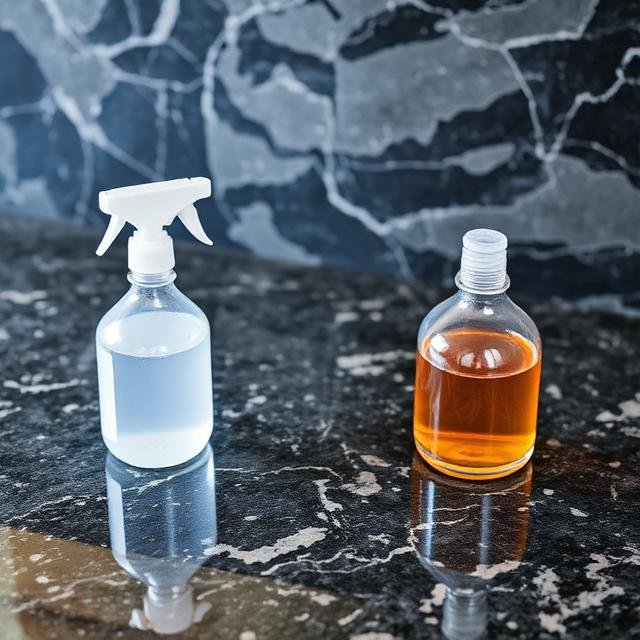
How do you fix dull granite?
You can restore the shine by deep cleaning the surface of granite using pH-neutral stone cleaners to strip away film, resolving deep organic stains with a baking soda poultice, applying a premium-quality solvent-based impregnating stone sealant, and buffing the surface with granite polish.
Introduction
Granite countertops are a hallmark of timeless durability in modern home design. However, the homeowners notice with time that their mirror-like surface begins to look dull or hazy. The granite is incredibly hard, and its finish is susceptible to chemical and physical changes that can damage the natural luster.
If your countertops have lost their radiance, they rarely ruin the surface of granite permanently. Understanding exactly why the granite is losing its shine is the first step towards reviving its original factory radiance.

Top 4 Reasons Your Granite Countertop is Losing Its Shine
1. Soap Film Accumulation
One of the most common causes of the dull surface of granite is the routine followed by homeowners. Using dish soap for daily cleaning may cause the surface of the granite to become dull. It leaves behind the microscopic layer of lipid film on natural stone. Over weeks and months, the film accumulates, trapping dust and cooking oils. This results in a cloudy, streak-laden appearance that blocks the stone’s natural look.
2. Chemical Etching from Acidic Cleaners
Granite is a natural rock composed of quartz, mica, and feldspar. It is less chemically sensitive than marble. It can still suffer from etching, a chemical burn that occurs when acidic substances react with factory polish. The household liquids like vinegar, wine, and generic bathroom cleaners eat away at the polished finish and create dull spots that cannot simply be wiped away.
3. Degradation of the Protective Sealant
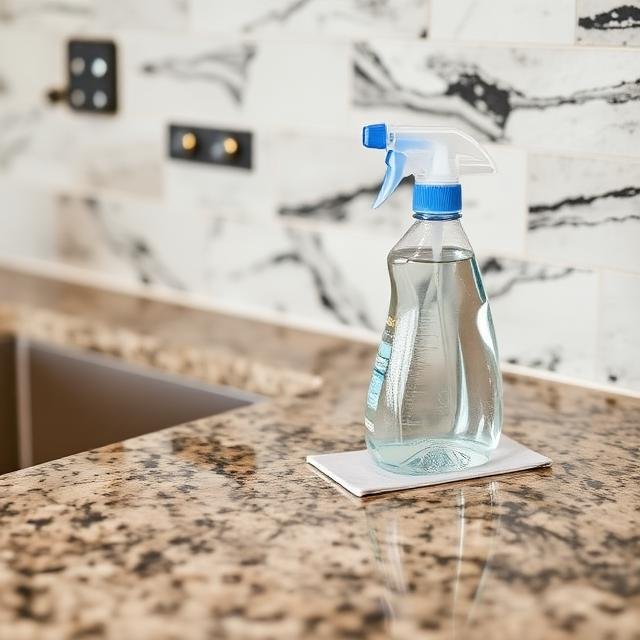
Granite is naturally porous in nature. It prevents liquid penetration and stains. It requires being sealed at regular intervals. The sealant wears down due to age and improper friction cleaning agents; the bare stone is exposed. This exposure allows water and organic compounds to penetrate microscopic pores and darken the stone internally with superficial reflectivity.
4. Micro-Abrasions and Scratches
The abrasive scrubbing pads, wool, and sliding heavy ceramic pots and cast iron skillets across the countertop introduce micro-scratches. A single scratch causes thousands of tiny abrasions that scatter light instead of reflecting it. It causes the surface to appear flat matte.
Step-by-Step Restoration Protocol: How to Fix Your Granite’s Shine
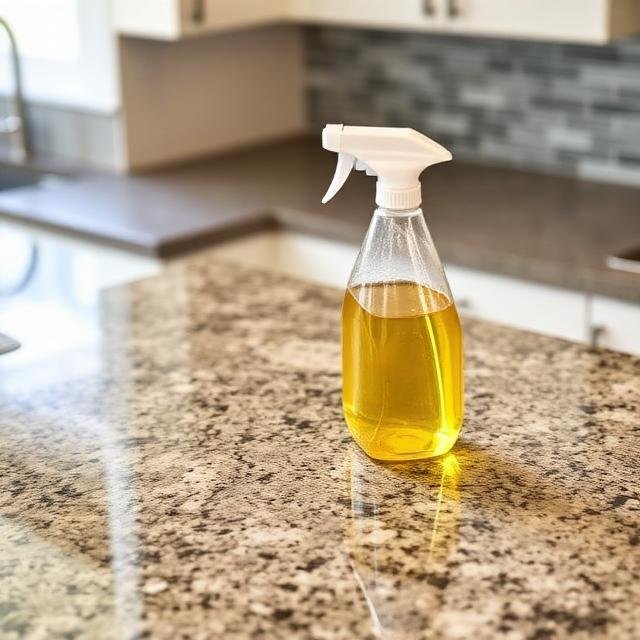
Granite can restore the shine in a systematic approach; moving from deep cleaning to surface sealing and conditioning is important. Here is the exact step-by-step process used by natural stone professionals to restore it.
Step 1: Stripping & Deep Clean
- Objective: To remove the accumulated soap scum and old wax coatings.
- Action: Always use pH-neutral stone cleaners. Mix 1: 1 of isopropyl alcohol and distilled water. Then wipe them using a microfiber cloth. For stubborn buildup, therefore, use a stone-safe degreaser.
Step 2: Stain Removal
- Objective: Draw out deep set of oil and stains causing discoloration.
- Action: Apply the baking soda and water paste and acetone paste. Cover the paste with plastic wrap and let it sit for 24 hr, then scrape it gently.
Step 3: Resealing
- Objective: To replenish the internal protective barrier of the natural stone.
- Action: Always ensure the surface is fully dry, then apply a premium quality solvent impregnation sealer. Let it penetrate the stone for 10-15 minutes, then buff off all the excess liquid completely before it dries.
Step 4: Topical Polishing
- Objective: To enhance the superficial glossy finish on the surface of stone.
- Action: Apply some high-quality granite polish and buff in a circular motion with a clean microfiber cloth.
Proactive Maintenance: Preventing Future Dullness
Once you have restored the stone’s factory finish, maintaining it involves adopting stone-safe cleaning protocols:
- Use Stone-Safe Cleaners: Switch to pH-neutral cleaners specifically engineered for natural stone.
- Protect the Surface: Always use a vegetable chopping board and coasters to protect the surface from thermal shock, scratches, and acidic spills.
- The Six-Month Water Drop Test: Put a few drops of water droplets on the granite counter. If it beads up, then the granite sealer is intact. If it soaks into or absorbs into the stone and it darkens within 5 min, it’s time to reseal.
Conclusion
A dull granite countertop is ruined; it is simply masked by soap film from depleted sealant. By removing acidic cleaners and dish soaps from your routine, execute a deep cleaning, and apply high-quality impregnating sealers and polish the surface. With this method you can maintain a flawless, highly glossy shine for a long period of time. Investing in the right choice of granite and with proper care can preserve both the elegance, aesthetics, and durability of granite, and the ROI will increase.
Frequently Asked Questions (FAQs)
Q1: Can I use Windex or vinegar to clean my granite countertops?
Answer: No, you should never use vinegar or any cleaners that contain acidic liquids, bleach, or citrus ingredients on the granite. It is highly acidic in nature, and it causes etches on the surface of stone over time. The harsh chemicals break down the sealant and directly cause the loss of the shine of granite.
Q2: How often should I seal my granite countertops to prevent dulling?
Answer: On average, granite countertops should be sealed every 12 to 18 months. The exact frequency depends on the density of the specific granite variety.
Q3: Why does my granite look cloudy even after I wipe it down?
Answer: This cloudiness is almost caused by the film of dish soap cleaners. Wiping down the counter with a specialized stone-safe degreaser or an isopropyl alcohol solution will easily strip away the film and reveal the true shine underneath.
Q4: Is it possible to mechanically polish granite at home?
Answer: Light topical polishing can be easily accomplished at home using the commercial granite and using microfiber cloths. However, if the stone has deep structural scratches or chemical etching, it requires professional mechanical polishing using diamond pads.

