Choosing the right marble stone for your dream floor is a big decision, as it impacts the aesthetics and value of the home. Travertine and marble are two popular choices; both offer a unique beauty and characteristics. Let us understand the Travertine vs marble difference in cost, durability, and maintenance before making the decision.

Cost
When it comes to the initial investment, travertine holds an affordable price compared to marble.
Travertine:
- Material Cost: It typically ranges from Rs 2000 to Rs 5000 per sq ft for tiles. It completely depends on the finish, size, grade, and much more.
- Installation Cost: Similarly to marble, the professional installation can range from Rs 4000 to Rs 8000 per sq ft and varies based on complexity, geographic location, and subfloor preparation as well.

Marble:
- Material Cost: Marble is considered to be one of the most durable and expensive stones. The price ranges from Rs 5000 to Rs 10000 per sq ft or even higher for rare varieties, color combinations, vein patterns, texture, and thickness of slabs.
- Installation Cost: Similar to travertine, the installation costs range from Rs 4000 to Rs 9000 per sq ft. However, due to the marble’s weight and the precision for the installation, it can be charged more.

Overall Cost Comparison:
For a standard flooring project, you expect travertine to be approximately 30% less expensive than marble.
Durability
Both travertine and marble are durable natural stones, but they possess different strengths and weaknesses.
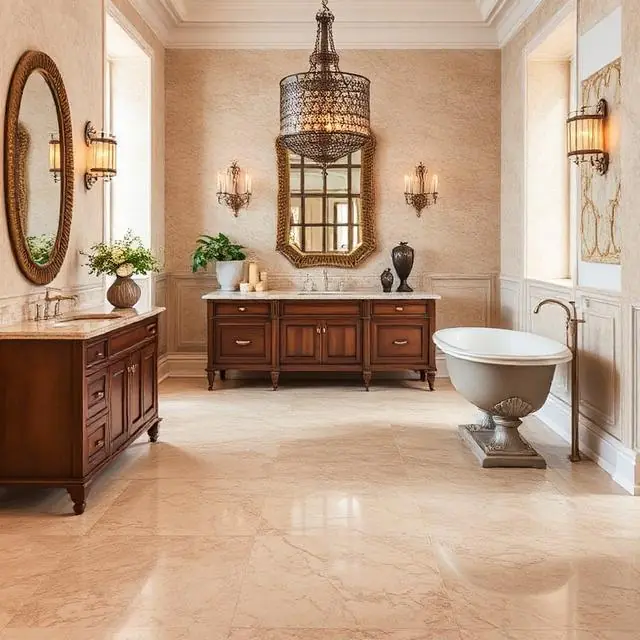
Travertine:
- Hardness: Travertine is formed from limestone, and it is generally softer than marble stone. It is highly susceptible to chipping and scratches when it is used in high-traffic areas or heavy-footing areas.
- Porous Nature: Travertine is naturally porous, and it has small holes and pits in it. While these can be filled during the installation for a smooth surface, improperly sealed travertine is highly susceptible to staining from liquids.
- Heat Resistance: It is highly heat resistant and suitable for areas exposed to sunlight, bathroom areas, and near fireplaces.
- Slip Resistance: The honed travertine can offer good slip resistance when it is wet, making it a viable option for outdoor areas and bathroom areas.
Marble:
- Hardness: Marble is a metamorphic rock, and it is formed from limestone. It is denser and harder compared to travertine. This makes it more resistant to scratches and chipping. However, it is relatively soft compared to granite.
- Porous Nature: It is less porous than travertine, and it is more susceptible to etching from acidic liquids like vinegar, cleaning agents, and citrus liquids. That can dull the polished finish. It requires regular sealing that can act as a shield to prevent staining.
- Heat Resistance: Good heat resistance.
- Slip Resistance: The polished marble can be slippery when it is wet and makes it a concern in the bathroom areas. The honed marble texture offers better traction.
Overall Durability Comparison: Marble is generally more resistant to scratches and wear from foot traffic due to its higher density. However, both require sealing to prevent staining, and marble is more prone to etching from acids.

Maintenance
It requires regular maintenance to preserve the beauty and longevity of both travertine and marble flooring.
Travertine:
- Sealing: Absolutely, it is required. It should be sealed regularly every 1-3 years depending upon the traffic areas and sealant quality. It prevents stains from penetrating as it is porous in nature.
- Cleaning: Regular sweeping or vacuuming is recommended to remove the dirt and grit from the scratches of the surface. Hence, it requires regular mopping with a pH-neutral stone cleaning agent. Never use any acidic cleaners to clean the surface.
- Spills: Immediately wipe off the spills, especially when acidic liquids fall on the surface, in order to prevent stains and etching.
- Repairs: Minor chips and cracks can often be filled with epoxy stone fillers that can be honed to match the surrounding tile.
Marble:
- Sealing: It is required to prevent stains. The marble should be sealed after installation and resealed regularly every 1-2 years.
- Cleaning: Similar to travertine, regular sweeping/vacuuming and mopping with a pH-neutral stone cleaner are vital. Never use acidic cleaners (like bleach, vinegar, or lemon juice), as they will etch the surface and create dull spots.
- Spills: Immediate cleanup of spills, especially acidic ones, is crucial to prevent permanent etching or staining.
- Repairs: Scratches can sometimes be buffed out by a professional. Deeper chips and cracks may require professional repair or tile replacement. Professional honing and polishing can restore a dull finish.
Overall Maintenance Comparison:
Both require diligent sealing and gentle cleaning. The main difference is that marble is more susceptible to etching from acids, which can be more challenging to repair than a stain on travertine (if sealed).
Conclusion
| Feature | Travertine | Marble |
| Cost | More affordable ($2-10/sq ft material) | More expensive ($5-50+/sq ft material) |
| Durability | Softer, more prone to scratches/chips. Very porous, requires thorough sealing. Good for moderate traffic. | Harder, more scratch-resistant. Less porous, but susceptible to etching from acids. Ideal for moderate to high traffic, but with care. |
| Maintenance | Requires frequent sealing (1-3 years). Clean with pH-neutral cleaner. Prone to staining if unsealed. | Requires frequent sealing (1-2 years). Clean with pH-neutral cleaner. Highly susceptible to etching from acids; immediate cleanup of spills is critical. Professional polishing may be needed. |
| Aesthetics | Earthy, rustic, warm tones, often with natural pitting. | Elegant, luxurious, wide range of colors/veining, often with a highly polished finish. |
Choosing between travertine and marble ultimately comes down to your budget, aesthetic preferences, and tolerance for maintenance.
- Choose Travertine if: You’re looking for a more cost-effective natural stone, prefer an earthy and rustic aesthetic, and are prepared for diligent sealing to protect its porous nature. It’s excellent for creating warm, inviting spaces.
- Choose Marble if: You desire a luxurious, elegant look with unique veining, are willing to invest more, and can commit to strict maintenance to prevent etching and preserve its pristine finish. Marble adds undeniable grandeur to any room.
Both stones offer timeless beauty and can significantly enhance your home’s appeal when properly cared for. Consider your lifestyle and the room’s function when making your final decision.
FAQs
Q: Can I install travertine or marble myself?
A: While DIY is possible for experienced renovators, natural stone installation is precise and labor-intensive. Professional installation is highly recommended to ensure proper subfloor preparation, leveling, and sealing, preventing costly mistakes.
Q: Are travertine and marble suitable for bathrooms?
A: Yes, both can be used in bathrooms. However, due to water exposure, both must be properly sealed. For marble, consider a honed finish for better slip resistance. Travertine’s slip resistance (especially tumbled or honed) can make it a good choice.
Q: How do I remove a stain from travertine or marble?
A: The method depends on the type of stain. For oil-based stains, a poultice with mineral spirits might work. For organic stains (coffee, tea), hydrogen peroxide might be effective. Always test in an inconspicuous area first. For difficult stains, it’s best to consult a stone care professional.
Q: What’s the difference between honed and polished finishes?
A:
- Polished: A highly reflective, glossy finish that brings out the stone’s color and veining. It can be more slippery and show scratches more easily.
- Honed: A matte or satin finish with little to no shine. It offers better slip resistance, hides minor scratches better, and gives a softer, more natural look.
Q: Can I use steam cleaners on travertine or marble?
A: Generally, it’s not recommended. The high heat and steam can potentially damage the sealant or even the stone itself, especially if there are existing micro-fractures. Stick to pH-neutral cleaners and warm water.