
Marble flooring is the symbol of luxury and adds timeless beauty to any home. However, the natural stone is porous in nature and sensitive to acidic liquids. It requires a gentle daily cleaning routine to maintain the lustrous shine and prevent etching and stains. The secret to the lasting beauty of marble isn’t scrubbing with metal scrubbers, but consistent gentle care is required. In this article let us understand the correct way to clean and maintain the marble floors on a daily basis.
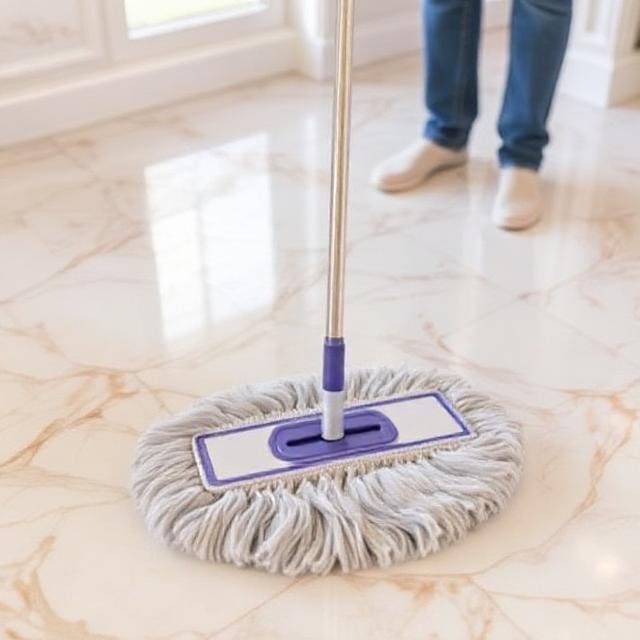
The Daily Marble Maintenance Routine (The Non-Negotiables)
The aim to clean the floor daily is to remove the dirt and microscopic grit that acts like sandpaper, scratching the marble’s delicate surface over time.
1. The Essential First Step: Dry Dusting/Sweeping
This is the critical step, and it should be performed daily, especially in high-traffic areas.
- Tool of Choice: A clean and non-treated microfiber dust mop.
- The Technique: Always gently sweep the entire floor to collect dirt, debris, and sand. Avoid pushing the dirt; instead, use smooth strokes.
- Avoid: Never use vacuum cleaners; the plastic or metal attachments and rotating brushes can easily scratch the surface. If you are using a vacuum, then use only a canister model with a soft brush attachment for hard floors.
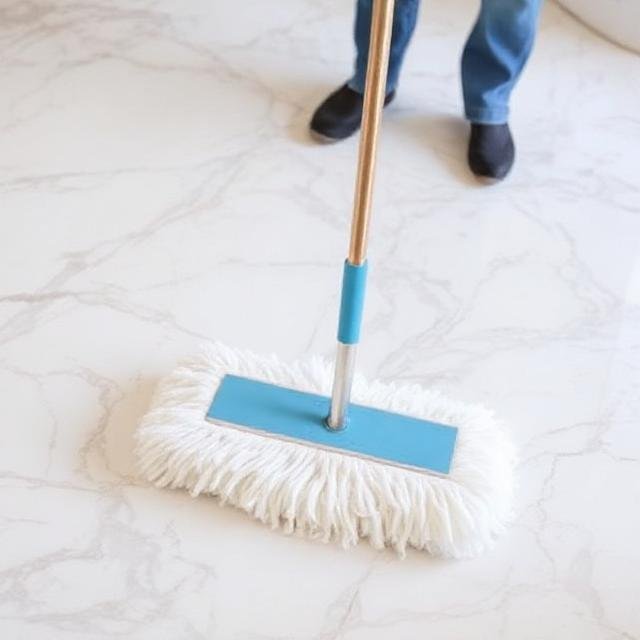
2. Immediate Spill Management: The “Code Red”
Marble is porous in nature, absorbs liquid easily, and causes stains and creates etching very quickly.
- Action: Treat every spillage, like water, lemon juice, or coffee, as a code red.
- The Technique: Blot immediately with a soft, clean, absorbent cloth. Never scrub the spillage.
- Cleanup: Always follow up by gently wiping the area with a pH-neutral solution and then rinsing with clean water and drying thoroughly.
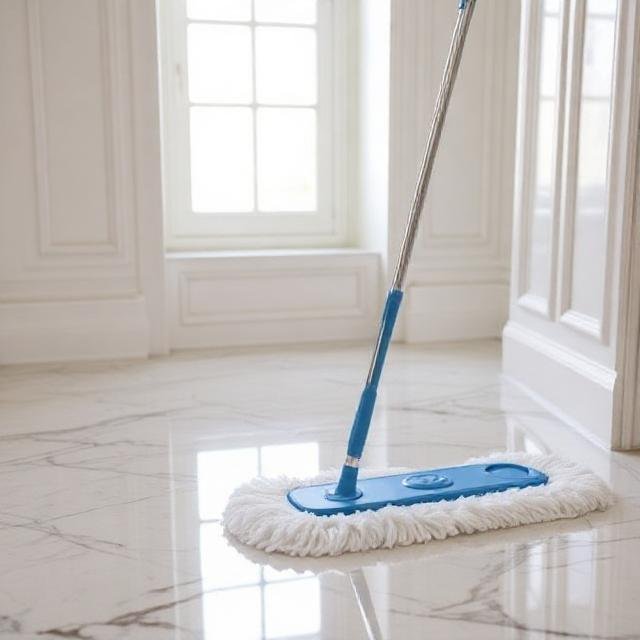
3. Proactive Protection: Rugs and Mats
While not a cleaning step, this is a vital part of daily maintenance to reduce the need for cleaning.
- Entryways: Place doormats outside and inside every entrance to trap dirt and moisture before it reaches the marble.
- High-Traffic Zones: Use washable area rugs or runners in areas like hallways, living room paths, and near the kitchen sink. Ensure the rug backing is non-slip and gentle on the stone.
Weekly/Bi-Weekly Damp Mopping
A damp mop should be done once a week, depending on the floor traffic, to remove the grime the dry mop missed.
- Prep: First, complete the daily dry dusting routine.
- The Solution: Always mix a few drops of pH-neutral cleaner with warm water in a bucket. Use a cleaner specifically formulated for natural stone.
- NEVER USE: Vinegar, lemon juice, ammonia, bleach, or any acidic or abrasive cleaning products. They will chemically etch and permanently dull the stone.
- The Mop: Use a soft sponge mop or a microfiber flat mop. Wring out the mop until it is just damp, not soaking wet. Excess water can penetrate the stone.
- Mopping: Gently mop the floor in a steady motion.
- Rinsing: This step is crucial. Go over the floor again with a mop dipped in clean, plain water and thoroughly wrung out to remove any soapy residue. Residue will attract dirt and cause streaks.
- Drying: Always dry the floor with a clean, soft cloth or dry mop. Allowing water to air-dry can leave behind water spots and mineral deposits. You can also turn on ceiling fans or open windows for air circulation.
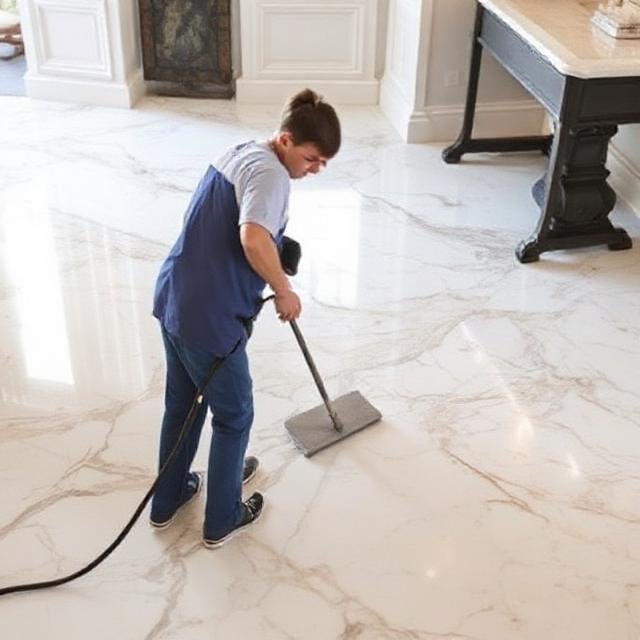
Conclusion: Consistency is Key
Marble floors are a long-term investment that repays care with breathtaking beauty. The “correct way” to clean and maintain them daily is defined by two principles: gentleness and consistency. By making daily dry dusting, immediate spill blotting, and strategic use of rugs non-negotiable, you will preserve the natural elegance and magnificent shine of your marble for years to come.
FAQs: Marble Floor Care
What is the best cleaner for marble floors?
The best cleaner is a pH-neutral cleaner specifically designed for natural stone. Alternatively, you can use a very dilute solution of mild, pH-neutral dish soap and warm water.
Can I use vinegar or lemon juice?
Absolutely not. Both vinegar and lemon juice are highly acidic and will cause immediate etching—a dull, corrosive mark on the stone’s surface.
How often should I seal my marble floor?
The frequency varies based on the specific type of marble and the sealant used, but professional sealing is generally recommended every 1 to 3 years to protect the stone against staining.
What is ‘etching’ and how do I fix it?
Etching is a chemical burn on the stone’s surface, caused by contact with acid (such as vinegar, wine, or citrus spills). For minor etching, you may be able to repair it using a marble polishing compound. However, deep etches usually require professional re-honing and polishing of the stone.
Can I steam mop my marble floor?
It is not recommended. The high heat and intense moisture from steam mopping can potentially damage the sealant and negatively affect the underlying stone. It is best to stick to the damp mopping technique.
What is the best cleaner for marble floors?
The best cleaner is a pH-neutral cleaner specifically designed for natural stone. Alternatively, you can use a very dilute solution of mild, pH-neutral dish soap and warm water.

