
Sourcing high-quality Indian marble for B2B commercial projects requires technical verification rather than aesthetic selections.
For B2B buyers such as developers, architects, and hospitality procurement managers. Indian marble offers a strategic balance of premium-grade aesthetics and industrial-scale availability. However, ensuring premium-quality marble involves specific technical verification and volume-based logistics.

In this article we will walk you through how to know the export quality standards of marble, various ASTM certifications, and volume pricing.
1. Understanding Export Quality Standards
For the B2B sector, “export quality” is not a marketing term; it means a set of physical and chemical parameters that assures the stone can withstand heavy duties with the rigors of international shipping and high-traffic areas, especially for commercial purposes.
- Dimensional Accuracy: The marble slabs require consistent thickness, typically 18 mm or 20 mm for export, with a tolerance of less than ±1 mm.
- Surface Finish: Premium quality Indian marble like Ambaji White and Makrana marble undergo multiple stages of polishing up to 3000 grit in order to achieve a glass finish without any pinholes or any cracks on the surface.
- Processing: For large-scale projects, always prefer Gangsaw-cut slabs. Unlike circular cuts of marble, Gangsaw processing ensures large marble slab size; also, it is easy for book matching.
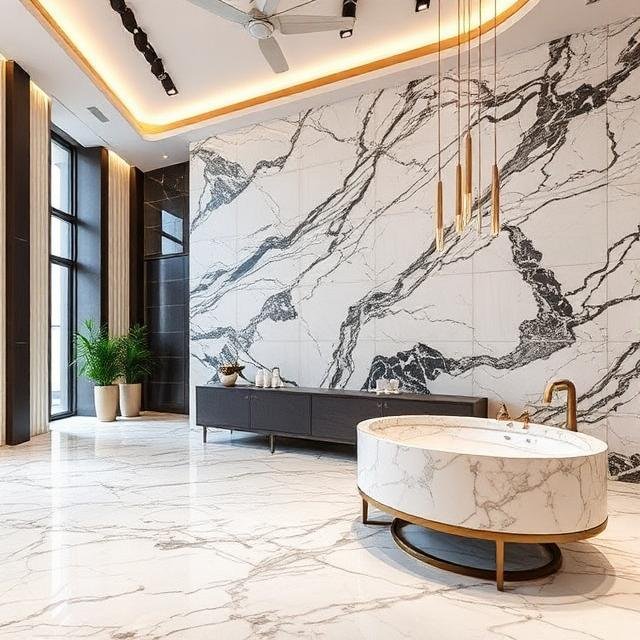
2. The Role of ASTM Certifications
To reduce the risk in commercial contracts, especially in Europe and North America, buyers often mandatorily prefer ASTM (American Society for Testing and Materials) testing. These certifications can provide the stone’s performance profile.
| ASTM Standard | Test Description | Importance for B2B |
| ASTM C503 | Standard Specification for Marble Dimension Stone | Classifies marble into Calcite or Dolomite based on mineral content. |
| ASTM C170 | Compressive Strength | Ensures the stone can support structural weight in lobbies or facades. |
| ASTM C97 | Water Absorption & Specific Gravity | Vital for hospitality; lower absorption (typically <0.75%) prevents staining. |
| ASTM C241 | Abrasion Resistance | Measures wear-and-tear for high-footfall areas like shopping malls. |

3. Volume Pricing & Procurement Logistics
B2B pricing is very sensitive to volume and container optimization.
- Tiered Pricing: The majority of Indian exports in marble hubs such as Udaipur and Kishangarh offer tiered pricing based on the number of marble containers.
- Dry-Lay Inspection: The premium projects always mandate a “dry-lay” service. This involves laying out slabs at the factory floor to check the vein matching and color consistency of the marble before they are selected.
- Packaging: The commercial-grade export requires fumigated ISPM-15 wooden crates and A-frames to prevent hairline fractures during waterway transit.

Conclusion
Sourcing Indian marble for a commercial project requires technical specifications. Further, ASTM certification is a must, and focus on “dry lay” verified batches. B2B buyers can leverage the cost-effectiveness of the Indian market without compromising on the quality and standards for luxury commercial developments.

FAQs
Q: What is the typical lead time for a 5-container order?
A: Depending on the type of marble, like Katni or Makrana, it usually ranges between 4 to 6 weeks from the date of deposit to the port’s delivery.
Q: Can Indian marble be used for exterior cladding?
A: Yes, varieties like Udaipur Green or Jaisalmer Yellow are frequently used for exterior designs due to their high density and resistance to weathering, provided they meet ASTM C97 standards.
Q: How do I verify a supplier’s export history?
A: Request their IEC (Importer-Exporter Code) and check for CAPEXIL membership, which is the Indian government’s council for chemical and allied export products.

