
A perfect countertop for the kitchen is a significant decision that impacts both the aesthetics and functionality of the space. Among many options, sintered stone vs. marble often sparks the debate. These two materials offer unique advantages and disadvantages, making it significant to understand their unique differences before making a decision.

This article explains a comprehensive comparison and helps you decide the best for your kitchen countertops.
The Allure of Natural Marble
For centuries, marble has been known for its timeless beauty, durability, and luxurious material. It has distinctive veins and a soft, opulent appeal for kitchens and bathrooms in grand homes across the globe. Marble is a natural stone formed over millions of years that gives each slab a unique and captivating pattern.

Pros of Marble Countertops:
- Aesthetic Appeal: Unparalleled beauty offers a sophisticated appeal.
- Unique Patterns: Every slab is one of a kind and adds character and individuality to your kitchen.
- Cool Surface: It has a cool surface to touch and makes it ideal for pastry and baking preparation.
- Increases Home Value: The marble countertop can be a strong selling point in the future.

Cons of Marble Countertops:
- Porous Nature: It is highly susceptible to stains from acidic liquids and oils and requires regular sealing.
- Softness: Prone to scratches, chips, and etching.
- Maintenance: Demands consistent cleaning and sealing to preserve its beauty.
- Cost: Generally a premium material, and repairs can be expensive.
- Sintered stone vs marble price: Marble typically has higher upfront costs and maintenance expenses.
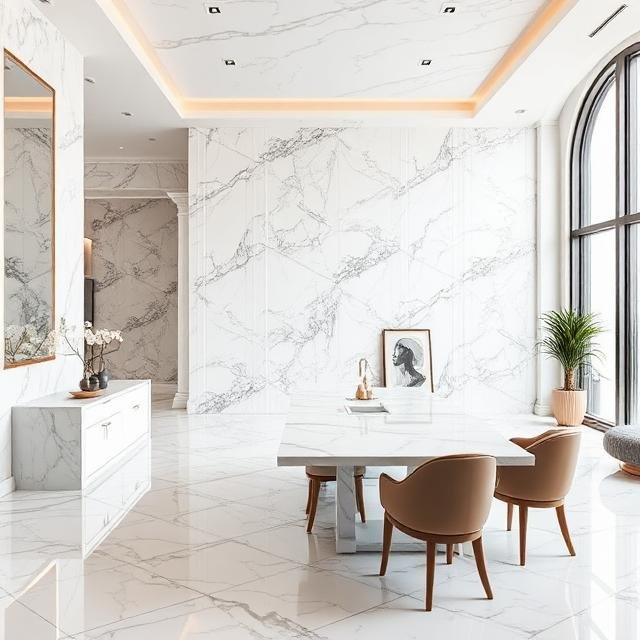
The Rise of Engineered Sintered Stone
Sintered stone is a new player in the kitchen countertops market, gaining rapid popularity for its exceptional performance. It is an engineered material, created by fusing natural minerals under extreme heat and pressure. It has a natural process of stone formation but an accelerated rate.
Pros of Sintered Stone Countertops:
- Exceptional Durability: It is highly resistant to scratches, abrasion, and chips, which makes it incredibly resilient in a busy kitchen.
- Non-Porous: The marble and sintered stone are completely non-porous. It is highly stain resistant and doesn’t require sealing. This is a key difference between sintered stone and marble, which is best for kitchen countertops.
- Heat Resistance: It can withstand high temperatures without damage, and it allows hot pots and pans to be placed directly on the surface.
- UV Resistance: It won’t fade when exposed to direct sunlight, which makes it suitable for outdoor kitchens.
- Hygienic: Its non-porous surface prevents the growth of bacteria.
- Design Versatility: It is available in a variety of patterns, colors, and finishes, including natural marble, granite, and even wood. It makes it a strong contender when considering “sintered stone vs quartz” or “sintered stone vs granite.”

Cons of Sintered Stone Countertops:
- Appearance (Subjective): The design and sophisticated look may prefer the authentic look and feel of a natural stone.
- Weight: It can be very heavy, requiring professional installation.
- Impact Resistance: It is highly scratch resistant to a heavy and sharp impact on the unreinforced edge.
- Cost: It is often more affordable than high-end marble and still a premium material. This factors into “sintered stone vs marble: which is best for kitchen countertops price” and “sintered stone vs marble: which is best for kitchen countertops cost.”
Sintered Stone vs Marble Dining Table: Beyond Countertops
The comparison extends beyond just kitchen countertops. When considering a sintered stone vs marble dining table, similar factors come into play. A marble dining table offers classic beauty but requires careful handling to avoid stains and scratches. A sintered stone dining table, on the other hand, provides a highly durable and low-maintenance option that can withstand daily use without fear of damage.

Other Comparisons: Sintered Stone vs Quartz, Sintered Stone vs Granite, Sintered Stone vs Ceramic
- Sintered Stone vs Quartz: Both are engineered, but sintered stone generally offers superior heat and UV resistance. Quartz is also non-porous but can be susceptible to heat damage.
- Sintered Stone vs Granite: Granite is a natural stone like marble, but harder and less porous. However, sintered stone still surpasses granite in terms of non-porosity and overall durability, especially against etching.
- Sintered Stone vs Ceramic: Sintered stone is often considered a more advanced and robust version of ceramic, offering greater strength and larger slab formats suitable for seamless countertops.
Conclusion: Which is Best for You?
The choice between sintered stone vs marble for kitchen countertops ultimately depends on your priorities and lifestyle.
- If you dream of a kitchen with unparalleled natural beauty, a truly unique aesthetic, and are prepared for diligent maintenance, marble might be your ideal choice. You appreciate the history and character of a material that will gracefully age with careful attention.
- If you prioritize ultimate durability, low maintenance, hygiene, and a material that can withstand the rigors of a busy kitchen without worry, sintered stone is likely the superior option. Its advanced engineering makes it a practical and long-lasting investment.
Consider your budget, how actively you use your kitchen, and your willingness to maintain the surface. Both materials offer stunning results, but their performance characteristics are distinctly different.
FAQs
Q: Is sintered stone more expensive than marble?
A: Sintered stone vs marble price can vary widely depending on the specific type and quality. Generally, high-end, rare marble varieties can be more expensive than sintered stone. However, many sintered stone options are comparable to or even more affordable than mid-range marble, especially when considering the long-term sintered stone vs marble which is best for kitchen countertops cost due to marble’s higher maintenance needs.
Q: Can I put hot pots on sintered stone?
A: Yes, sintered stone is highly heat resistant. While trivets are always recommended to prolong the life of any countertop, sintered stone can typically withstand high temperatures without damage.
Q: Does marble stain easily?
A: Yes, marble is porous and very susceptible to staining, especially from acidic liquids like wine, coffee, and citrus juices. It also etches easily, where acids remove the shine.
Q: Is sintered stone good for outdoor kitchens?
A: Absolutely! Sintered stone’s UV resistance, heat resistance, and non-porous nature make it an excellent choice for outdoor kitchen countertops, where natural stone like marble might fade or weather over time.
Q: How does a sintered stone dining table compare to marble?
A: A sintered stone dining table will offer superior resistance to scratches, stains, and heat compared to a marble dining table, making it a more practical choice for everyday family use. Marble offers a classic, luxurious aesthetic but requires more careful handling.
Q: What about “sintered stone vs quartz” for durability?
A: While both are engineered and durable, sintered stone generally offers higher heat and UV resistance than quartz, making it more versatile for various applications.

