In the quest for modern design, durability has become as coveted as design. The designers and homeowners are no longer just looking for beauty; they also demand good durability and resilient surfaces that can withstand the rigors of daily life without flinching. “Porcelain Slabs vs. Ultra-Compact Surfaces”
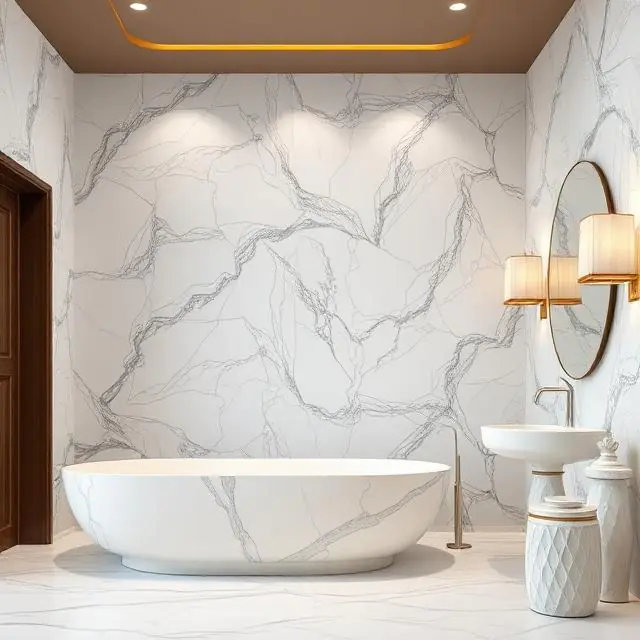
There are two powerhouse materials that are dominating the large-format slab market, such as porcelain slabs and ultracompact surfaces. These two promise an indestructible experience, but how do they stack up against each other when it comes to heat? Let us explore these in detail.
The Rise of the Super-Surfaces
Natural stones like granite and marble reigned supreme as materials. Each has pros and cons and has a set of vulnerabilities like staining, etching, or scratching. The modern kitchen demanded more. Enter porcelain slabs and ultra-compact surfaces, or engineered materials, from advanced manufacturing processes designed to eliminate these common pain points.
Porcelain Slabs: The Elegant Workhorse
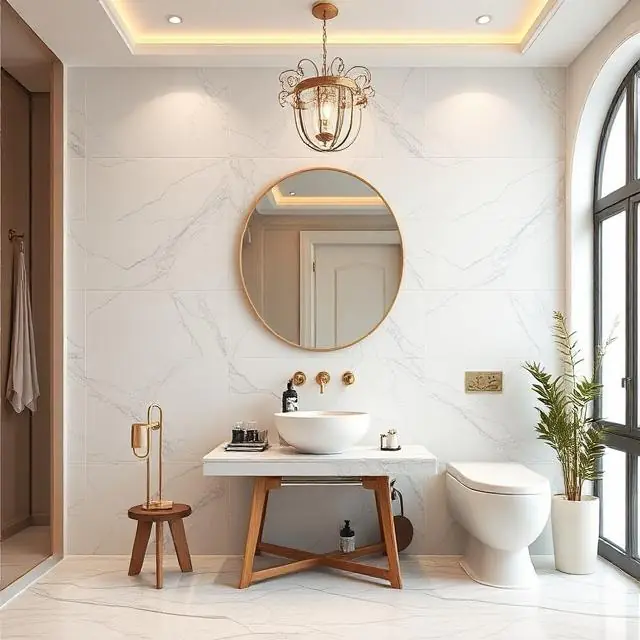
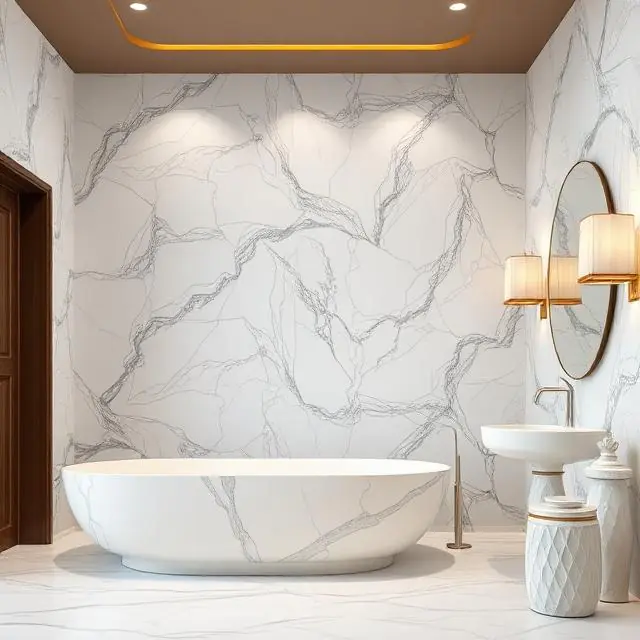
The modern porcelain slabs are good for bathrooms. These are large-format slabs, often measured up to 10 by 5 feet or even larger. This mimics the look of natural stone.
What are they? The porcelain slabs are made up of refined clay and mineral powders. These are fired in high temperature, and with intense heat, the material vitrifies and makes it one of the most incredible nonporous and uniformly strong stones.
Key Advantages:
- Extreme Durability: Virtually scratch, chip, and crack resistant.
- Heatproof: Can withstand direct heat from hot pans without damage.
- Stain Proof: Non-porous surface means liquids can’t penetrate, making them impervious to stains from wine, coffee, or oil.
- UV Resistant: Won’t fade or discolor even in direct sunlight, making them ideal for outdoor kitchens.
- Low Maintenance: Requires no sealing, polishing, or special cleaners. A simple wipe-down is all it takes.
- Versatility: Available in a vast array of colors, patterns, and finishes (matte, polished, textured), allowing for incredible design flexibility for countertops, backsplashes, flooring, and even wall cladding.
Ultra-Compact Surfaces: The Engineered Marvel
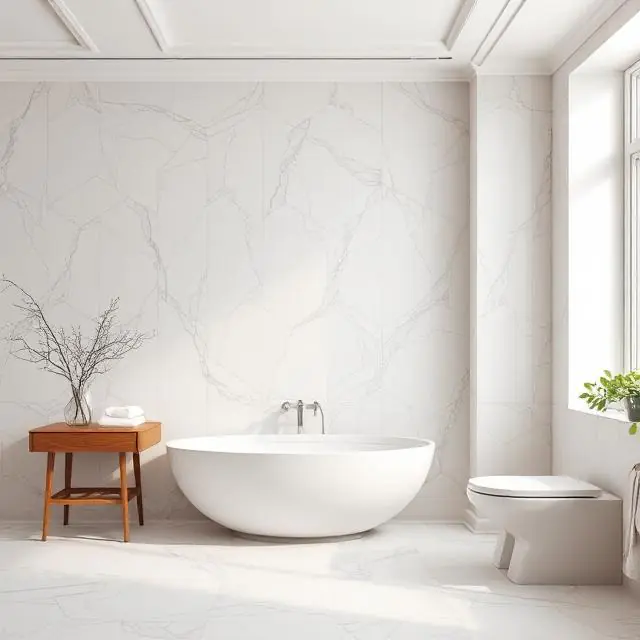
The ultra-compact surfaces (UCS) are a new category of engineered material. It is considered the next evolution in surface technology. Some of the brands, like Neolith, Dekton, and Lapitec, are pioneers in this field.
What are they?
UCS are created with a sophisticated process called TSP (Technological Sintering Process). It involves subjecting a good blend of minerals, glass, and quartz to high temperature. This is the metamorphic process that gives a natural stone over millennia.
Key Advantages (often mirroring and sometimes exceeding porcelain):
- Unparalleled Durability: The most resilient surface on the market, and it is highly resistant to scratches and etching.
- Exceptional Heat Resistance: Designed to withstand very high temperatures without burning, scorching, or cracking.
- Zero Porosity: Like porcelain, UCS are entirely non-porous, making them utterly impervious to stains, bacteria, and mildew.
- UV Stability: Perfect for outdoor applications, as they will not degrade or fade under sun exposure.
- Chemical Resistance: It is highly resistant to a wide range of household chemicals and cleaning agents.
- Thin & Lightweight: Can be manufactured in thinner profiles, making them suitable for various applications beyond just countertops.
The Head-to-Head Showdown: Porcelain Slabs vs. Ultra-Compact Surfaces
While both materials offer incredible “indestructible” qualities, there are subtle differences to note:
- Manufacturing Process: Porcelain is essentially a highly advanced ceramic. UCS involves a more complex sintering process, often combining different raw materials, leading to slightly different performance characteristics.
- Density & Homogeneity: UCS often boast a slightly higher density and more uniform composition throughout the slab, which can translate to marginal gains in impact resistance.
- Edge Work: Both require careful edge fabrication. UCS can sometimes offer more consistent internal coloring, making edge appearance slightly more seamless if not fully mitered.
- Cost: Generally, porcelain slabs can be a more budget-friendly option compared to the premium price tag often associated with the most advanced Ultra-Compact Surfaces, though this varies greatly by brand and pattern.
- Market Presence: Porcelain has a wider range of manufacturers globally, offering extensive pattern choices. UCS are often associated with specific, high-end brands.
Conclusion: Which “Indestructible” is Right for You?
Both porcelain slabs and ultra-compact surfaces deliver on the promise of an “indestructible” kitchen. They represent the pinnacle of engineered surface technology, offering remarkable resistance to heat, stains, scratches, and UV damage.
Choosing between them often comes down to specific aesthetic preferences, budget, and perhaps minute differences in performance or brand availability. If you’re seeking a highly durable, versatile, and relatively cost-effective option with a vast design range, porcelain slabs are an excellent choice.
If you prioritize the absolute highest echelon of technical performance, cutting-edge material science, and are prepared for a potentially higher investment, ultra-compact surfaces might be your ideal match.
Ultimately, either choice will provide a kitchen surface that not only looks stunning but is engineered to withstand the test of time and the demands of modern living, truly creating an “indestructible” heart of the home.
FAQs about Porcelain Slabs & Ultra-Compact Surfaces
Q1: Are these materials truly “indestructible”?
A1: While incredibly durable and highly resistant to most forms of kitchen wear and tear (heat, stains, scratches), no material is 100% indestructible. Extreme force or specific types of impact can still cause damage, but they are among the most resilient surfaces available.
Q2: Can I use these materials outdoors?
A2: Absolutely! Both porcelain slabs and ultra-compact surfaces are highly UV-resistant and impervious to weather elements, making them perfect for outdoor kitchens, patios, and cladding.
Q3: How do they compare to quartz?
A3: Porcelain and UCS offer superior heat resistance and are generally more scratch-resistant than quartz. Quartz is non-porous and stain-resistant, but its resin content makes it vulnerable to extreme heat and UV fading.
Q4: Do they require sealing?
A4: No. Both porcelain slabs and ultra-compact surfaces are non-porous and do not require any sealing, ever. This is a significant advantage over natural stone.
Q5: Are they heavy to install?
A5: While often thinner than natural stone, their density can make them heavy. More importantly, their rigidity means they require specialized tools and highly skilled installers to prevent breakage during transport and fabrication.