
Marble has a gold standard for adding elegance and timeless elegance to any home. While considering the beauty of natural stone for your kitchen floor, one must know the different finishes of marble: Polished and Honed.
The choice is based on one’s aesthetic, maintenance, and appeal for your kitchen floor. Both finishes are suitable for high-traffic areas and spill-prone rooms of the house. In this article we will walk you through the Polished Vs. Honed Marble and pros, cons of both the polished and honed marble finishes and the best choice of marble finish for kitchen flooring.
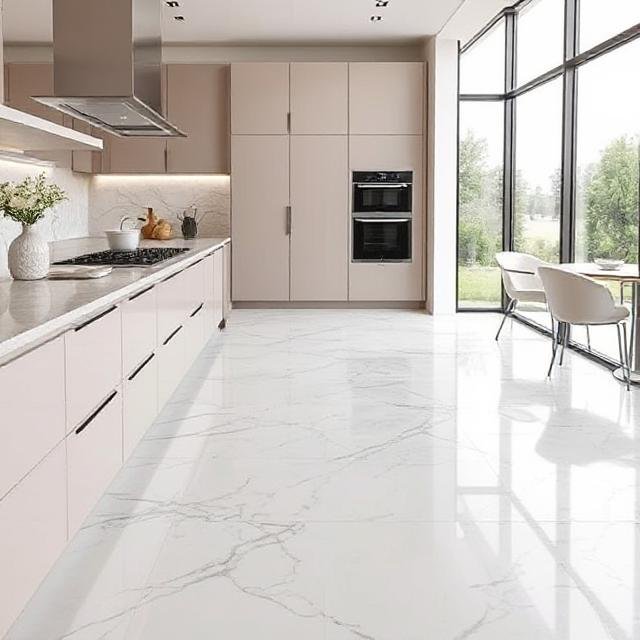
The Two Faces of Marble
The fundamental difference between the two marble finishes lies in the final stage of sanding.
- Polished Marble: This finish is achieved when intensely grinding and buffing the stone to create a mirror-like smooth, glossy, shiny finish. It reflects the light beautifully, making the color and veins appear more vibrant and providing sophisticated appeal.
- Honed Marble: In this finish the final buffing stage leaves the stone with a smooth, matte, or satin appearance. It offers a softer, natural look that absorbs light rather than reflects the light.
Polished Marble: Pros and Cons for the Kitchen
Let us understand the polished marble finish pros and cons for the kitchen flooring.
| Feature | Polished Marble (High-Gloss) |
| Aesthetics | Luxurious, formal, highly reflective. Enhances color and veining. |
| Durability/Wear | Shows scratches, etches (dull spots from acid) very easily. |
| Safety | Slippery when wet, a major concern for a kitchen floor. |
| Stain Resistance | Generally more stain-resistant due to closed pores (when properly sealed). |
| Maintenance | Easier to wipe clean daily, but requires more effort to maintain the shine and buff out visible scratches/etches. |
| Best For | Low-traffic, formal kitchens where aesthetics are the priority. |
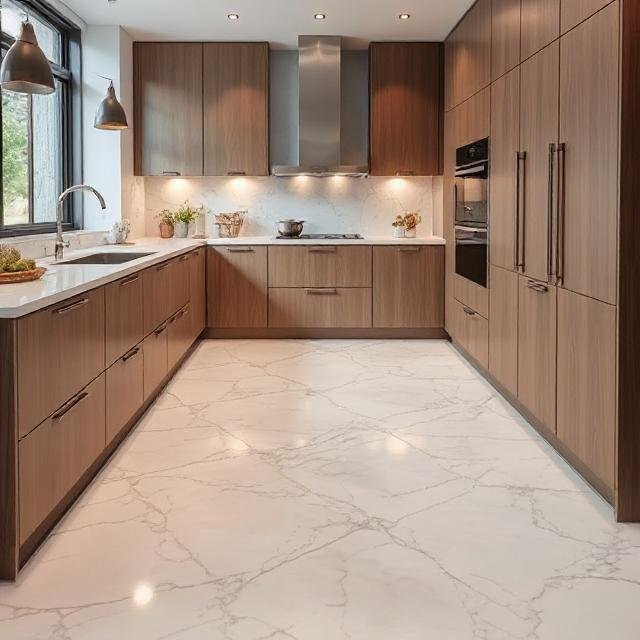
Honed Marble: Pros and Cons for the Kitchen
Let us understand the polished marble finish pros and cons for the kitchen flooring.
| Feature | Honed Marble (Matte/Satin) |
| Aesthetics | Natural, subtle, understated elegance. Muted colors and veining. |
| Durability/Wear | Hides scratches and etches far better due to its non-reflective surface. |
| Safety | Less slippery than polished marble, offering better traction. |
| Stain Resistance | More porous and prone to staining; requires more frequent sealing. |
| Maintenance | Hides daily wear, but needs more frequent and consistent sealing to prevent stains. |
| Best For | Busy, high-traffic kitchens, or homes with children/pets. |
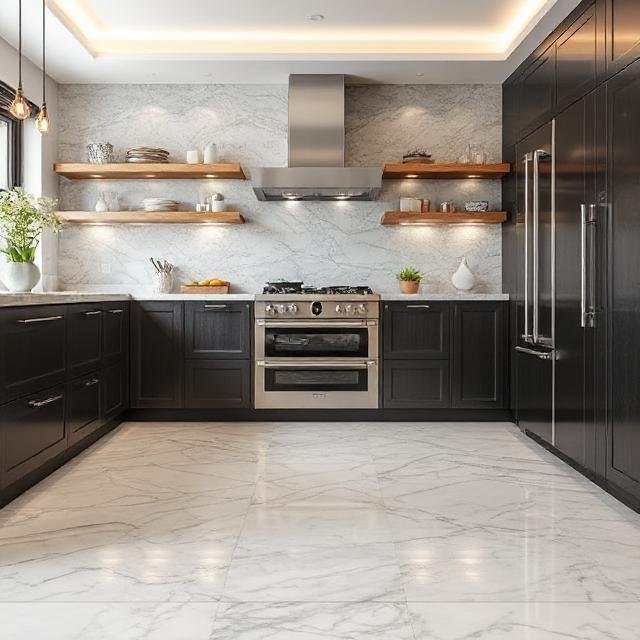
The Verdict: Which is Better for Kitchen Flooring?
For kitchen flooring, most of the homeowners prefer the Honed Marble finish. As it is an area of heavy foot traffic, there are constant spills like lemon juice, vinegar, wine, or oil and a high risk of water spillage.
- Safety First: Honed marble’s superior slip resistance is arguably the most important factor in a busy, wet kitchen environment.
- Hides Wear: A matte surface camouflages the inevitable scratches and etching marks that will occur from daily life, keeping your floor looking pristine for longer.
- Practicality: While it needs more frequent sealing against stains, its ability to hide general wear and tear from foot traffic makes it a more practical, forgiving choice for the long run.
Polished marble is better reserved for kitchen accents like backsplashes, or for grand entryways and formal spaces where water spills and heavy use are less of a factor.
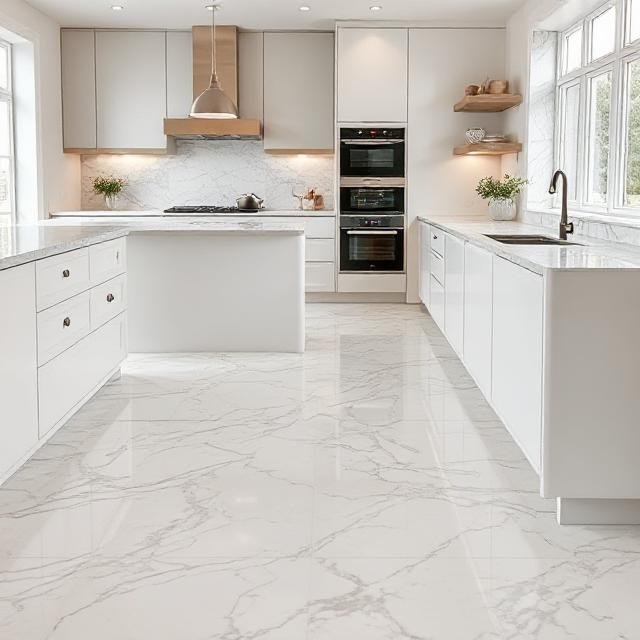
Frequently Asked Questions (FAQs)
1. Does marble stain easily in a kitchen?
Yes, marble is a porous stone, and regardless of the finish, it is susceptible to staining and etching from acidic substances. Sealing is mandatory for both honed and polished marble to protect against stains.
2. Can I use honed marble on my kitchen floor and polished marble on my backsplash?
Absolutely. Mixing finishes is a popular, modern design choice. Honed on the floor offers practicality and safety, while polished on the backsplash can bring the high-gloss luxury without the risk of slipping or scratching.
3. How often do I need to seal a marble floor?
This depends on the stone and the sealer, but typically honed marble floors should be sealed every 6-12 months, while polished marble may be able to go 1-2 years. Always follow the manufacturer’s recommendations.
4. What is etching and why does it matter?
Etching is a dull mark left on the marble when an acidic substance (like lemon juice, vinegar, or certain cleaning products) chemically reacts with the calcium carbonate in the stone. Etches are much more visible on polished marble because they disrupt the smooth, reflective surface.

