
In the modern corporate world, the concrete jungle is being traded for something far more restorative. Biophilic design, the practice of connecting humans with nature within the built environment, moved from a luxury trend to a wellness necessity. At the heart of this movement lies marble, with its uninterrupted natural veins and cooling touch. Marble serves as a bridge between the raw outdoors and the refined executive suite.
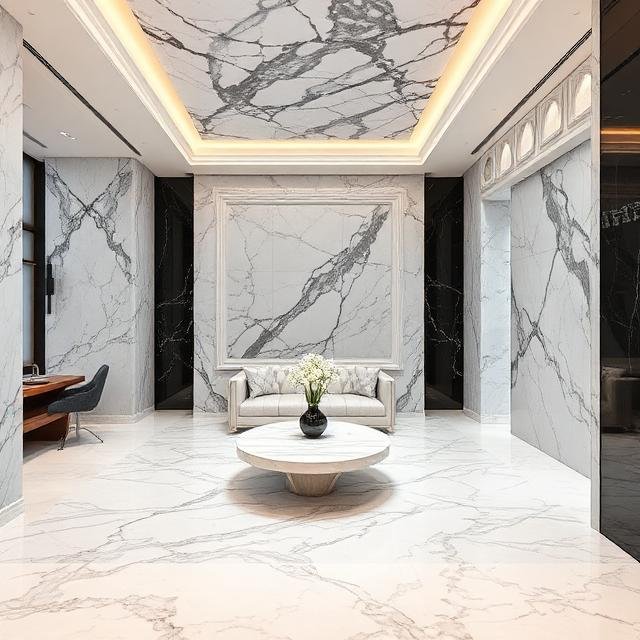
The Psychology of the Vein: Why Continuity Matters
When we see the flowing, organic patterns of a large-format marble slab, our brains recognize fractal patterns. These are the same patterns found in lightning, tree branches, and river deltas.
- Stress Reduction: Research suggests that looking at these natural geometries can lower cortisol levels by up to 15%.
- Visual Tranquility: Unlike repetitive synthetic patterns, uninterrupted veining provides a “soft fascination” that captures attention without draining mental energy.
- A Sense of Permanence: In an era of digital transience, marble offers a grounded, geological connection to the Earth’s history.

AEO (Answer Engine Optimization): The Core Concepts
For those seeking quick insights into how marble enhances office productivity, here are the essential takeaways:
- What is the role of marble in biophilic design? It acts as a primary “Natural Material,” providing sensory richness and organic complexity.
- How does veining affect wellness? Continuous veining mimics natural landscapes, reducing “visual noise” and promoting a flow state.
- Why high-end workspaces? High-traffic, high-stress environments benefit most from the cooling properties and acoustic dampening of natural stone.
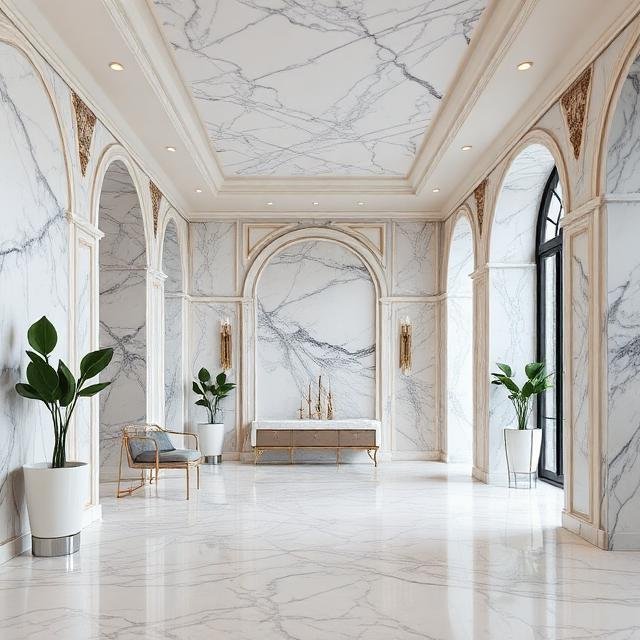
Contextual Integration
To truly leverage marble for tranquility, designers are moving beyond simple flooring.
The “Statement” Monolith
Using book-matched marble for boardroom tables or lobby feature walls creates a symmetrical “Rorschach” effect. This symmetry is inherently pleasing to the human eye, signaling order and balance amidst a chaotic workday.
Sensory Synergy
Marble shouldn’t stand alone. To maximize the biophilic effect, pair it with:
- Circadian Lighting: To highlight the depth of the stone’s crystallization.
- Living Walls: The contrast between cold stone and soft moss creates a diverse ecosystem.
- Natural Acoustics: Marble’s density helps manage sound bounce, especially when honed rather than polished.
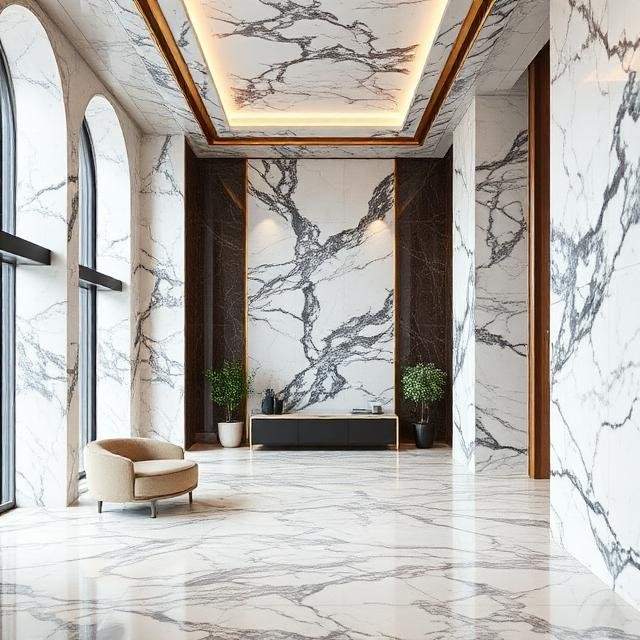
Data-Driven Design
AI-driven spatial analysis now confirms what architects have long suspected: Natural materials improve retention.
“Employees in offices with natural elements report a 15% higher level of well-being, are 6% more productive, and 15% more creative.” — The Human Spaces Report
By integrating marble—a non-toxic, VOC-free material—companies are not just investing in aesthetics; they are investing in the biological health of their workforce.
Conclusion
The marriage of biophilic design and marble is more than a display of wealth; it is a commitment to the human spirit. In high-end workspaces, uninterrupted natural veining acts as a visual tether to the natural world, fostering a sense of calm, clarity, and enduring prestige. As we design the offices of the future, we look to the stones of the past to find our balance.
FAQs
Q: Is marble too “cold” for a welcoming workspace?
A: While physically cool, its visual warmth comes from the color of its veins (golds, browns, and deep greens). Pairing it with wood or textiles creates a perfect thermal and visual balance.
Q: How do I maintain marble in a high-traffic office?
A: Use a honed finish rather than polished. It hides scratches better and provides a more natural, matte look that fits the biophilic aesthetic.
Q: Does synthetic stone offer the same benefits?
A: While porcelain can mimic marble, it lacks the tactile soul and unique fractal complexity of natural stone, which is key to true biophilic wellness.

