
When selecting the stone for high-traffic areas, especially for residential and commercial spaces, from bathroom vanities to kitchen countertops. The decision often narrows to a fundamental debate Natural stone vs Engineered stone.
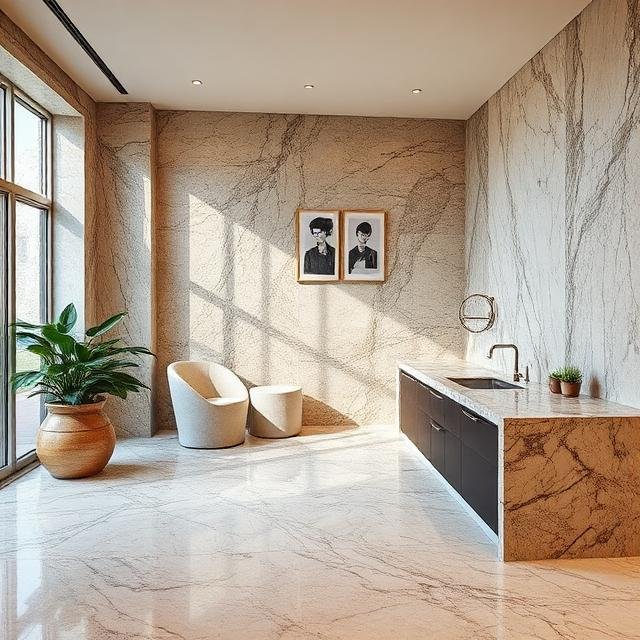
Both stones deliver aesthetics and return on investment. Understanding the durability and market demand of materials such as granite, quartzite, Italian marble, and engineered quartz is critical to making an informed decision.
1. Defining the Surfaces: Extraction vs. Precision Engineering
What is Natural Stone?
Natural stones like Italian marble, like Calacatta, Carrara, and Statuario marbles, granite, quartzite, soapstone, and limestone are geological formations quarried directly from the earth. Every piece of slab has an organic composition shaped over millions of years by high-intensity pressure and heat. No two slabs will be identical, as they are formed naturally; hence, the veining pattern and pigmentation vary.
What is Engineered Stone?
Engineered stone like quartz is a composite material, and it is composed of crushed natural minerals bound with 7% to 10% polymers and color pigments. It is formed in extreme heat and pressure without resin binders to produce a compact surface.
2. Head-to-Head Comparative Analysis
| Feature / Metric | Natural Stone (Granite, Marble, Quartzite) | Engineered Stone (Quartz, Sintered Surfaces) |
| Aesthetic Uniqueness | 100% unique; organic movement, authentic depth | Replicated patterns, uniform slabs, consistent veining |
| Porosity & Staining | Porous to semi-porous; requires periodic sealing | Non-porous (quartz); zero liquid absorption, highly stain-resistant |
| Heat Resistance | Exceptionally high (granite & quartzite tolerate hot cookware directly) | Moderate; polymer resins can discolor or crack above 150°C (300°F) |
| Scratch & Chip Resistance | Varies (quartzite is ultra-hard; marble is soft/prone to etching) | Very high scratch resistance; edges can chip under heavy point impact |
| Outdoor / UV Suitability | Excellent for granite, slate, and quartzite | Poor for standard resin quartz (fades/yellows under UV); excellent for sintered stone |
| Maintenance Level | Moderate to High (requires pH-neutral cleaners and sealant upkeep) | Low (routine soap and water; never needs sealing) |
| Average Installed Cost (per sq. ft.) | ₹350 – ₹2,500+ / $60 – $200+ (highly variable based on rarity) | ₹250 – ₹1,200 / $50 – $140 |
3. The Pros & Cons Breakdown
Natural Stone
Pros:
- Timeless Luxury & Authenticity: High-end varieties like Statuario and Calacatta carry unmatched luxury and organic visual depth that manufactured alternatives cannot perfectly replicate.
- Extreme Heat Tolerance: Natural granite and quartzite are naturally formed under volcanic temperature like baking trays will not scorch the stone.
- Longevity & Restoration: Scratches, minor chips, and etching on natural stone can be professionally ground down, polished, and restored repeatedly.
- Outdoor Versatility: Natural stone does not degrade under UV rays and making it most best option for outdoor kitchen and patios.
Cons:
- Maintenance Demands: Porous structures are susceptible to acidic etching and oil stains if not sealed regularly.
- Fissures & Structural Variations: Natural fault lines and variations mean slabs must be carefully inspected prior to fabrication.
Engineered Stone
Pros:
- Zero Maintenance & Non-Porous: Engineered quartz does not require sealing, providing total resistance against household bacterial growth and everyday liquid spills.
- Design Uniformity & Predictability: If a project requires multiple matching slabs with seamless bookmatching across wide waterfall counters, engineered stone delivers exact consistency.
- Structural Flexibility: Resin-reinforced quartz surfaces offer slightly higher tensile strength than standard marble slabs, and it reduces accidental breakage during complex cutouts.
Cons:
- Thermal Shock Vulnerability: Placing boiling pots directly on resin-bound engineered quartz can cause thermal shock, or yellow discoloration.
- Repair Complexity: Deep chips are difficult to pair invisibly compared to natural stone.
- UV Degradation: Standard quartz is unsuitable for outdoor installations due to resin yellowing when exposed to continuous sunlight.
4. Resale Value and Real Estate Return on Investment (ROI)
Surface selection directly impacts perceived property value and buyer appeal:
- Luxury and High-End Resale: In premium residential markets, natural stone remains the gold standard. Luxury homebuyers often prioritize natural materials, viewing them as authentic, heirloom assets.
- Mid-to-High Tier Residential Markets: Engineered quartz frequently yields the highest practical ROI for suburban and mid-tier family homes. The buyers value low-maintenance durability, family-friendly stain resistance, and modern uniform finishes.
- Appraisal Impact: Both materials offer strong resale retention provided the stone harmonizes with the overall quality tier of the property.
5. Conclusion
The choice between natural and engineered stone hinges on lifestyle priorities and project context:
- Choose Natural Stone if your design prioritizes organic character, authentic luxury, heat resistance, and long-term restorative longevity, and you are comfortable with routine sealing maintenance.
- Choose Engineered Stone if you demand uniform aesthetics, low maintenance, zero-sealing convenience, and superior stain protection for high-traffic environments.
Frequently Asked Questions (FAQs)
1. Is quartzite the same as engineered quartz?
No. Quartzite is a 100% natural metamorphic rock formed from sandstone under intense heat and pressure, offering superior hardness and heat tolerance. Engineered Quartz is a man-made composite composed of crushed natural quartz bound with polymer resins.
2. How often does natural stone require sealing?
Most natural granite and marble surfaces require sealing every 12 to 24 months, depending on stone porosity and usage intensity. A quick “water droplet test” (observing if water beads or absorbs within 10 minutes) determines whether resealing is necessary.
3. Can engineered quartz be used in outdoor kitchens?
Standard resin-based engineered quartz is not recommended for outdoor use because UV rays degrade and discolor the resin binder. However, sintered stone or UV-stable porcelain slabs are specifically engineered for full outdoor exposure.
4. Which surface is better for everyday kitchen stain resistance?
Engineered stone is inherently non-porous and naturally resists stains from coffee, turmeric, wine, and oils without chemical sealants.

