
Blue marble is the crown jewel of interior design that instantly elevates the space with premium look. Standard marbles like Carrara, Calacatta are most commendable marble, but blue marble grabs the attention with its dramatic look with the beautiful veining patter and oceanic hues. In this article, we will walk you the rarest slabs and luxury home decor ideas of blue marble
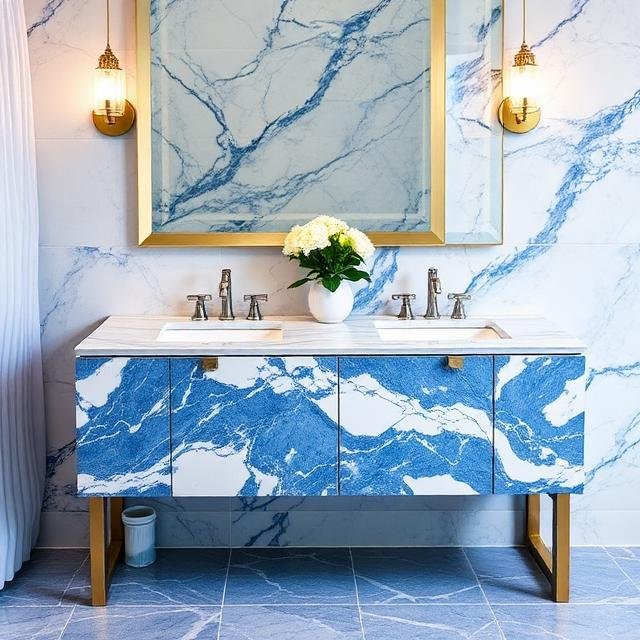
1. The Rarest Blue Marble Slabs
Blue marble is one of the most rare marble. It is actually an quartzite or sodalite which is harder than the traditional marble.
A. Azul Bahia (Granite)
- Origin: Brazil
- Appearance: A stunning, intense navy and royal blue with white, gold, and black veining. It looks like a satellite view of the ocean.
- Best For: Kitchen countertops, bathroom vanities. It is extremely durable but requires sealing regularly to maintain the vivid color.
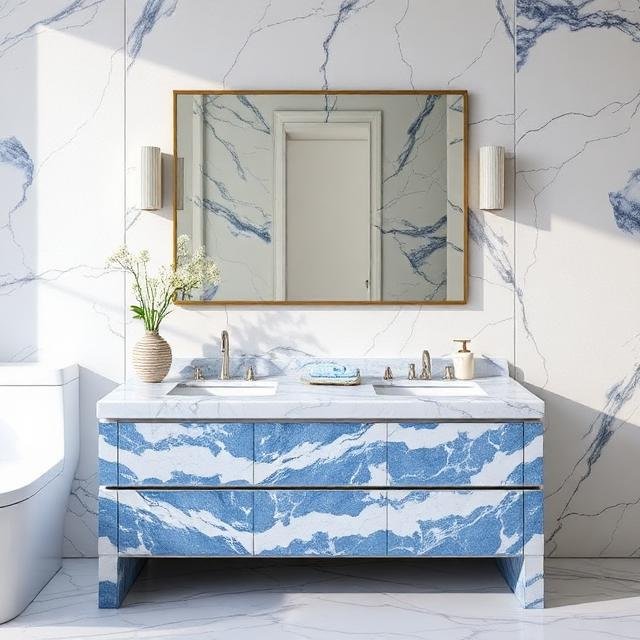
B. Azul Macaubas (Quartzite)
- Origin: Brazil
- Appearance: Often mistaken for marble, this is a quartzite (harder than granite). It features soft, wavy veins of light sky blue, cyan, and indigo on a white background.
- Best For: High-traffic areas like flooring or kitchen countertops because it is resistant to scratching and etching.
C. Sodalite Blue (Semi-Precious)
- Origin: Brazil, Bolivia, Namibia
- Appearance: A deep, midnight blue stone often crossed with white or yellow veins. It is technically a semi-precious stone.
- Best For: Backlit feature walls or bar tops. Because it is translucent, lighting it from behind creates a glowing, gem-like effect.
D. Blue de Savoie (Marble)
- Origin: France
- Appearance: A subtle, steely blue-grey with minimal white veining. It is understated and sophisticated.
- Best For: Minimalist, modern interiors, specifically flooring and wall cladding where you want elegance without “shouting.”
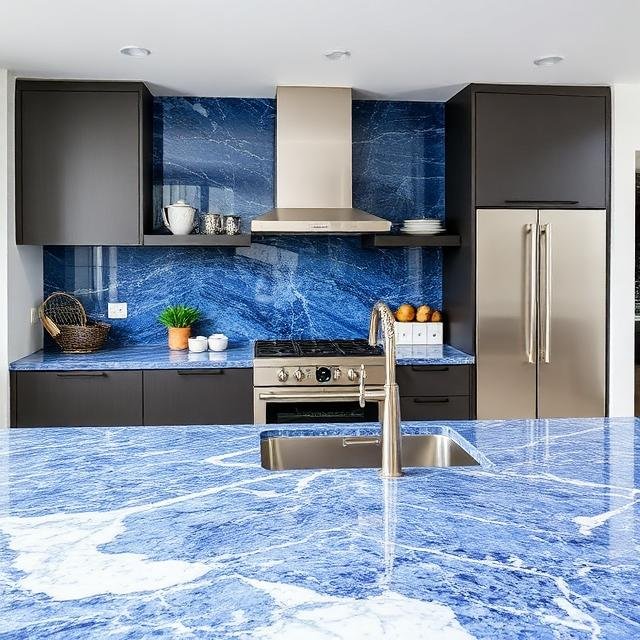
2. Luxury Home Decor Ideas using Blue Marble
The “Oceanic” Kitchen Island
Instead of a plain white island, use a waterfall edge Azul Macaubas slab. The blue waves cascading down the sides of the island create a centerpiece that anchors the room. Pair this with brushed gold hardware to complement the warm tones often hidden in the blue stone.
The Backlit Bar
Use Sodalite Blue for a home bar backsplash or counter. Install LED panels behind the slab. When the lights are off, it looks like a deep, solid navy stone. When the lights are on, the stone glows with electric blue energy, perfect for evening entertaining.
The Powder Room Statement Wall
Small spaces can handle bold patterns. Clad the wall behind the vanity mirror in Azul Bahia. Keep the vanity unit simple (white or walnut wood) and the floor neutral. This creates a “jewel box” effect that guests will never forget.
Bookmatched Flooring
For a grand entrance foyer, use bookmatched blue marble slabs. This means the veins of two adjoining slabs mirror each other (like an open book or butterfly wings). This technique turns the floor into a massive piece of abstract art.
Conclusion
Blue marble is not just a building material; it is art. Whether you choose the durability of Azul Macaubas or the gem-like prestige of Sodalite, incorporating these blue stones ensures your home possesses a unique character. While the cost is higher than standard stone, the resale value and visual impact are unmatched in the world of luxury interiors.
FAQs
Q1: Is blue marble expensive?
A: Yes, it is among the most expensive natural stones. Prices can range from Rs 1000 to over Rs 4000 per square foot depending on the rarity (like Sodalite) and the quality of the cut.
Q2: Can I use blue marble in the kitchen?
A: Yes, but be careful. If it is true marble (calcite-based), it can be etched with acids (lemon, vinegar). For kitchens, Azul Macaubas (Quartzite) or Azul Bahia (Granite) are better choices as they are harder and resistant to acid etching.
Q3: How do I maintain blue marble?
A: Seal it professionally every 6–12 months. Use pH-neutral cleaners only. For vibrant stones like Azul Bahia, avoid direct, harsh sunlight if possible, as UV rays can sometimes fade the blue minerals over many years.

