An outdoor kitchen is an excellent option for a modern home. If you are planning to extend your living space and provide a modern look, then having an marble for outdoor kitchens is an excellent option.
During planning space, one must know how to select the correct kitchen countertop. Marble is known for its timeless beauty and durability for both indoor and outdoor designs.
Marble is a natural stone made of limestone. It offers an unparalleled elegance with its beautiful veins and classic appeal.
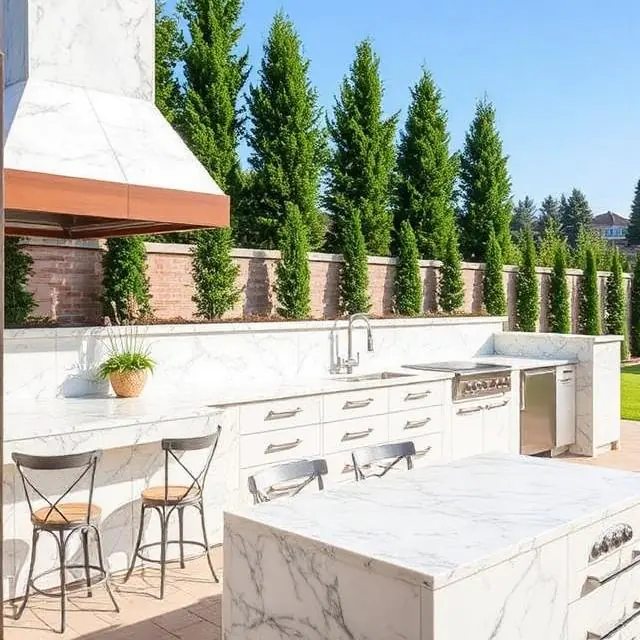
However, it is porous in nature, which makes it susceptible to stains and etching and easily reactive to acidic liquids. It can damage the surface of the stone. Therefore, choosing the best marble for an outdoor kitchen that can be weather resistant is crucial. Let’s delve into the specifics.
Understanding Marble’s Vulnerabilities Outdoors
Before we understand the right type of marble, it is important to know the inherent characteristics and the challenges in an outdoor setting:
- Porosity: Marble is absorbent in nature and can easily absorb liquids and cause stains if it is not cleaned immediately. Outdoors, the risk increases as it is exposed to more rain, spilled drinks, and more sunlight.
- Etching: When acidic substances such as vinegar, cleaning products like lemon juice, and acidic cleaners easily react with the calcium carbonate in the marble, they cause dull spots on the surface. This is particularly relevant to the kitchen environment.
- Weathering: Prolonged exposure to UV rays can damage the surface of marble and tends to fade or alter the color of the stone over time. During cold climates, it can lead to cracks if moisture penetrates the stone.
- Scratching: Marble is a durable stone, but it can be scratched while abrasive cleaning and using sharp brushes to clean the surface.
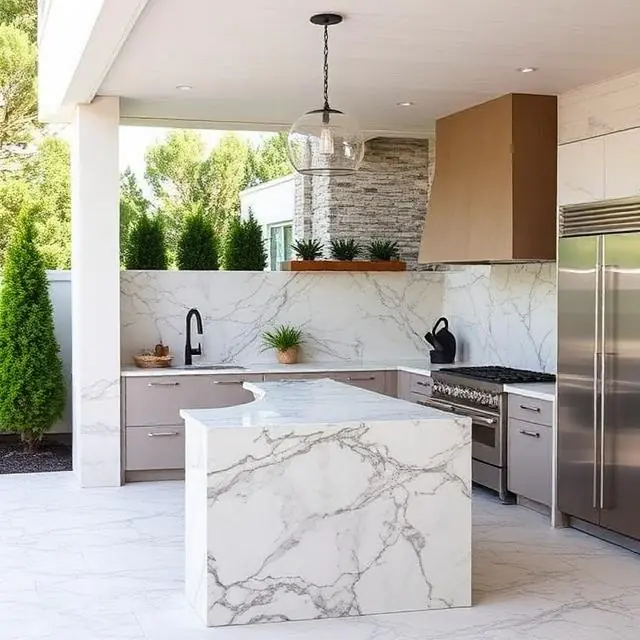
What Kind of “Marble” Works Best for Outdoor Kitchens?
People refer to marble for outdoor use; they often categorize it into several types of stone that share similar aesthetic qualities, but it differs in durability. The marble can be used in different varieties, and specific considerations make them more viable.
- Harder Marbles (e.g., Carrara, Calacatta, Statuario): It is a classic marble epitome of luxury. It is beautiful, and they are among the softer marbles.
- Pros: Stunning aesthetics, timeless appeal, can be sealed.
- Cons: Highly prone to etching and staining. Regular sealing is critical. May show weathering more prominently.
- Outdoor Suitability: It is possible with extensive maintenance, diligent sealing (every 6-12 months), and ideally, a covered outdoor space to minimize direct exposure to elements and spills.
- Dolomitic Marbles (e.g., Danby Marble): These are often considered as harder marbles, and they contain a high percentage of dolomite. A mineral that makes them less reactive to acids than pure calcite marbles.
- Pros: Still beautiful, more resistant to etching than traditional marbles, durable.
- Cons: Still porous and requires sealing. Can still etch with strong acids or prolonged exposure.
- Outdoor Suitability: A better choice than traditional marble for outdoor use due to improved acid resistance. Regular sealing is still essential. A covered area is highly recommended.
- Quartzite (Often Mistaken for Marble): This is where the confusion often lies; natural quartzite is a metamorphic rock formed from sandstone. It is less hard and less porous than marble. The quartzites have veins and color patterns that mimic marble.
- Pros: Extremely durable, highly resistant to scratching, etching, and heat. Very low porosity.
- Cons: Can be more expensive than some marbles. Some varieties might still benefit from occasional sealing (though far less frequently than marble).
- Outdoor Suitability: Excellent! Quartzite is arguably the best natural stone choice for an outdoor kitchen countertop if you love the marble aesthetic but need superior durability and weather resistance. It stands up well to sun, rain, and typical outdoor kitchen wear and tear.
- Granite (Another Excellent Alternative): Like marble, granite is a top contender for outdoor kitchens due to its robust nature. It is an igneous rock, formed from molten magma and incredibly dense and durable.
- Pros: Very hard, highly resistant to scratches, heat, and etching. Low porosity (especially darker varieties). Excellent weather resistance.
- Cons: Aesthetic differs from marble (more granular patterns, less prominent veining).
- Outdoor Suitability: Excellent! If the classic marble veining isn’t your absolute top priority, granite offers exceptional performance in any outdoor environment.
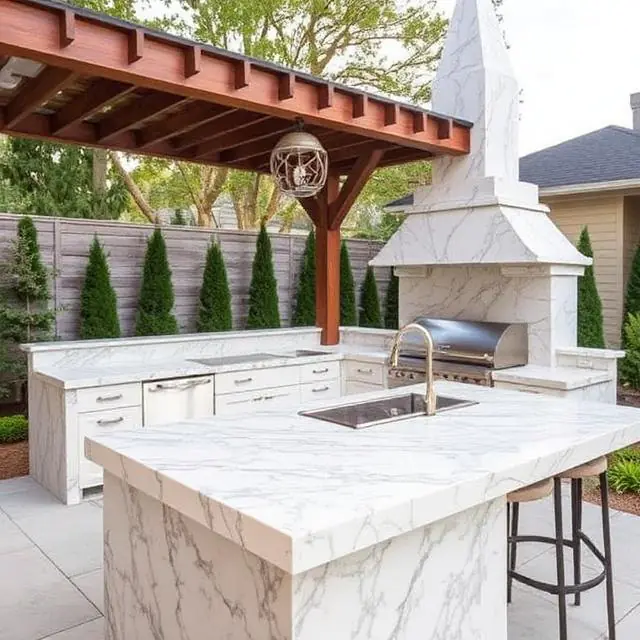
Key Considerations for Marble in Outdoor Kitchens
If you’re set on using actual marble, here’s how to maximize its longevity outdoors:
- Location, Location, Location: An outdoor kitchen with a substantial overhang or full roof will dramatically protect marble from direct sun, rain, and environmental debris.
- Sealing is Non-Negotiable: Use a high-quality impregnating sealer designed for natural stone. Apply multiple coats initially and re-seal every 6-12 months, or as recommended by the sealer manufacturer and your stone fabricator.
- Honed vs. Polished Finish: A honed (matte) finish can be more forgiving for minor etching and scratches, as it doesn’t show imperfections as readily as a highly polished surface. However, honed surfaces can be slightly more porous and may require more frequent sealing.
- Immediate Cleanup: Wipe up spills, especially acidic ones, immediately. Don’t let food or drinks sit on the surface.
- Winter Protection: In cold climates, cover your marble countertops during winter months to protect them from freeze-thaw cycles that can cause damage.
- Professional Installation: Ensure your fabricator has experience installing natural stone outdoors and understands the specific requirements for drainage and stability.
Conclusion
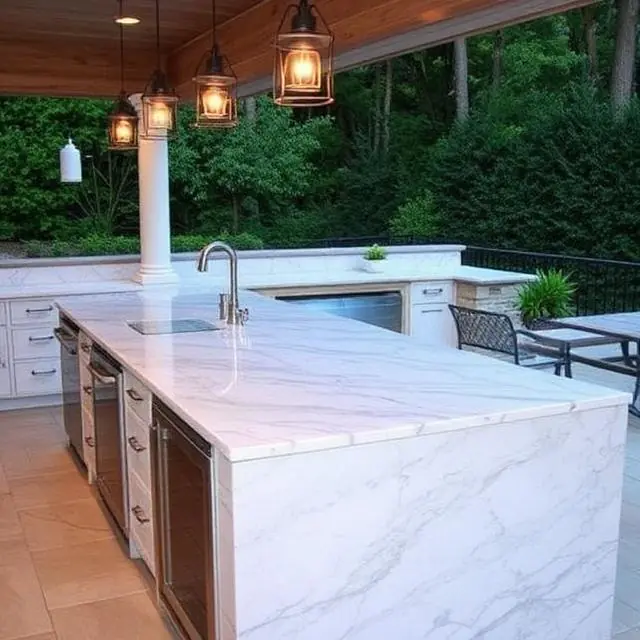
While true marble can be a beautiful choice for an outdoor kitchen, it comes with significant maintenance requirements and is best suited for covered outdoor areas. For the classic marble look with superior durability and less upkeep, natural quartzite is the undisputed champion for outdoor countertops. If you’re open to other aesthetics, granite also offers exceptional performance and weather resistance. Ultimately, the “best” marble for your outdoor kitchen depends on your willingness to maintain it and the specific climate conditions it will face. Choose wisely to ensure your outdoor kitchen remains a stunning and functional space for years to come.
FAQs About Marble for Outdoor Kitchens
Q: Can I use any marble outdoors?
A: While technically possible, not all marbles are equally suited. Harder marbles like Danby offer slightly better resistance, but truly durable options with a similar look are quartzite or granite.
Q: How often do I need to seal outdoor marble countertops?
A: True marble outdoors should be sealed every 6-12 months with a high-quality impregnating sealer. Quartzite will require much less frequent sealing, perhaps every 2-5 years, or not at all depending on the specific type.
Q: Will outdoor marble stain easily?
A: Yes, true marble is very porous and will stain easily, especially from oils, wine, and other pigmented liquids, if not sealed and cleaned immediately. Quartzite is far more stain-resistant.
Q: Does outdoor marble fade in the sun?
A: Some types of marble, especially darker ones, can experience some color change or fading over prolonged exposure to direct UV sunlight. A covered outdoor kitchen will help mitigate this.
Q: Is quartzite really better than marble for outdoor kitchens?
A: Yes, if you prioritize durability, scratch resistance, etching resistance, and low maintenance while still wanting a natural stone with marble-like aesthetics, quartzite is significantly better suited for outdoor kitchens than true marble.