
In recent years, the interior design has had a profound shift away from stark, sterile minimalism towards spaces that feel alive and deeply connected to the natural world.
This movement, widely known as biophilic design, seeks to weave organic textures and colors into the very fabric of our everyday living spaces. The houseplants and raw timber are staples of this movement; more luxurious protagonists emerged to take center stage in Green Marble.
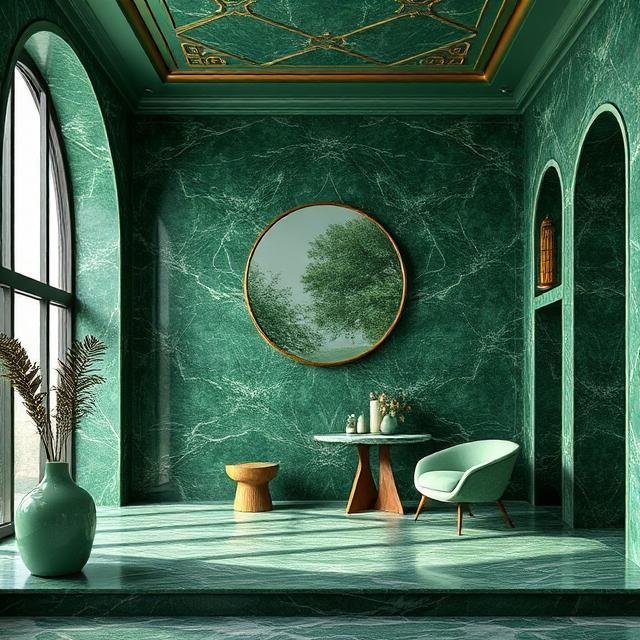
The opulent vintage lobbies’ aesthetic, green marble, is experiencing an unprecedented renaissance. From dramatic forest tones to soft and soothing sage waves, this exquisite natural stone is redefining how we invite nature over our thresholds.
The Psychology of Green and Biophilic Luxury
The designers and homeowners are suddenly attracted to green marble? The answer lies at the intersection of psychology and aesthetics. The green color is inherently linked to growth and tranquility.
Popular Varieties Dominating Interiors
The term “Green Marble” is one of the famous Indian marbles that has a stunning spectrum of geological masterpieces, each with its own personality.
- Verde Guatemala: A deep, rich serpentine stone with fine, dark veining that evokes the density of a rainforest canopy.
- Verde Alpi: Hailing from Italy, this dramatic variety features dark green backgrounds broken by striking, intense white quartz veins, resembling snow-covered pines.
- Ming Green: A softer, crystalline marble with subtle jade tones, perfect for minimalist spaces requiring a delicate touch of nature.
- Irish Connemara: A rare, wildly patterned stone displaying a breathtaking collage of olive, sage, and sepia tones.
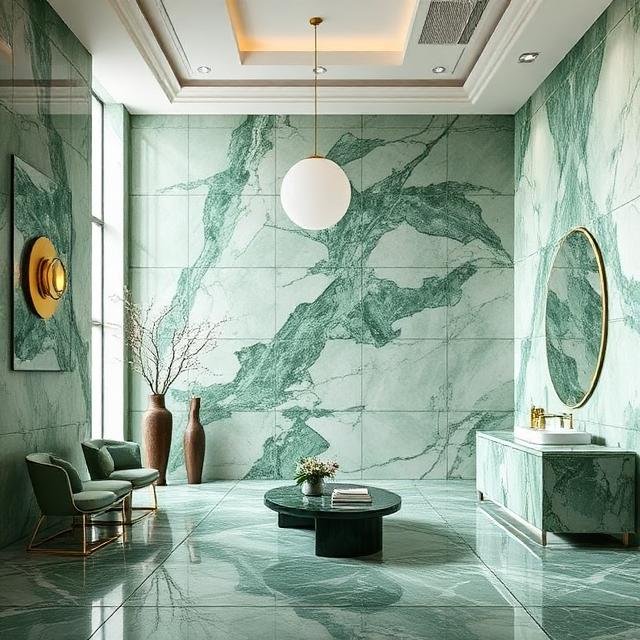
How to Incorporate Green Marble into Your Home
Integrating green marble doesn’t require turning your home into a stone cavern. The key lies in strategic balance. Consider these impactful applications:
- Statement Kitchen Islands: A waterfall island in Verde Alpi acts as a functional piece of art, transforming the kitchen into a dramatic culinary sanctuary.
- Sanctuary Bathrooms: Wrap a vanity or a single shower wall in green marble to evoke the serenity of an upscale woodland spa.
- Accent Furniture: For a subtle nod to the trend, introduce green marble coffee tables, side tables, or even carved decorative bowls and coasters.
Conclusion
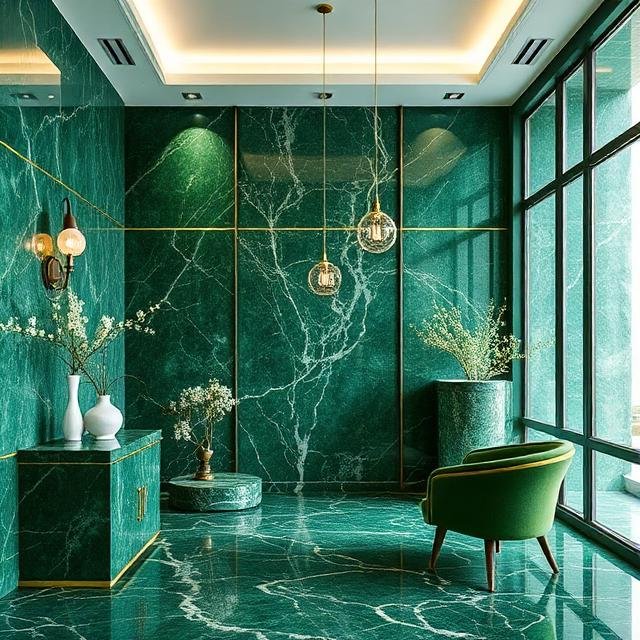
The rise of green marble is more than just a fleeting aesthetic trend; it is a manifestation of our collective desire to stay anchored to the earth in an increasingly digital world. By blending the raw, untamed essence of nature with the timeless elegance of natural stone, green marble creates spaces that feel both remarkably luxurious and profoundly comforting. It is proof that when it comes to design, nature remains the ultimate artist.
Frequently Asked Questions (FAQs)
- Q1: Is green marble a true marble?
- A: Geologically, many green marbles (like Verde Guatemala) are actually serpentinites rather than traditional calcite marbles. However, in the design and stone industry, they are classified and treated as marble due to their ability to take a high polish and their similar structural density.
- Q2: Does green marble scratch or stain easily?
- A: Like all marbles, green marble is susceptible to scratching and acid etching (from juices, wine, or vinegar). However, serpentine-based green marbles are often slightly harder and less porous than white calcite marbles. Regular sealing and prompt cleanup are recommended.
- Q3: What colors pair best with green marble?
- A: It pairs beautifully with warm brass and gold hardware, which accentuates its rich tones. For cabinetry and walls, earthy neutrals like cream, beige, terracotta, and rich walnut wood stains complement it perfectly.

