
Kitchen countertops are a high-traffic area and the centerpiece of the modern home. In high-traffic environments where the huge families gather, meals are prepared at lightning speed, and hot pans or heavy groceries are constantly shifted on the chosen surface material.
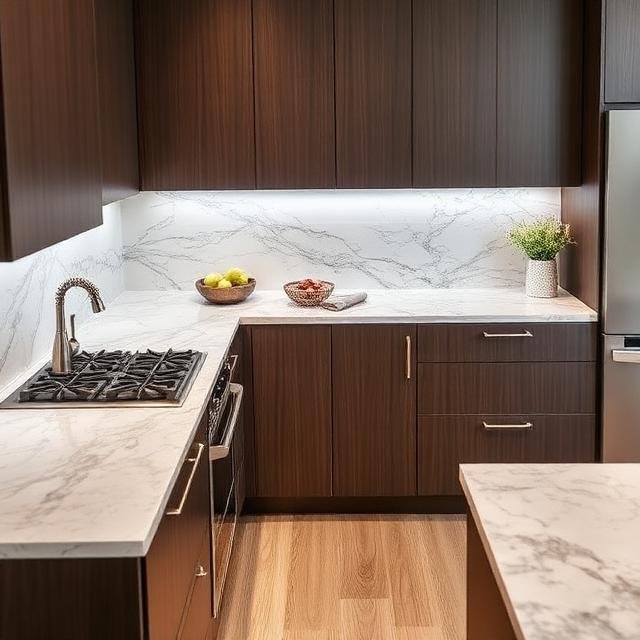
Among the premium options, granite and engineered quartz remain the most prioritized contenders. But when we think of the daily chaos of a busy kitchen, does the material truly reign supreme?
1. Composition and Aesthetic Variety
Understand how each material is made and how it performs under different stress levels.
- Granite is a natural stone, and it is quarried directly from the earth. The composition is primarily of feldspar and mica; every single slab is a completely unique geological fingerprint.
- It offers a rich organic visual depth and unique structural complexities that engineered alternatives struggle to match perfectly.
- Quartz countertops are engineered surfaces. They consist of roughly 90 to 93% crushed quartz crystals and 7 to 8% polymer resins and pigments. This manufacturing process has absolute visual consistency across slabs and unexpected or unpredictable color shifts.
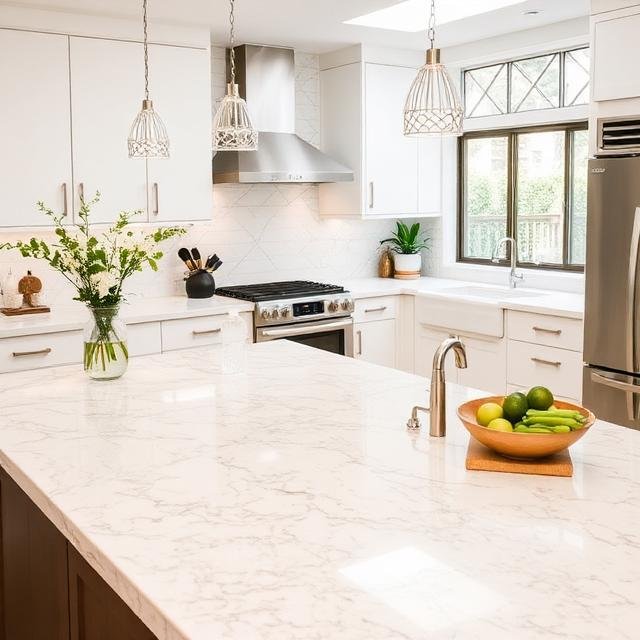
2. Durability and Impact Resistance
In a high-traffic kitchen, accidental impacts from heavy ceramic pots and heavy-bottomed items dropped suddenly are inevitable.
- Scratch Resistance: Both materials excel here. Granite ranks around 6, while quartz scores more than 7. The normal kitchen knives will generally be dull before scratching the surface; therefore, the chopping boards are recommended to use.
- Chip and Crack Vulnerability: Quartz has a slight edge due to its resin binder. The degree of structural flexibility makes quartz less brittle compared to granite. Granite has internal crystalline fault lines, and if it is hit at precisely the wrong angle, it can chip away at the object.
3. Porosity and Stain Defense
Spilled liquids like wine, lemon juice, or any coffee or tea liquids are daily occurrences in an active kitchen. The surface is porous in nature, and it’s easy for these liquids to become permanent stains.
The porosity equation, as quartz is an engineered product and it is bound with resin, hence the porosity is zero, and the natural granite has micropores that can easily absorb liquids easily if it is not sealed.
4. Thermal Resistance
This is where the natural stone outshines the engineered option. Granite is formed under high pressure and heat. It can comfortably handle hot pans placed directly on the surface without any cracking or blistering.
Conversely, quartz is highly vulnerable to thermal shock. The resin polymers are actually used for binding purposes; the quartz crystals might melt and cause discoloration when they are exposed to sudden intense heat.
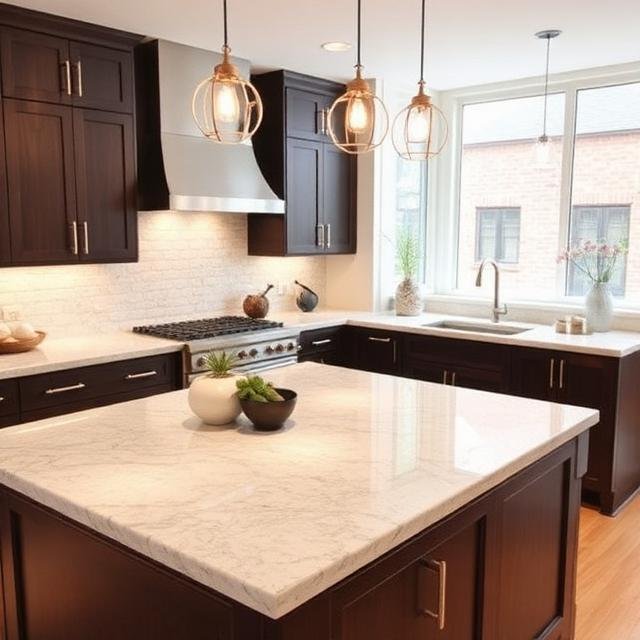
Comparative Analysis Matrix
| Performance Metric | Natural Granite | Engineered Quartz |
| Composition | 100% natural volcanic stone | ~93% quartz crystals, 7% polymer resin |
| Porosity & Stains | Porous; requires regular sealing | Non-porous; naturally stain-resistant |
| Heat Resistance | Excellent (Up to 1200°F) | Vulnerable (Resins melt above 300°F) |
| Maintenance | Moderate; needs specialized cleaning & sealing | Very Low; soap and water only |
| Aesthetic Profile | Unique slabs, natural variation | Consistent patterns, modern designs |
5. Maintenance and Long-Term Upkeep
For a busy home chef for daily maintenance matters, quartz is a set-and-forget surface. It requires only the standard dish soap, warm water, and soft cloth for cleanup. The abrasive scrubs should be avoided, and it needs to be waxed, polished, or sealed.
Granite needs deliberate care. A periodic resealing. It is sensitive to acidic cleaners. When the vinegar, lemon juice or bleach can cause the etches, therefore, the sealant is is must to protect the stone’s polish. Granite owners can commit to using pH-neutral cleaners to keep the stone surface safe and clean.
Conclusion: The High-Traffic Verdict
Both materials perform well, but it is ideal depending on the homeowner’s requirements and specific cooking habits:
- Choose quartz if your household prioritizes zero maintenance convenience and total stain defense against any spillage. If you can build the habit of always using trivets for hot cookware.
- Choose granite if you are a passionate home chef who wants to set down hot pans anywhere without a second thought. It is preferred as the organic beauty of raw natural stone, and spending a few minutes once a year resealing is a must.
Frequently Asked Questions (FAQs)
Q: Does quartz scratch more easily than granite?
A: No. Quartz and granite are closely matched in hardness. Quartz is slightly less prone to micro-scratching or chipping because its binding resins make the material less brittle.
Q: Can I cut directly on a granite or quartz countertop?
A: While both surfaces are hard enough to resist knife scratches, doing so will quickly dull your kitchen knives. Additionally, slicing repeatedly on unsealed granite can compromise the protective barrier. Always use a cutting board.
Q: How do I know when my granite countertop needs to be resealed?
A: Perform the “water droplet test.” Pour a few drops of water onto the surface. If the water beads up indefinitely, your seal is intact. If the water quickly darkens the stone and sinks in within 10–15 minutes, it is time to reapply a sealer.

