
White marble is the classic vein of Italian Carrara marble that has dramatic veining like Calacatta and Thassos marble. However, the exact geological characteristics that give white marble aesthetics and make it unique are It is composed primarily of recrystallized calcite (CaCO₃), while the marbles are porous in nature, alkaline metamorphic rocks. It can easily react to the acidic liquids and absorb the liquids deep within the crystalline matrix.
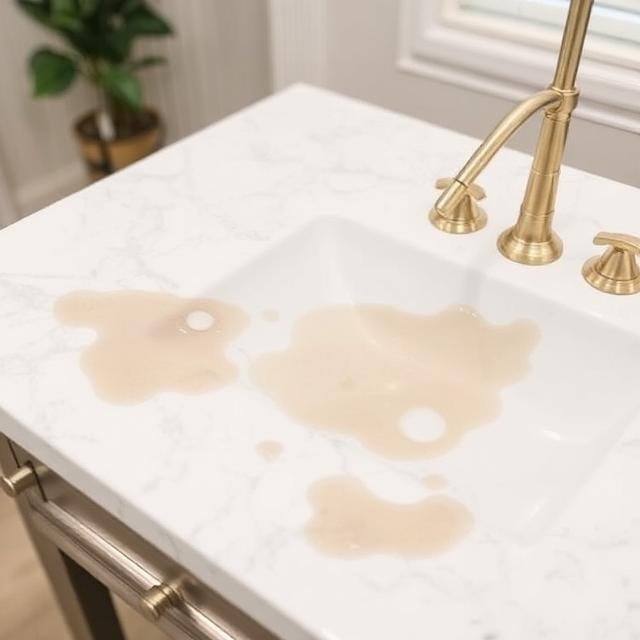
When an unsightly blemish compromises the pristine stone counter, vanity, or floors, a precise chemical counter strategy is important. If inappropriate scrubbing can cause the etching on the surface, driving stains, or stripping away polished finishes.
This comprehensive guide lets you know how to remove stains from white marble and gives an authoritative, scientifically backed blueprint to neutralize and safely eliminate the etches from the white marble without compromising the structural integrity.
The Geology of Vulnerability: Etching vs. Staining
Before applying any treatment, it is necessary to differentiate between a stain and the etches, as their remedial protocols are completely distinct:
- Stain: It occurs when a foreign pigmenting substance such as rust, oil, or tea penetrates the microscopic pores of the stone; it will deposit the color deeply within the subsurface matrix. The surface remains physically intact, but the color has changed.
- Etch Mark: It occurs when the acidic liquid, like wine, lemon juice, or any cleaner, tends to have a chemical reaction with the calcium carbonate in the marble. This chemical reaction dissolves a microscopic layer of the stone surface, leaving behind dull, rough, and any whitish marks. As the etching is a physical surface erosion, it is not a discoloration.
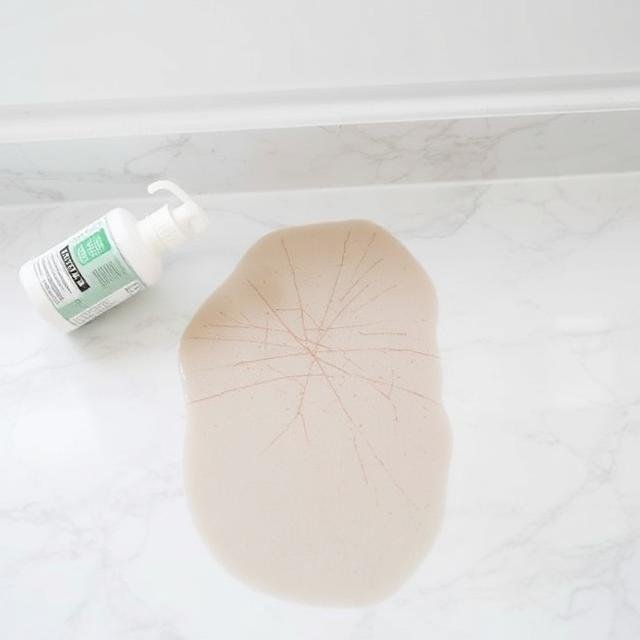
Step-by-Step Diagnostic Protocol for White Marble Stains
The different chemical compounds require particular counter agents. It is necessary to use the correct solvent that will be more effective. If a wrong solvent is used, then it will be ineffective and alter the white marble’s brightness and its aesthetic design.
- Organic Stains (Coffee, tea, red wine, tobacco, fruit juices, cosmetics): Use 12% hydrogen peroxide liquid or professional stone poultice powder.
- Oil-Based Stains (cooking oil, butter, grease, lotions, milk, and sebum): Use acetone, isopropyl alcohol, or baking soda mixed with liquid dish soap.
- Inorganic / Rust (metal canisters, iron-rich well water, nails, screws): Use professional, non-acidic rust remover gel specifically rated for marble.
- Biological Stains (Mold, mildew, algae, and moss): Use diluted ammonia (1/2 cup ammonia in 1 gallon of water) or a specialized stone biocide.
CRITICAL SAFETY WARNING: CHEMICAL REACTIONS Never mix ammonia with bleach or any chlorine-based products. This combination generates highly toxic chloramine gas, which causes severe respiratory damage. Work in well-ventilated areas and wear nitrile gloves throughout all chemical applications.
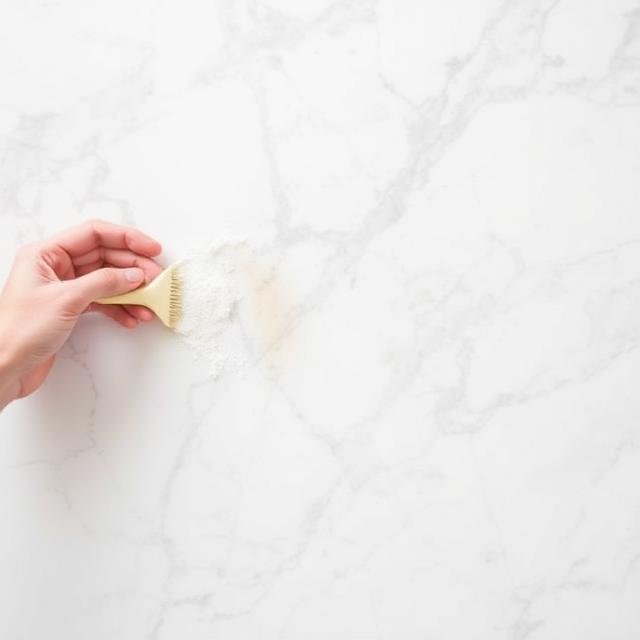
The Ultimate Extraction Technique: Subsurface Poultice Extraction
For deep, stubborn organic stains that cannot be cleared via simple surface wiping, you must deploy a chemical poultice. A poultice works via capillary action. The liquid chemical solvent breaks down the stain molecules, and an absorbent powder base draws the dissolved
Required Materials: Hydrogen peroxide 12% or pure acetone for oil stains, unscented white paper towels, plastic wrap, painter’s tape, and distilled water.
- Preparation: Clean the target area gently with distilled water and a microfiber cloth. Pat completely dry.
- Mixing the Slurry: Combine your chosen solvent (e.g., hydrogen peroxide) with the absorbent powder in a glass bowl until it achieves the thick, uniform consistency of peanut butter.
- Application: Apply the poultice paste directly over the stained zone using a plastic spatula, extending roughly 1/2 inch past the borders of the stain. Maintain a uniform thickness of 1/4 inch.
- Sealing the Reaction: Cover the applied paste with plastic wrap. Use some painter’s tape to seal all four edges securely to the stone. This arrests evaporation, forcing the solvent to drive down into the stone pores.
- Ventilation & Curing: Allow the sealed poultice to sit undisturbed for 24 hours. After 24 hours, slice open the top of the plastic wrap with a utility knife to let air circulate, but do not remove the mixture. Allow it to air-dry completely over the next 24 hours. As the paste dries, it draws the pigment up into itself.
- Scraping & Inspection: Once dry and hardened, gently scrape the crusty paste away using a rigid plastic putty knife or scraper. Clean the residue with distilled water, wipe dry, and assess the surface. For severe or historic staining, this process may require 2-3 iterative applications.
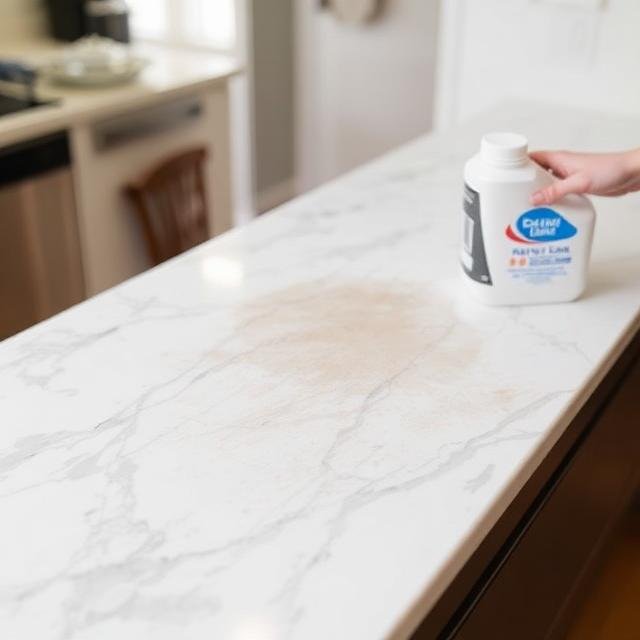
How to Restore Light Etch Marks
If your marble exhibits a dull spot rather than discoloration, it is an etch, not a stain. The light-colored etches can be removed manually by polishing. Apply some non-acidic marble polishing powder directly over the dull mark. The buff area using a damp microfiber cloth is tight and overlapping circular motions. The ultra-fine abrasive compound microplanes the calcite crystals and can restore the mirror-smooth glossy finish.
Conclusion
White marble is an investment in timeless natural artistry. While its porous architecture leaves it vulnerable to chemical interactions, stains are rarely terminal sentences. By correctly identifying the contaminant and employing precise chemical solvents via the poultice capillary extraction technique, you can lift deep-set discoloration and restore the immaculate clarity of your stone. Implement a disciplined regimen of routine sealing and pH-neutral maintenance to safeguard your marble assets for decades to come.
Frequently Asked Questions (FAQs)
Q1: Can I use baking soda and vinegar to clean marble?
A: Absolutely not. Vinegar is highly acidic (acetic acid) and will instantly etch and corrode marble surfaces on contact. While baking soda is a safe, mild abrasive when mixed with water or dish soap for oil stains, it should never be combined with acidic elements on natural stone surfaces.
Q2: Why did my white marble turn yellow after applying a treatment?
A: Iron oxidation is the primary cause of yellowing in white marble. Many white marbles natively contain trace deposits of iron compounds. Exposure to excessive moisture, flood conditions, or incorrect high-pH alkaline chemicals can oxidize these embedded iron particles, turning them to rust. Treat yellowing with a professional stone rust remover gel.
Q3: How long should I wait to use my kitchen counter after applying a poultice?
A: The extraction process requires a full 48-hour cycle: 24 hours under sealed plastic wrap to break down the contaminant, and an additional 24 hours uncovered to allow the paste to dry and pull the stain out. Avoid using the countertop or exposing it to water during this entire 48-hour window.

