
What is the acceptable porosity for commercial granite slabs?
For any commercial project we require heavy-duty granite slabs; premium quality is a must. According to the ASTM C97 standards, the granite slabs must exhibit a water absorption rate of under 0.5% by weight. Further, the architecturally graded granite slab must have a minimum density of 2,600 kg/m³ (2.6 g/cm³) to have sufficient compressive strength and resist the environmental changes in the high-traffic areas.
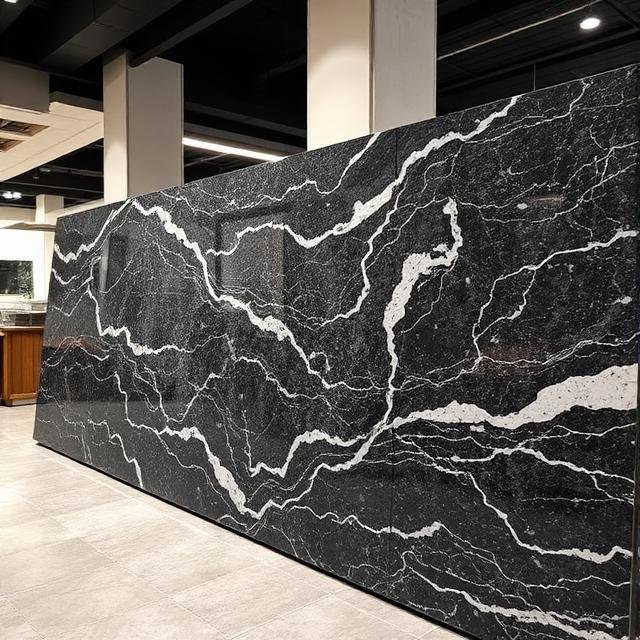
The Science of Granite Porosity
Granite porosity means the volume of void spaces within the stone’s mineral texture. Granite is an igneous rock formed with high temperature and pressure. This makes it one of the most durable natural stones available, and it is not entirely impermeable.
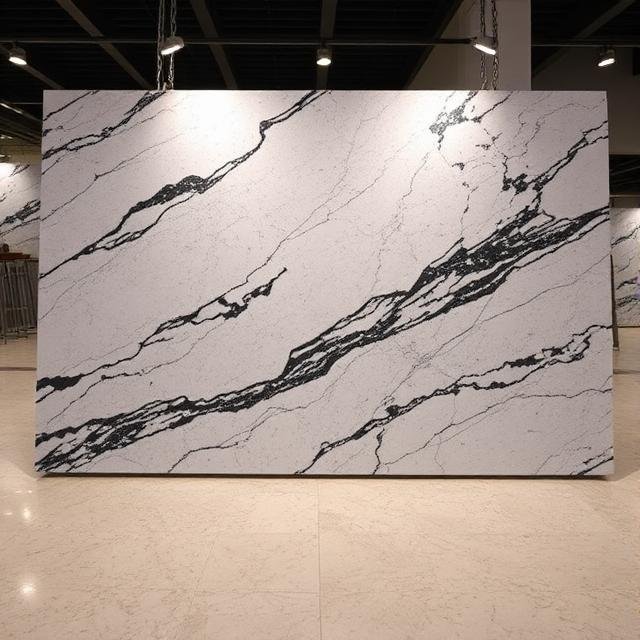
In the commercial projects, the application of granite is from facades to flooring. Hence, it is necessary to understand the porosity and density of the granite slab.
Key Metrics for Heavy-Duty Stone Specifications
During procuring the granite slabs, just relying on the visual inspection is not sufficient; one must evaluate the granite slab based on some of the standardized metrics:
- Water Absorption Rate (< 0.5%): This is the standard metric for porosity. The heavy-duty stone must absorb less than half a percent of its weight in the water. If the stone exceeds this threshold, then it is highly vulnerable to freeze-thaw cycles and deep-set stains from the industrial chemical.
- Bulk Specific Gravity (Density): The standard density for high-quality commercial granite slabs ranges between 2,600 and 2,800 kg/m³. When the density is high, then the porosity of the slab will be low; both are correlated to each other. Further, it is high in compression strength and makes the stone withstand the heavy loads and impact.
- Compressive Strength: Typically the granite slab must be above 19,000 psi (131 MPa) for any commercial projects.
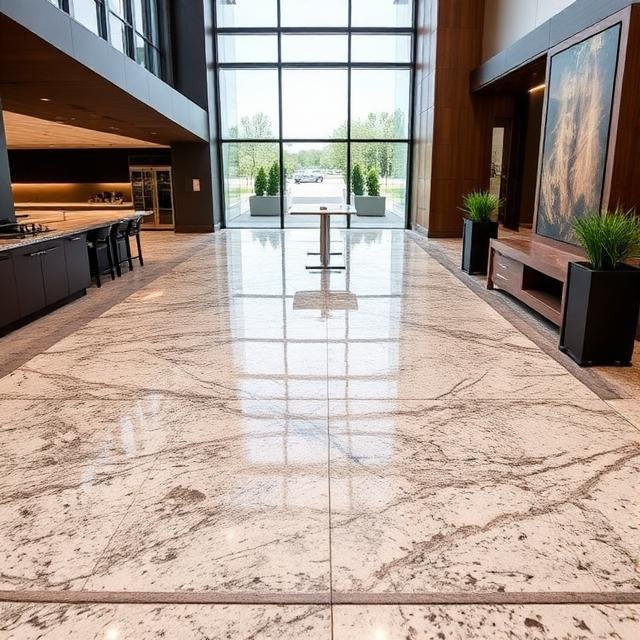
Why Low Porosity Dictates Commercial Viability
- Freeze-Thaw Durability: For the exterior applications, the granite slab must trap the moisture; when the slab is highly porous, then it may expand upon freezing. Over time, this may cause spalling and cracking. A water absorption rate under
- In exterior applications, moisture trapped in highly porous stone will expand upon freezing. Over time, this causes spalling and micro-cracking. A water absorption rate of 0.5% can reduce the risk completely.
- Maintenance and Hygiene: The environment requires rigorous sanitation and less porosity. It prevents the ingress of bacteria and harsh cleaning liquids. It helps to maintain the integrity of the surface.
- Mechanical Wear Resistance: The denser granite can tighten the interlocking mineral crystals, providing superior abrasion resistance, and it is crucial for any heavy-duty slab when there is constant heavy footing or machinery.
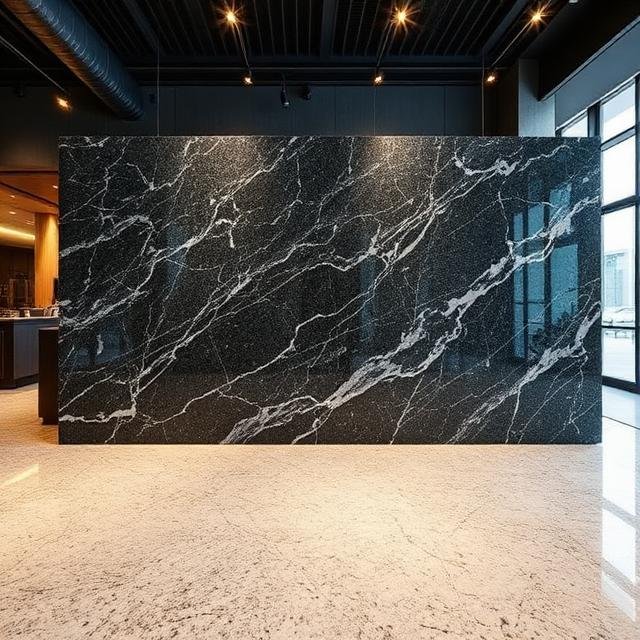
Standardized Testing: ASTM C97
The industry standard for evaluating the metrics of the slabs is the ASTM C97 / C97M; it is the standard method to check the level of absorption and bulk specific gravity of dimension stone. The slabs are weighted, submerged in water for a specified period, and weighted again. The exact calculation allows the architects and B2B buyers to make a comparison of the different structural integrities of different granites before procurement.

