
Italian marble texture is frequently referred to as the “gold standard” of natural stone due to its distinct geological “fingerprint” as well as its prestige. Italian marble has a high crystalline structure that gives it a luminous, glass-like depth that distinguishes its texture from that of many other stones.
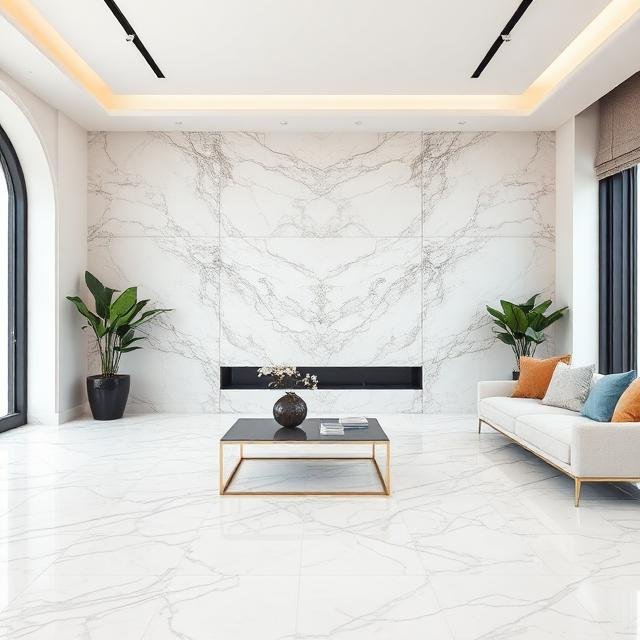
Italian marble is a metamorphic masterpiece that has been created over millions of years, and it is more than just a building material. Its texture is defined by a dense, fine-grained composition that permits a mirror-like polish. It was formed from limestone that was exposed to the extreme heat and tectonic pressure of the Apuan Alps. This is a thorough guide to Italian marble texture.
1. The Three Italian Marble Texture Titans
There are three famous and most demanded Italian marbles, such as Calacatta, Statuario, and Carrara marbles. They look similar, but they differ in textures.
- Carrara: It is known for its soft and feathery texture; it has a linear vein pattern on a grey-white background. It is one of the most common and classic textures.
- Calacatta: It has a bold and dramatic look with a thick broken veins pattern ranging from dark grey to gold veins against a stark and milky white base.
- Statuario: The texture that bridges the gap with a bright white background and a good blend of thin grey veins gives a bold look. It is prized for its book-matching potential, where two slabs are mirrored to create a symmetrical pattern.
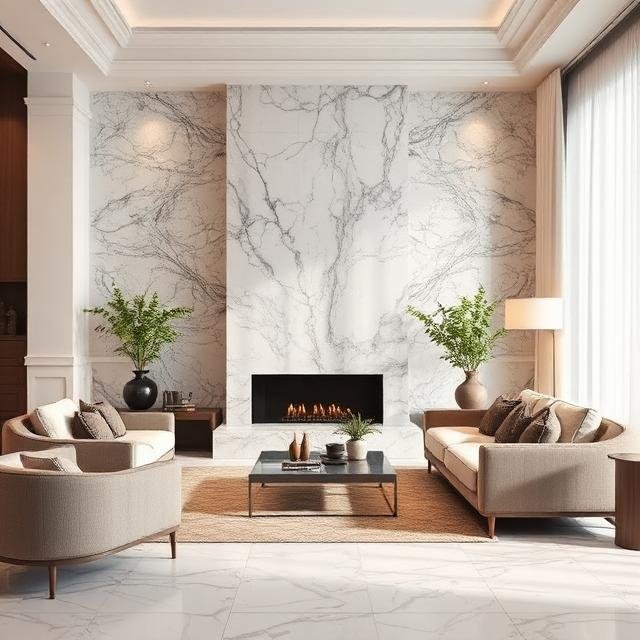
2. Specialized Textures Beyond White
While white Italian marble dominates the market, it is quarried in Italy and produces a broader spectrum of tactile experiences:
- Botticino: Its creamy, compact texture with light gold veins gives a warmer look. It is the best match for traditional designs such as in puja rooms.
- Nero Marquina: A velvety black texture interrupted by sharp, lightning-like white veins.
- Travertine: Technically a limestone but often grouped with marble, it has a porous, pitted texture that provides a rustic, Mediterranean vibe.
Conclusion
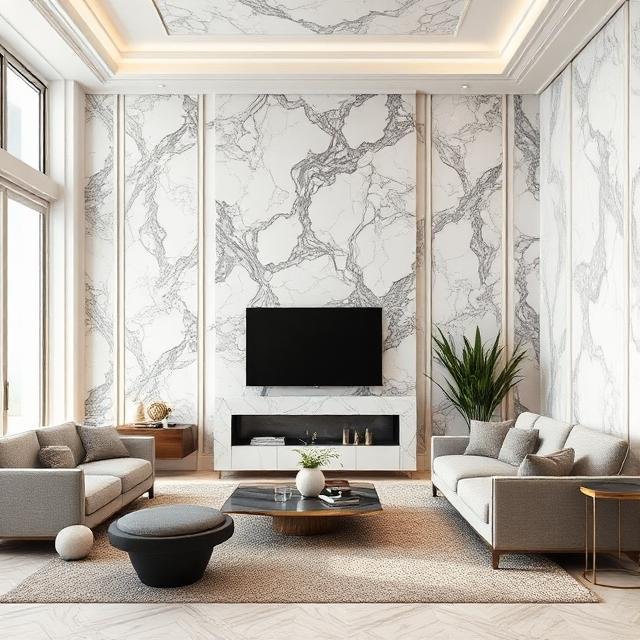
The texture of Italian marble is its soul. Whether you prefer the subtle, cloud-like ripples of Carrara or the high-contrast drama of Calacatta, these textures provide a sense of movement and “living” history that synthetic materials simply cannot replicate. When choosing your slab, always feel the surface; a genuine Italian marble should feel naturally cool and exceptionally dense.
FAQs
Q: Why does Italian marble feel cooler than other stones?
A: Because of its high density and thermal conductivity, it dissipates heat quickly, keeping the surface cool even in warm climates.
Q: What is “honed” vs. “polished” texture?
A: A polished finish is shiny and reflective, highlighting the color and veins. A honed finish is matte and satin-smooth, which is better for high-traffic areas as it hides scratches and “etching” (dull spots from acids).
Q: Does the texture change over time?
A: Marble is porous. Without proper sealing, acidic liquids (like lemon or wine) can “etch” the texture, creating dull spots. However, with care, the stone develops a beautiful patina over decades.

