
In 2026, kitchen design has transformed beyond the huge appliances to the invisible and light appliances. Nowadays, an invisible induction cooktop is a great fusion of luxury and technology that allows you to cook directly on your marble and looks like countertops without visible burners.
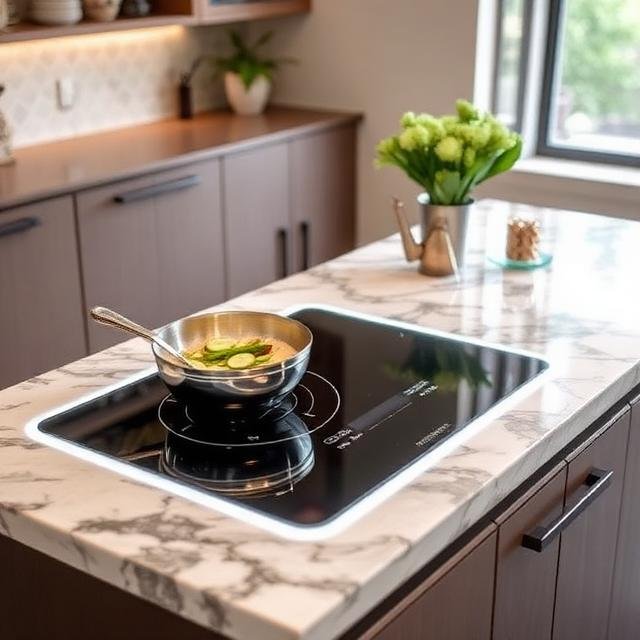
In this guide let us explore how this “magic” technology works, the costs involved, and how to choose the right material for a seamless kitchen experience.
What is an Invisible Induction Cooktop?
The invisible induction is also called undermount induction. It is involves installing electromagnetic induction coils directly beneath a a solid countertops surface. It is a traditional glass top induction stove. There is no visible of plate. After activation the system heats the magnetic cookware through the stone and leaves the surrounding surface cook and functional for prep work.
The Best Countertop Materials for 2026
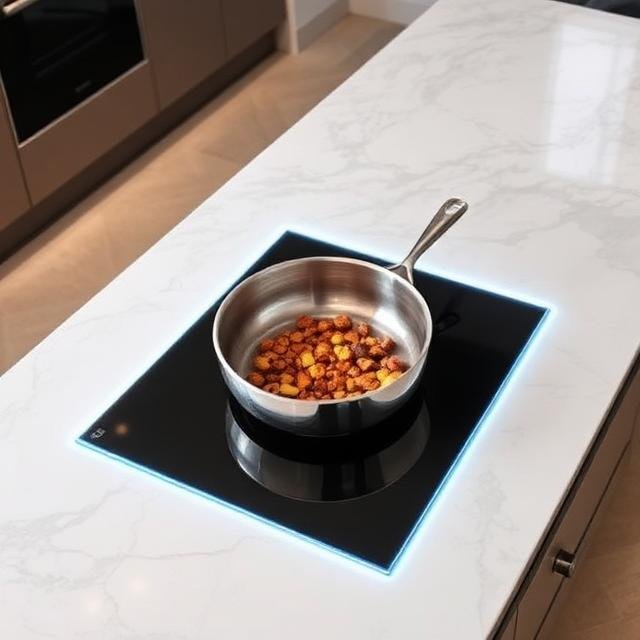
The goal is a marble look not all natural stones can handle the heat, for an invisible induction cookstop, a correct material choice is must. Here is teh right material choice and the compatibility.
| Material | Compatibility | Why? |
| Porcelain Slabs | Best Choice | Extremely heat resistant (up to 1200°C) and non-porous. Perfect for marble-effect designs. |
| Sintered Stone | Excellent | Brands like Dekton or Neolith are ultra-compact and virtually immune to thermal shock. |
| Natural Granite | Conditional | Must be milled (thinned) to approx. 1.5cm in the burner area. Requires professional density testing. |
| Natural Marble | Risky | Natural marble is porous and prone to cracking under uneven heat. Use marble-look porcelain instead. |
| Quartz | Not Recommended | Most quartz contains resin (plastic), which can melt or discolor at temperatures above 150°C. |
Key Benefits of “Cooking on Stone”
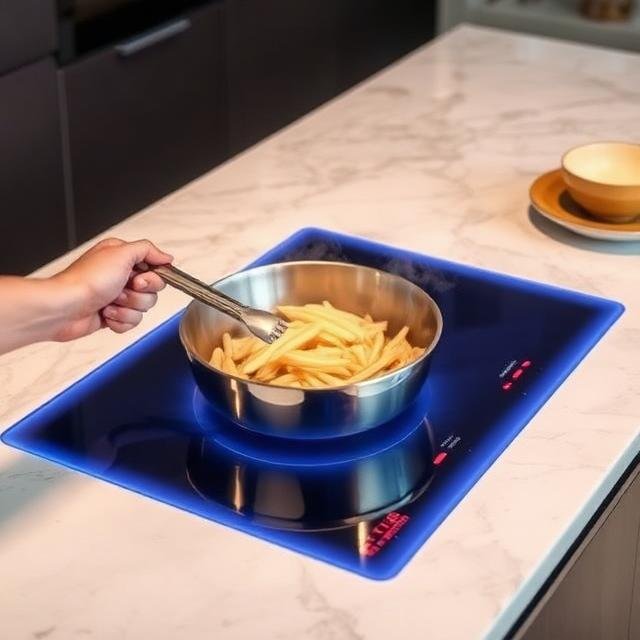
- Uninterrupted Aesthetics: Your kitchen island looks like a solid piece of stone with a minimalist design and high end boutique look.
- Space Maximization: When the stove is off, the cooking zone doubles the workspace and it can be used as a buffet area or dining area.
- Safety First: The induction advanced technology can only heat the pots, and while the stone may feel warm from the pot’s residual heat, there are no open flames.
- Effortless Cleaning: There are no knobs or glass edges. You can simply wipe down the complete counter with a damp cloth.
Installation & Cost in 2026
The invisible induction is a premium investment. It need specialized fabrication to ensure the stone is thin enough for the magnetic field to pass through and strong enough to hold the pot.
- 1-2 Burner Unit: Approximately Rs 160,000
- 4-5 Burner System: Approximately Rs 240,000
- Installation/Fabrication: Expect to pay an additional ₹91,600 – ₹183,100 for specialized stone milling and electrical work.
Conclusion
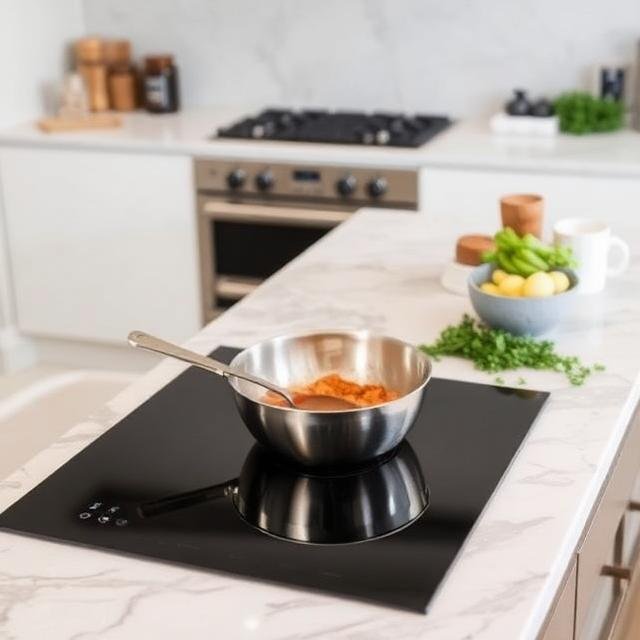
The invisible induction cooktop is the gold standard for modern, clutter-free living. While it requires a significant upfront investment and specific material choices (like high-grade porcelain), the result is a futuristic kitchen that is as functional as it is beautiful. It’s not just a cooktop; it’s a lifestyle upgrade that turns your kitchen into the centerpiece of your home.
FAQs
1. Can I use my existing pots on an invisible induction counter?
Only if they are magnetic. A quick test: if a magnet sticks to the bottom of your pan (cast iron, stainless steel), it will work. Aluminum, glass, and copper are not compatible.
2. Does the countertop get hot enough to burn me?
The induction system itself doesn’t heat the stone. However, the stone will absorb “residual heat” from the hot pot. It will feel warm but is generally much safer than a gas or electric burner.
3. Is it hard to repair?
Repairs can be complex because the unit is under the counter. Most premium brands design their systems to be accessed via the cabinetry below, so you usually don’t have to “lift” the entire stone slab.
4. How do I know where to place the pan?
Most systems use subtle laser-engraved markers or “smart” LED indicators that shine through the stone to show you exactly where the cooking zones are located.

