
Terrazzo is a material with roots stretching back to 15th-century Venetian workers, having a resurgence not just for its timeless beauty but also as a sustainable material with various designs. The modern innovation of using marble waste and other stone offcuts to create an aesthetic decorative terrazzo can transform the construction and design industry’s approach to material uses. In this article let us understand how to turn marble scraps into decorative Terrazzo.
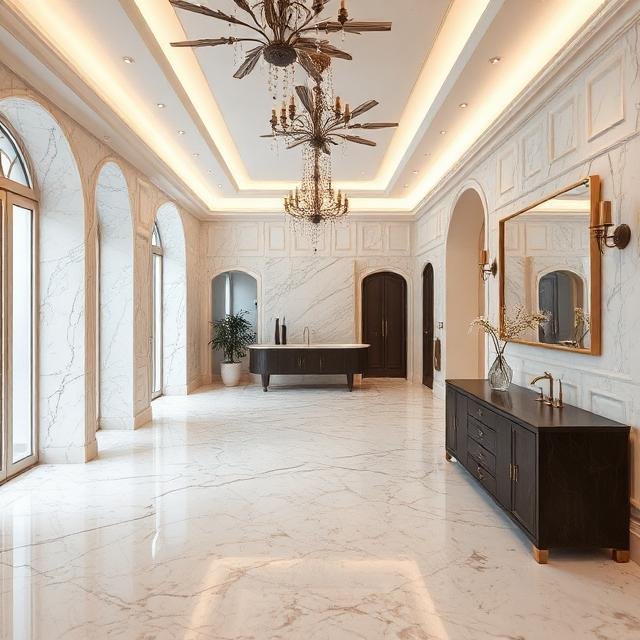
The Circular Story of Terrazzo
Terrazzo originated from resourcefulness: Venetian workers embedded the discarded marble scraps into beautiful decorative terrazzo. The marble scraps are combined with lime binder or clay to create a durable, fine, smooth surface.
Today, the tradition is elevated by advanced technology, turning the marble scraps, i.e., unwanted slabs, chips, and dust, into a highly desirable and smooth-finish product.
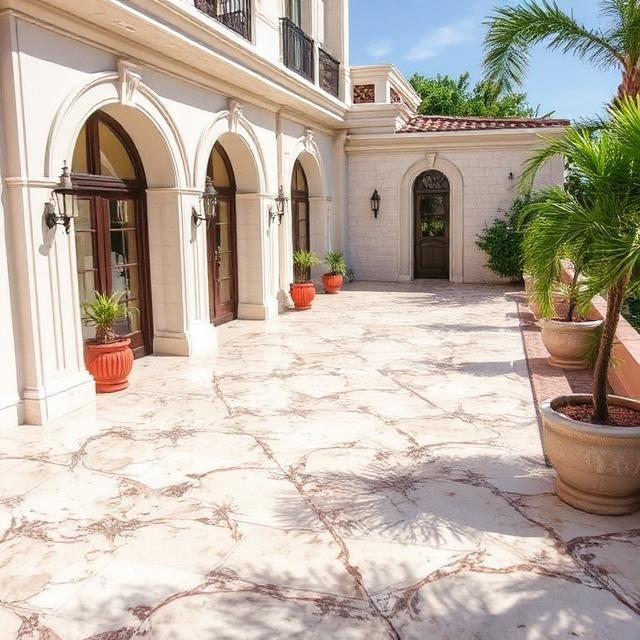
Key Innovations in Material Composition:
- Recycled Aggregate: The core of modern sustainable terrazzo. Instead of quarried marble, manufacturers use finely crushed marble chips and offcuts. Beyond marble, the waste materials like recycled glass, mother-of-pearl, quartz, and industrial byproducts are incorporated.
- Advanced Binders: The traditional terrazzo used cementitious binders, which are used in modern versions like epoxy resins. Epoxy-based terrazzo is known for its:
- Superior durability and resistance to cracking.
- Low to zero volatile organic compounds (VOCs), which greatly improves indoor air quality.
- Wider color palette, allowing designers to create vibrant and sophisticated patterns that were challenging with cement alone.
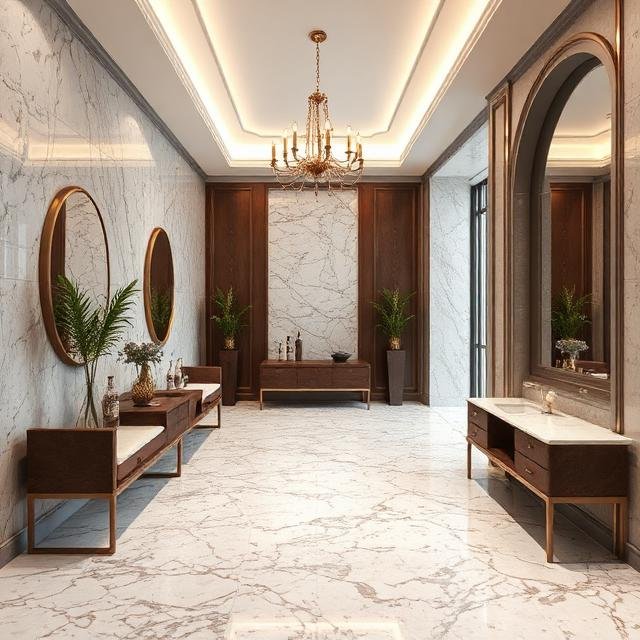
Environmental and Aesthetic Benefits
The reuse of marble scraps in Terrazzo is more beneficial that aligns with global green building movements:
| Benefit Category | Description |
| Waste Diversion | Directly addresses the significant problem of stone industry waste by transforming scraps that would otherwise end up in landfills into a high-value product. |
| Sustainability & LEED | Using recycled content and locally sourced materials (where possible) helps projects qualify for green building certifications like LEED. |
| Longevity & Durability | Terrazzo surfaces are exceptionally hard-wearing, often lasting for the life of the building (decades or even centuries), minimizing the need for replacement and reducing long-term material consumption. |
| Design Versatility | The ability to customize the aggregate size, color, and binder allows for limitless design possibilities, from creating seamless, monolithic looks to intricate, custom patterns for floors, countertops, and wall cladding. |
Conclusion
The evolution of terrazzo from a resourceful flooring solution to a premium, sustainable design choice demonstrates a powerful principle of the circular economy: waste is simply a resource in the wrong place. By embracing marble waste, innovators are not only diverting tons of material from landfills but are also creating a product that is uniquely beautiful, incredibly durable, and ethically responsible. As the demand for eco-friendly building materials continues to rise, decorative terrazzo stands out as a material that perfectly marries tradition with the future of sustainable design.
Frequently Asked Questions (FAQs)
Q: Is terrazzo expensive compared to other flooring options?
A: While the initial installation cost for poured-in-place terrazzo can be higher than standard tiling, its exceptional durability and minimal maintenance requirements result in a significantly lower lifecycle cost. Its longevity often makes it the most economical choice over decades.
Q: Does using recycled marble chips affect the quality or appearance of the terrazzo?
A: No, it often enhances the quality. When marble waste is crushed and processed correctly, it creates high-grade aggregate. Furthermore, using mixed marble fragments gives the final product a unique, authentic speckled pattern that is one-of-a-kind.
Q: Where can decorative terrazzo be used?
A: Its versatility is a key advantage. It’s suitable for high-traffic flooring (malls, airports, schools), countertops, vanities, wall cladding, and even pre-cast furniture and home décor items.13 Both interior and exterior applications are possible with the correct binder.

