
Marble flooring is a timeless beauty and durable. It gives a sophisticated appeal to the space; however, its porous nature makes it highly susceptible to stubborn stains like oil and turmeric (haldi) stains. The usage of cooking oil and turmeric powder is very common in the household on a daily basis. The spillage of oil and turmeric stains on the marble floors are stubborn stains; this guide breaks down the safest and most effective methods to tackle the stubborn stains without damaging the shine of the marble surface.
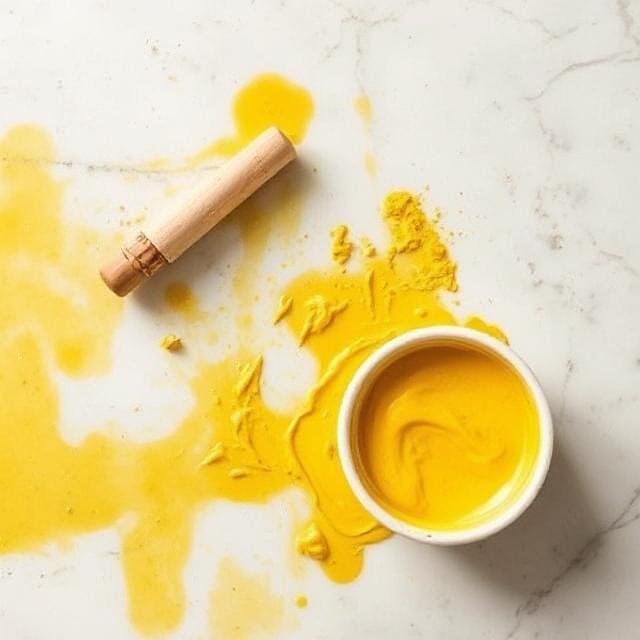
Understanding the Stains: Stubborn Oil and Turmeric Stains from Marble Floors
Before cleaning, it is necessary to understand the two types of stains:
- Oil-Based Stains (Grease, Cooking Oil): Liquids such as oil and grease can penetrate easily, as the marble surface is porous in nature. They need a solvent to dissolve the oil and an absorbent medium to draw it out.
- Organic/Pigmented Stains (Turmeric): The bright color of turmeric stains is highly pigmented; to remove the pigmented stains requires an oxidizing agent.
The safest solution to remove these stains on marble is the poultice method. The poultice is a thick paste that chemically removes the stains from the stone as it dries.
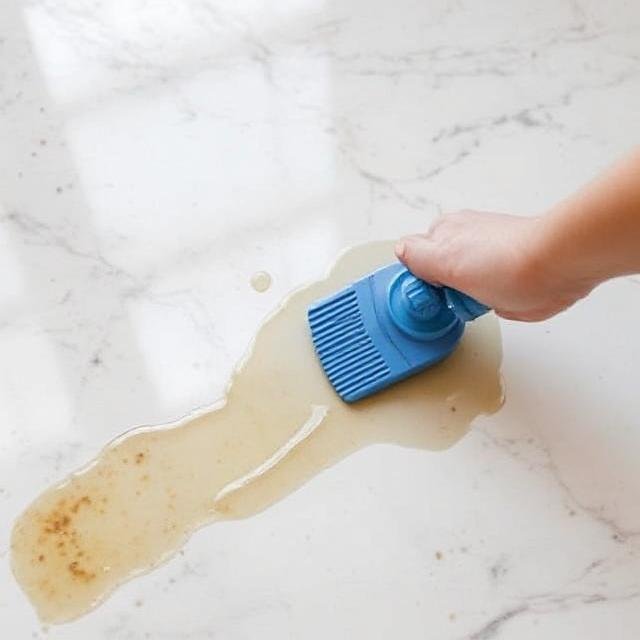
The Poultice Method for Oil and Turmeric
There are two separate treatments for oil stain removing and turmeric stain removing. An acetone solvent is required to remove the oil stains, while an oxidizer like hydrogen peroxide is required to remove the bright turmeric stain.
1. Removing the Oil Stain (The Dark Spot)
| Material | Purpose | Notes |
| Absorbent Powder | To draw out the stain | Baking Soda (recommended) or Talcum Powder |
| Solvent | To dissolve the oil | Acetone (or Mineral Spirits) |
| Equipment | Mixing bowl (glass/plastic), plastic spatula, plastic wrap, masking tape, soft cloth | Caution: Acetone is highly flammable. Work in a well-ventilated area. |
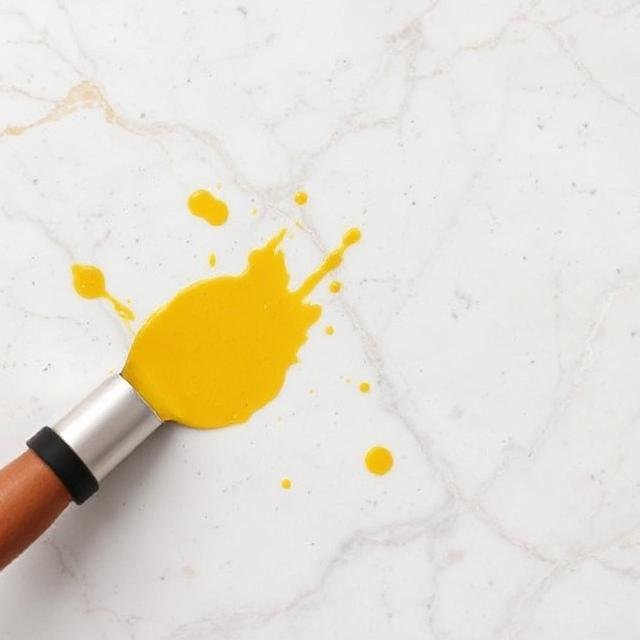
Steps:
- Mix the Poultice: In a nonmetal bowl, mix the baking soda with acetone and make a thick paste.
- Apply: Dampen the stained surface with a few drops of water and apply the poultice onto the oil stain, spreading it about half an inch thick.
- Cover & Wait: Now, cover the paste with plastic wrap and seal the edges with masking tape. This allows the solvent to remain active for a long period of time.
- Dry & Remove: Allow the poultice to dry completely for at least 24 hours; as it dries, it pulls out the oil stains. Once dry, scrape off the powder with a plastic spatula, rinse the surface with water, and dry it with a soft cloth.
2. Removing the Turmeric Stain (The Yellow Pigment)
| Material | Purpose | Notes |
| Oxidizer | To break down the pigment | 12% Hydrogen Peroxide (Standard household is 3%; test a small spot first) |
| Absorbent Powder | To form the paste | Baking Soda or Talcum Powder |
Steps:
- Mix the Poultice: Mix the absorbent powder with hydrogen peroxide and make a thick paste like peanut butter consistency.
- Apply & Wait: Now, apply the thick paste over the turmeric stain and cover it with plastic wrap and let it sit for 24 hours.
- Clean Up: Remove the dried paste and wash the area with water and wipe it with a soft cloth.
Essential Safety Precautions
- Test First: Always test any cleaning agent, especially like hydrogen peroxide, on a small area of the marble slab.
- Avoid Acids: Never use lemon juice, abrasive cleaners, or vinegars on the marble surface to clean the stains, as they cause irreversible damage to the stone.
- Ventilation: Always use the solvents like acetone only in ventilated areas.
- Wear Protection: Wear rubber gloves and eye protection glasses while doing stain removal treatment.
- Blot, Don’t Rub: Before cleaning the fresh spills, always blot the liquid. Rubbing the stains can spread the stain, and it can penetrate into the stone.
Conclusion: Maintenance is Key
Removing stubborn stains from marble is a patient process that often requires repeated poultice applications. Once the stains are gone, the best way to maintain your marble floors is through prevention. Regularly seal your marble (typically once a year) using a quality impregnating sealer.For routine cleaning, use only a pH-neutral, stone-safe cleaner and wipe up spills immediately. With proper care, your marble floors will retain their timeless beauty for years to come.
Frequently Asked Questions (FAQs)
| Q: Can I use vinegar or lemon juice? | A: No. Marble is calcium carbonate, and these acids will chemically react with and etch (dull) the surface, causing permanent damage. |
| Q: Will household bleach (sodium hypochlorite) work? | A: Bleach can be an effective oxidizer for organic stains like turmeric, but its high pH can be risky. Hydrogen peroxide is a safer, gentler alternative for marble. |
| Q: Why is a poultice better than scrubbing? | A: Scrubbing only addresses surface stains and can scratch the marble. The poultice draws deep-set stains out of the porous stone by chemical action. |
| Q: How do I prevent future stains? | A: Sealing your marble floor regularly (usually annually) is the best preventative measure. Always use doormats and quickly wipe up any spills. |

