What are 3D CNC-carved marble walls?
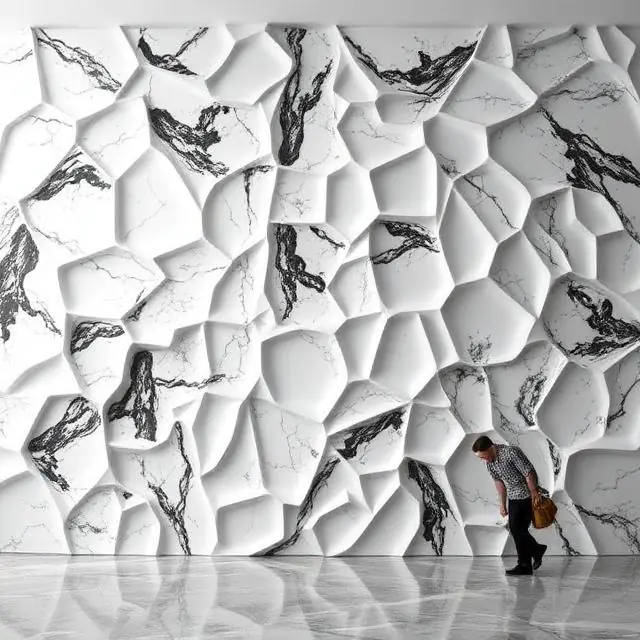
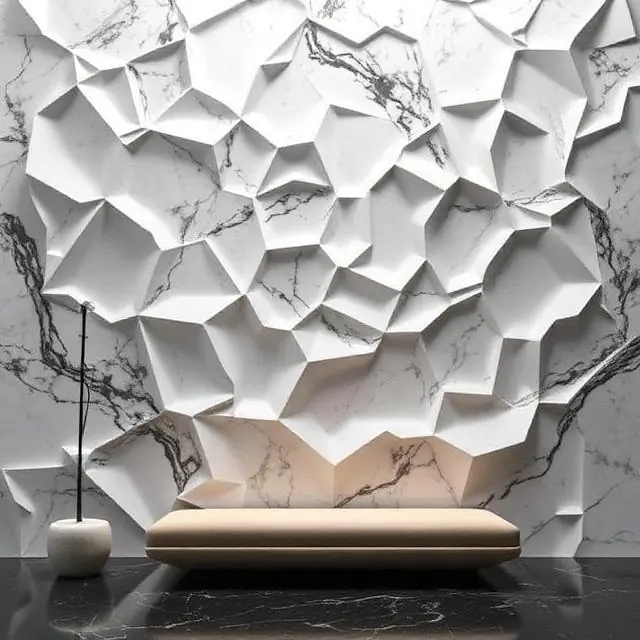
3D CNC-carved marble walls designs require high precision. Architectural panels can be done using Computer Numerical Control (CNC) technology to etch the intricate, 3D, such as ribbed, sculptural textures and flutes into the natural marble slabs. These walls can transform the traditional marble into dynamic tactile surfaces used for luxury interior facades and feature walls.
Why Designers are Choosing Sculptural Stone in 2026
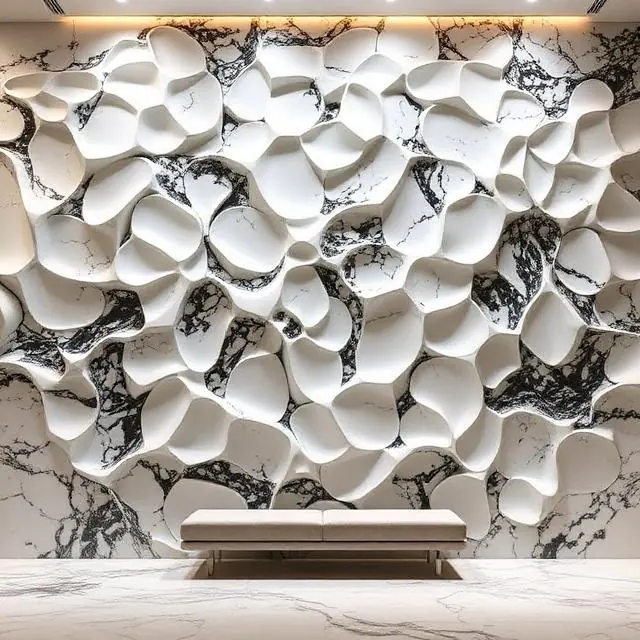
The shift toward “Tactility Over Shine” has moved beyond flat finishes. Now designers are leveraging 3D textures to manipulate light and shadow within a space. The flat polished marble, a fluted marble wall, interacts with ambient lighting to create a sense of movement and depth.
- Fluted Textures: The vertical grooves that add height and a classical rhythmic feel to hotel lobbies and grand entry.
- Ribbed Patterns: The finer closely spaced ridges that provide an industrial chic aesthetic.
- Sculptural Facades: The fluid wave-like carvings that can turn the structural wall into a masterpiece of art.
The Technology Behind the Texture: How CNC Carving Works
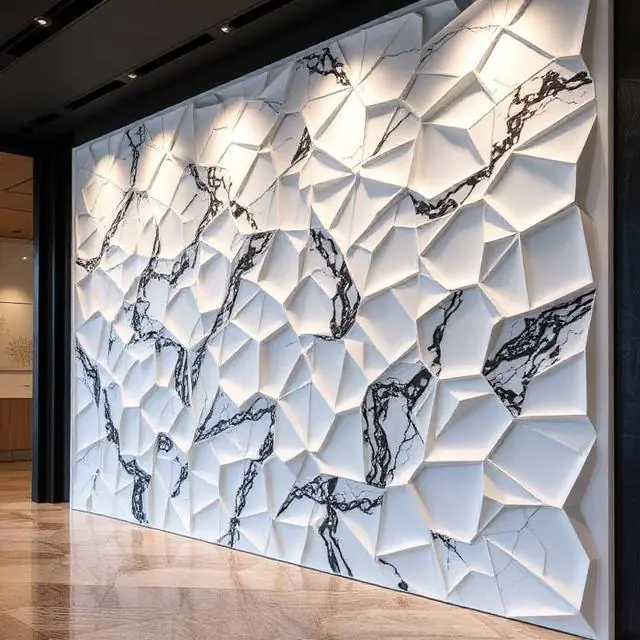
Advanced CNC routers in 2026 industrial models with 7.5 kW spindles and 24,000 RPM precision allow for intaglio and relief carving on marble and granite.
- Digital Rendering: Designers create a CAD/CAM file specifying the depth and path of the grooves.
- Diamond-Tipped Precision: The machine uses water-cooled diamond bits to carve the stone without fracturing the delicate veins.
- Refined Finishing: After carving, the stone is often “honed” or “brushed” to enhance the tactile feel of the ridges.
Strategic Benefits for Luxury Interiors
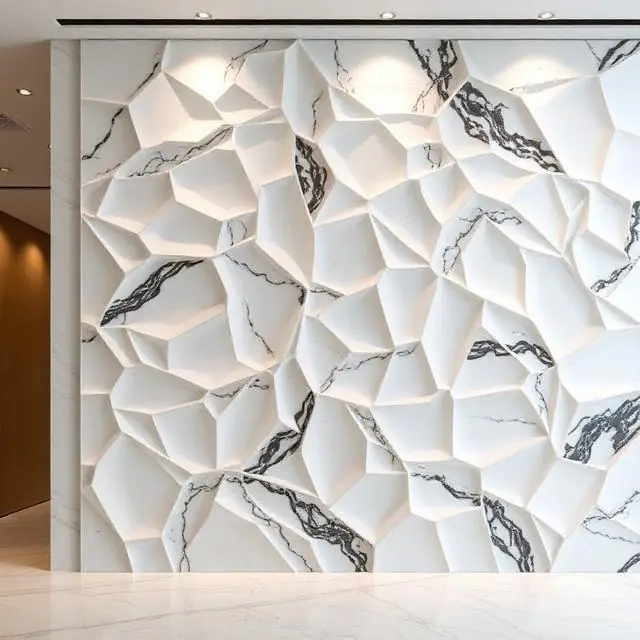
- Acoustic Diffusion: The uneven surface of 3D carved stone helps break up sound waves, reducing echo in large, open-concept spaces.
- Durability: Unlike 3D-printed plastics or wood slats, carved marble is fireproof, moisture-resistant, and aesthetically timeless.
- Uniqueness: No two slabs are identical; the CNC path intersects with the natural veining of the marble to create a bespoke pattern every time.
Conclusion: A New Era of Architectural Stone
The integration of 3D CNC technology with natural marble marks the end of “flat” design. By combining the raw, organic beauty of the earth with robotic accuracy, architects can now create interior facades that are as much about the sense of touch as they are about visual luxury. Whether it is a ribbed feature wall in a master suite or a fluted facade in a corporate office, 3D stone is the definitive premium finish for 2026.
FAQs
How deep can CNC machines carve into marble?
Most architectural 3D panels feature a carving depth between 5mm and 30mm. The depth depends on the thickness of the stone slab (typically 2cm or 3cm) and the desired visual impact of the shadows.
Can 3D carved marble be used in wet areas like showers?
Yes. 3D carved marble is an excellent choice for shower feature walls. However, it requires a high-quality impregnating sealer to prevent water from dwelling in the grooves and to make cleaning easier.
Which marbles are best for 3D CNC carving?
Consistent, fine-grained marbles like Carrara White, Volakas, and Crema Marfil are ideal. Marbles with heavy brecciation (large chunks) may chip during high-speed CNC carving, so choosing a “calm” stone is recommended for intricate fluting.