Marble countertops bring timeless beauty and luxurious appeal to any space. However, using the stunning natural stone as a kitchen countertop is a little tricky. Marble is a natural stone made of calcium carbonate, which makes it highly reactive to any acids and makes the marble surface etch.
Etching is not a stain on the marble; it is a corrosive chemical reaction that dissolves the marble surface, leaving behind dull light spots. With a few easy ways, you can protect marble countertops from acid etching and preserve marble’s pristine finish.
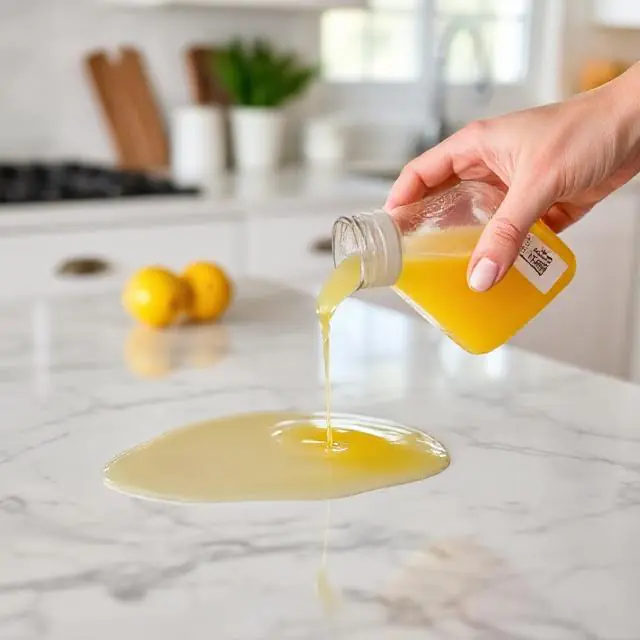
Here are 3 easy ways to protect your marble countertops from acid etching.
3 Easy Ways to Protect Marble Countertops from Acid Etching
1. Be Vigilant: Immediate Clean-up is Key
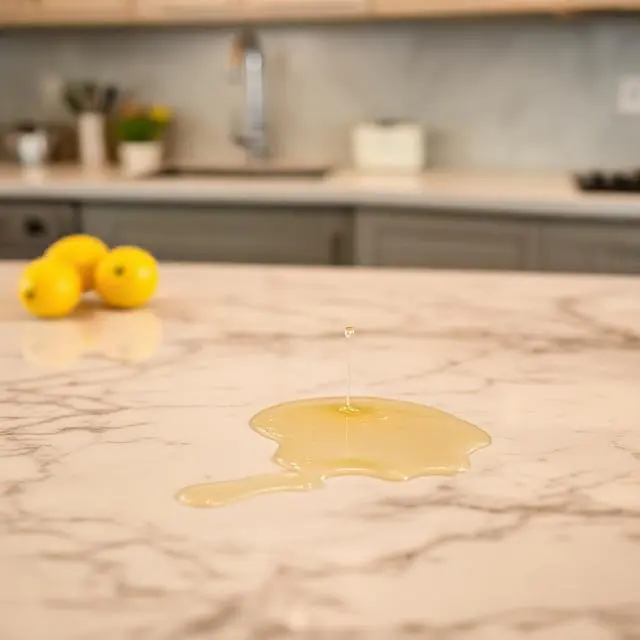
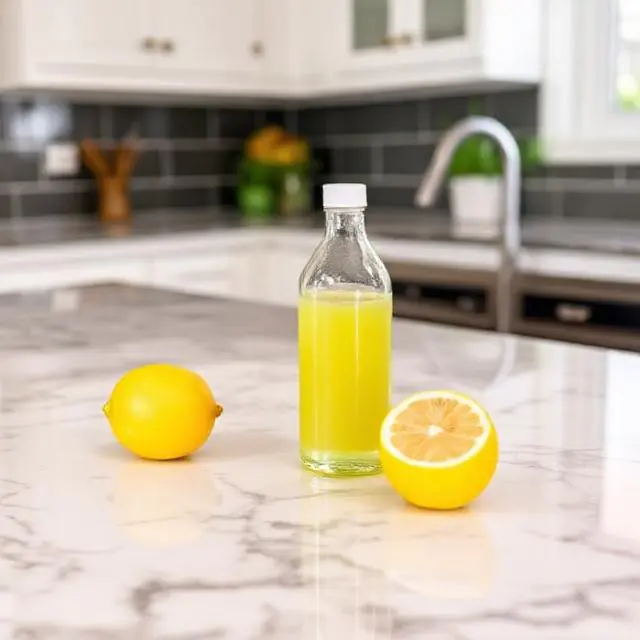
The common cause of etching of marble surfaces is everyday spills like lemon juice, vinegar, or any acidic liquids on the countertops. These acidic liquids sit on the surface and damage the marble surface.
- The Culprits: Vinegar, soda, coffee, tomato juice, and lemon juice are some commonly used in the kitchen.
- The Action: The moment it spills on the surface, it needs to be cleaned immediately with a soft, clean cloth. Do not scrub using any harsh abrasive metal brush; it can spread the acid over a large area. After wiping the area with a soft cloth, use a pH-neutral cleaner or mild soap, then dry it thoroughly.
- A Simple Rule: Act Fast! In order to minimize the contact time between the acid and stone, it is important to minimize the damage.
2. Implement a Protective Barrier: Sealers and Surface Protection
Constant usage of countertops makes them susceptible to any spillage of acidic solution. Therefore, a chemical barrier can provide a defense layer.
- Traditional Penetrating Sealers: A premium quality sealer can reduce the stone’s porosity and make it less likely to stain. The sealer does not prevent the marble from etching, but it can give time to clean up a spill before the acid penetrates the stone. Therefore, reapplying the sealer every three to five months is important.
- Advanced Surface Protection (Anti-Etch Coatings/Films): For maximum protection contact professionals for durable coating and proper guidance. Products like advanced polymer coatings are invisible barriers that acids cannot penetrate easily. They are often expensive but durable in nature.
3. Commit to pH-Neutral Cleaning
The wrong usage of cleaning products can slowly start etching on the marble over time.
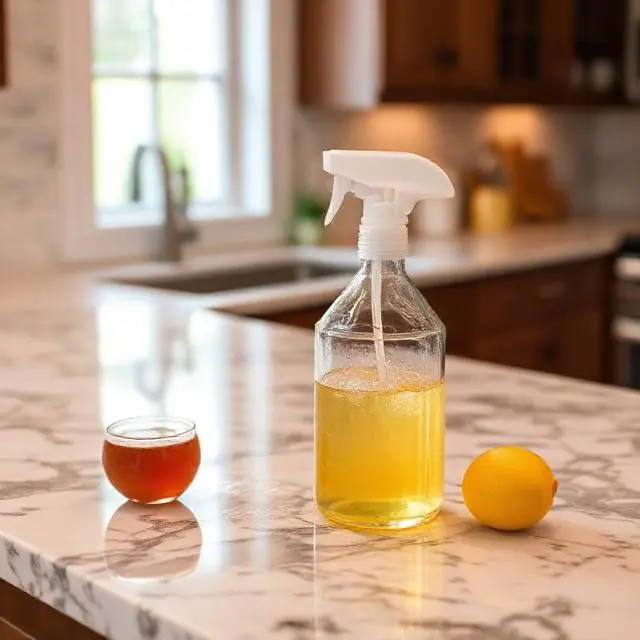
- Avoid Acidic/Harsh Cleaners: Never use cleaners that contain acidic elements like vinegar, bleach, or lemon; these acidic elements will damage the marble surface.
- Use Stone-Specific Formulas: Switch to high-quality pH-neutral cleaners that are specially formulated for cleaning marble. They ensure to give effective results in removing dirt and leave no residue without any chemical reaction with the stone.
- Simple Soap and Water: For daily wipes, always use mild pH-neutral liquids mixed with water for a safe and effective option.
Conclusion: Preservation is Possible
Owning marble countertops is a joy, not a burden. By adopting these three easy strategies, vigilant and immediate clean-up, using the right protective barriers (whether a traditional sealer or an advanced coating), and committing to pH-neutral cleaners you can ensure your marble retains its luxurious shine and flawless surface for decades to come.
FAQs on Marble Etching
Q: Is etching the same as a stain?
A: No. A stain is discoloration caused by a substance soaking into the porous stone. Etching is physical damage—a chemical burn that dissolves the stone’s surface, leaving a dull, lighter area.
Q: Will sealing my marble prevent etching?
A: A traditional penetrating sealer helps prevent stains by blocking pores. However, it does not stop etching, which is a chemical reaction on the surface. For full etch protection, you need a specialized anti-etch coating or film.
Q: How do I know if a spot is etched or stained?
A: Generally, an etch mark is a lighter, dull, or slightly rough spot where the shine has been removed. A stain is usually darker (e.g., red from wine, brown from coffee) than the surrounding stone.
Q: Can I remove an etch mark myself?
A: Minor, superficial etch marks on polished marble can often be lessened with a specialized marble polishing powder and a soft cloth, following the product’s instructions carefully. Deeper, extensive etching typically requires professional refinishing (sanding and re-polishing) by a stone restoration specialist.